A United Front: Chesapeake Urology Associates Puts Its Singular Spin on Integrative Care
When the founding partners of Chesapeake Urology Associates (CUA) in Maryland decided to merge their practices, Sanford J. Siegel, MD, CUA's president and CEO, drew inspiration from another consolidation process.
Thomas B. Smyth, MD, chats with a patient at Chesapeake Urology Associates.
When the founding partners of Chesapeake Urology Associates (CUA) in Maryland decided to merge their practices, Sanford J. Siegel, MD, CUA’s president and CEO, drew inspiration from another consolidation process.
“I read a lot about American history and I looked at the birth of this country,” Siegel explained. “If you look at this country under the Articles of Confederation, each state was very autonomous, which led to a weak central government. It wasn’t until the states came together under the Constitution and had a single purpose that the United States started to blossom.”
With that vision in mind, Siegel, then running a smaller version of CUA, joined forces with Thomas B. Smyth, MD, of Maryland Urology Associates, and Brad D. Lerner, MD, of Urologic Surgical Associates to form the current version of CUA in 2006.M
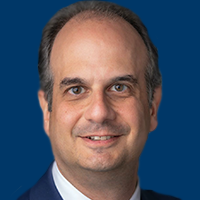
Sanford J. Siegel, MD
The practice now has 14 urology centers and 16 surgical centers in the state, and is staffed by 43 urologists, one urologic pathologist, four radiation oncologists, a dozen physician assistants, two nurse practitioners, and 400 additional employees. Smyth is CUA’s vice president, while Lerner is the clinical director of the CUA-affiliated Summit Ambulatory Surgical Centers.
Looking back, Smyth called the full-scale merger “the most important decision we made as a group... to fully integrate our practices, financially, operationally, and even culturally. We could have said, ‘You need to adopt all of Chesapeake Urology’s methods while you need to take on Maryland Urology’s way of doing things.’ But we made a decision to take a risk...we didn’t merge incrementally.”
The idea of integration has continued to be one of the keys to the practice’s success. Urologists in Cancer Care talked with Siegel and Smyth about the challenges they faced making CUA into a unified practice, some obstacles they’ve overcome, and what the next stage is for the group in the post—Affordable Care Act [ACA] era. Our editors also spoke with one of newest members of the practice about the future of urologic cancer care.
Brad D. Lerner, MD
Caregivers in a Corporation
It’s become trendy for business entities to refer to their employees as “family,” but Siegel doesn’t see it that way. “I don’t call them employees or family members; they are caregivers. Our strength is in the fact that everyone believes in our vision, which is to provide a superior patient experience.”
While the CUA physicians no doubt agreed with that vision in theory, obtaining buy-in to some of the practicalities of becoming a large group practice was another matter. One of the main challenges was getting the physicians—a group Siegel described as “healthy skeptics” who prefer to be their own bosses—to accept a new professional framework.
For instance, Smyth recalled that within a year of the merger, the physicianleaders realized that they needed to invest in administration to manage operations, finance, marketing, and human resources.
“That was tough for our physicians to swallow initially,” he said. “They said, ‘You [physician-leaders] are doing great. We are about to turn a corner, why do we need to invest in all these new people?’ It was huge leap of faith for all of us.” That leap paid off as it freed up the physicians to focus on their goal of superlative patient care. CUA is “first and foremost, a business, and we run it like one with a strong infrastructure that can support the growth, which is a part of our ongoing strategy,” Siegel said.
The group experienced the unpleasant side of doing business when a series of newspaper articles suggested that CUA had significantly boosted the number of Medicare prostate cancer patients it referred for intensity-modulated radiation therapy (IMRT) after investing in its own IMRT machine (Washington Post, February 28, 2011; Baltimore Sun, January 17, 2012).
Siegel categorically denied the allegations made against the practice, and responded to the criticism by pointing out that the number of prostate cancer patients who received IMRT in 2010 at CUA was “dramatically lower than the national average for utilization of radiation therapy for prostate cancer treatment.” In addition, “it is actually 56% more expensive for a patient with prostate cancer to be treated with radiation therapy in a Maryland hospital than in a medical practice such as Chesapeake Urology” (Baltimore Sun, May 21, 2011).
While the issue of self-referral in medicine is a serious one, Siegel drew attention to the fact that the majority of practicing physicians, and especially the ones at CUA, don’t have the time to dream up elaborate financial schemes.
“We wake up every day and think about providing the best patient care,” he said. “We do not wake up and think, ‘How many tests can I run today? How may CT scans can I order? How many patients can I send for radiation?’ We keep the needs of our patients front and center, which is what guides us in everything we do as an organization.”
Still, Siegel cautioned his fellow urologists that between the government’s closer scrutiny of potential Medicare fraud and a news cycle that feeds on scandal, even the most dominant urology practice in its area cannot afford to ignore controversy.
“It is a real mistake for doctors to put their heads in the sand as challenges continue to surface on many fronts,” he said. “Urologists are quickly beginning to realize that they must be constantly vigilant in defending their right to practice in a way that they believe is best for their patients. I think organizations such as the Large Urology Group Practice Association [LUGPA] has really helped raise awareness about independent urology issues. They are a strong voice for urology.”
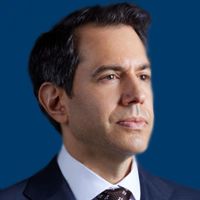
Thomas B. Smyth, MD
Full-Spectrum Care: Patients to Physicians
Holistic, integrated patient care has become a go-to concept in modern medicine, and CUA has embraced it. As the director of physician practice development, Smyth explained how CUA has its own take on the idea.
“Integrated care for us means taking a look at our common medical conditions and asking, ‘How can we better integrate these medical conditions with increasingly complex diagnostic and treatment algorithms within the scope of our practice?’ We recognize that, within the next five to ten years, we are going to be paid very differently than we are paid now. Because of that, we need to understand what it costs to take care of common diseases: benign prostate hyperplasia, kidney stones, erectile dysfunction, prostate cancer.”
The goal is to move patients along the entire continuum of care until their medical condition is treated to their satisfaction, Smyth added. This will require a shift away from the traditional idea of transactional medicine.
“A patient comes in for a transaction, the physician addresses or resolves that transaction, but no relationship is built and the patients often don’t ever come back,” Smyth said. “We believe that in order to better care for the patient, we need to change our system into one that builds relationships in which patients are able to discuss a variety of their health issues with the urologist.”
Finally, in another unique move toward integration, CUA has a formal program to ensure the well-being of its own staff, including discounted fees for exercise classes, gym memberships, and tobacco use cessation programs.
Urologic Cancer: Bench to Bedside
“We may be one of the only practices in the country that is doing a physician wellness program,” Smyth said. “If we keep our physicians and staff healthy, then our patients can see that we practice what we preach in terms of living a healthy lifestyle.”Full-spectrum, superior patient care often means offering investigational treatments. To that end, CUA has Chesapeake Urology Research Associates, under the direction of Ronald F. Tutrone, Jr, MD. Current urologic cancer clinical trials at CUA include:
- A phase III, randomized, active-controlled open-label study on the efficacy and safety of EN3348 (MCC) as compared with mitomycin C for intravesical treatment of subjects with recurrent or refractory nonmuscle-invasive bladder cancer after bacillus Calmette-Guérin (BCG) therapy.
- A randomized, parallel-arm, controlled study of a system that creates space between the rectum and prostate during image-guided IMRT for localized stage T1- T2 prostate cancer.
“It’s imperative that we offer our patients access to that science,” Siegel said. “It’s also important to our doctors that they are involved in making ongoing advances in medical care.”
Rian J. Dickstein, MD
The Future of Urologic Care
In addition to offering patients access to advances in medical care, CUA also keeps an eye on the future of urologic care by recruiting and mentoring new physicians. Rian J. Dickstein, MD, joined CUA in August 2012 after completing a fellowship at The University of Texas MD Anderson Cancer Center in Houston.
CUA appealed to Dickstein in part because of its mentorship program. “They align you to another physician who has been in practice for a number of years,” he said. Dickstein’s mentor is Geoffrey N. Sklar, MD, CUA’s chief medical officer. “I think it’s important for physicians who are coming out of training to have that support system.”
Dickstein was also attracted by the chance to join a large group practice. “I didn’t see a solo practice as a feasible and desirable lifestyle,” he said. “That wasn’t even a consideration for me. I was interested in the camaraderie of the group in terms of patient care, financial models, etc. A large group practice made perfect sense to me.”
Dickstein’s time at MD Anderson gave him a chance to compare cancer care at a major center with care at a urology practice—a difference that fits in with the CUA philosophy of promising a superior patient experience.
“What we can offer is a similar level of care as a major cancer center, but do it closer to home,” he said. “Also, I think we offer a mode of care that is more personalized than a bigger institution.”
Since starting at CUA, Dickstein said he has mostly treated kidney, prostate, and bladder cancer cases. It’s in the last disease state that Dickstein would like to see more public health focus.
“When it comes to smoking, most people focus on lung cancer. But they don’t realize that smoking is a major risk factor for bladder cancer. Furthermore, smoking affects cardiovascular health, which can in turn affect urologic health, specifically in the form of erectile dysfunction,” he said.
“For the most part, any of the risk factors that affect other diseases affect urologic health: Tobacco exposure, obesity, cardiovascular diseases, all of these increase the risk for urologic cancers, as well as how a patient will respond to treatment and their prognosis for recovery,” he added.
Between those population-based health issues and the potential for more than 30 million new Medicare patients under the ACA, the practice has an eye toward “organic growth,” Siegel said, such as expanding their geographic footprint and continuing to build relationships with their hospital partners.
Of course, they are looking to add new physicians who can share in CUA’s vision of fully integrated patient care.
“When we started in 2006, probably 65% of our doctors were over 50 years of age; now, 65% of our physicians are under 50,” he said. “So we have great promise for the future as we continue to build our physician base. We expect all of our people to have a strong commitment to patient care and to their social responsibilities. Our core values drive everything we do at CUA.”