

|Videos|August 13, 2013
Palliative Care and Cancer Pain Management
Advertisement
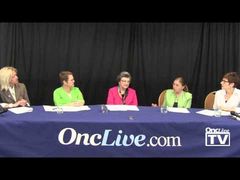

In this discussion, panelists describe palliative care and pain management for patients with cancer. In order to achieve optimal results, palliative care should play a major role throughout diagnosis, treatment, and into survivorship. In this process, preventative measures should be taken and a healthy lifestyle should be endorsed, in addition to addressing the patient's direct needs. The panelists agree that palliative care should be introduced early in the treatment paradigm, in order to be most effective.
Advertisement
Related to this article
An exploratory analysis of the phase 3 KEYNOTE-B15 trial found that ctDNA status was strongly prognostic for event-free survival regardless of treatment arm.
The KEYNOTE-866 trial did not meet its EFS primary end point with perioperative pembrolizumab added to neoadjuvant cisplatin and gemcitabine.
The sacituzumab govitecan, enfortumab vedotin, and zimberelimab triplet produced early, durable responses in untreated metastatic urothelial cancer.
Surufatinib plus serplulimab and cisplatin/etoposide produced a 69.8% ORR in advanced extrapulmonary neuroendocrine carcinoma.
Efficacy outcomes in KEYNOTE-905 were consistent with a contribution of both enfortumab vedotin and pembrolizumab in cisplatin-ineligible MIBC.
Patient-reported outcomes from the phase 3 lidERA trial show preserved functioning and less frequent joint pain with giredestrant vs standard endocrine therapy.
Arcotatug tavatecan improved PFS and OS vs physician’s choice in previously treated, CLDN18.2-positive advanced gastric and GEJ cancer.
Exploratory subgroup analyses of the phase 2 DOVACC trial suggested a possible signal with the triplet in HRD-negative and PARP inhibitor–naive disease.
Advertisement
Advertisement
Trending on OncLive
1
Adjuvant Giredestrant Preserves QOL With Sustained Tolerability in ER+, HER2– Early Breast Cancer
2
Arcotatug Tavatecan Improves Survival in CLDN18.2+ Advanced Gastric or GEJ Adenocarcinoma
3
Sacituzumab Govitecan Triplet Elicits Durable Responses in Treatment-Naive Metastatic Urothelial Cancer
4
Adding UV1 Vaccine to Olaparib/Durvalumab Maintenance Misses PFS End Point in BRCA-Wild Type Recurrent Ovarian Cancer
5