

The top 5 OncLive TV videos of the week cover insights in breast cancer, PV, myeloma, and CLL.
The top 5 OncLive TV videos of the week cover insights in breast cancer, PV, myeloma, and CLL.

The first MRD data from the phase 3 EXCALIBER-RRMM trial support iberdomide-based triplet therapy as early as first relapse, with PFS follow-up ongoing.
After nearly 7 years of follow-up, daratumumab added to VRd continued to improve PFS, PFS2, and sustained MRD negativity in transplant-eligible myeloma.
The FDA approved lirafugratinib in FGFR2+ cholangiocarcinoma and belzutifan plus lenvatinib in advanced ccRCC, and more.

Did you catch all of this week's top oncology news? Test your knowledge with OncLive's Weekly News Quiz.

Daiichi Sankyo and Merck withdrew the I-DXd BLA in ES-SCLC after FDA discussions found phase 2 IDeate-Lung01 data insufficient for accelerated approval.
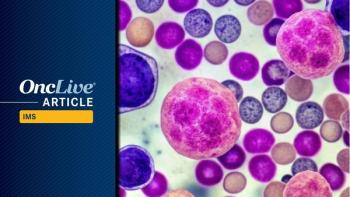
Monthly etentamig significantly improved response and PFS over standard available therapies in the phase 3 CERVINO trial, with low rates of high-grade CRS.

FDA grants priority review to durvalumab plus enfortumab vedotin for cisplatin-ineligible MIBC based on positive phase 3 VOLGA data.
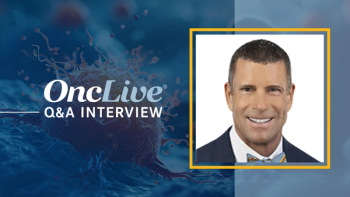
R. Lor Randall, MD, FACS, outlines how AI may affect oncology training, how to properly work alongside AI, and AI-patient conversations.

Results from an early-stage clinical trial found encouraging outcomes in newly diagnosed pancreatic cancer that had spread to distant organs.

Read a refresh of GI cancer FDA news from August 2026, including the approval of a RAS(ON) inhibitor in metastatic pancreatic cancer.

The FDA has approved belzutifan (Welireg) plus lenvatinib (Lenvima) for use in patients with advanced renal cell carcinoma with a clear cell component after PD-1 or PD-L1 inhibition.
R. Lor Randall, MD, FACS, discusses AI in musculoskeletal tumor diagnosis, surgical planning and robotics, and validation of AI tools.

MAPK drugs restore TSHR in aggressive thyroid tumors, helping CAR-T cell therapy see and control solid tumors again.
An FDA advisory committee voted in favor of the benefits of the Galleri MCED test outweighing its risks in patients 50 years of age and older.
Novel approaches to the use of AI in oncology may require discussion and ultimately modification of existing proprietary and regulatory barriers.
Extended follow-up from the phase 1b CAMMA 1 trial showed durable responses across two cevostamab dose levels, supporting selection of a recommended phase 3 regimen.

A MAIC found anito-cel produced response rates similar to those of cilta-cel, with fewer high-grade toxicities, in relapsed/refractory multiple myeloma.
Updated phase 2 LINKER-SMM1 data show single-agent, fixed-duration linvoseltamab produced deep, durable, and MRD-negative responses in high-risk smoldering multiple myeloma.
The FDA has approved lirafugratinib (Lyrfigtu) for the treatment of adult patients with previously treated unresectable, locally advanced or metastatic cholangiocarcinoma harboring an FGFR2 gene fusion or other rearrangement.

An IDMC recommended continuing a phase 2 minimal residual disease study of IMNN-001 without modification following a favorable safety review.
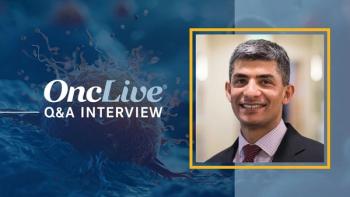
Shailender Bhatia, MD, discusses next steps for adjuvant therapy research in light of the phase 3 ADAM trial data and broader implications for Merkel cell carcinoma.

Clinicians and researchers are set to gather for the UCSF-cosponsored International Invasive Lobular Carcinoma Symposium.
SOT106 now holds both orphan drug and fast track designations across soft tissue sarcoma and osteosarcoma ahead of a first-in-human trial.
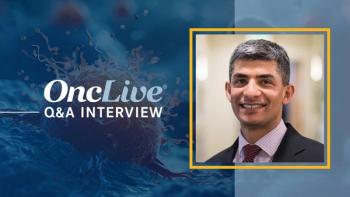
Shailender Bhatia, MD, discusses ADAM trial design, key efficacy and safety findings, and treatment implications in Merkel cell carcinoma.

Read a refresh of breast cancer FDA news from August 2026, including an sNDA application in PIK3CA-mutant disease and a fast track designation.

Lanreotide injection, a generic formulation referencing lanreotide, was approved by the FDA for GEP-NETs management.
The FDA granted final approval to Lutetium Lu 177 dotatate biosimilar for patients with SSTR-positive GEP-NETs.

The TrueBeam photon therapy system has been added to the Statesir Cancer Center at Atlantic Health CentraState Medical Center.

The addition of the β-catenin pathway inhibitor tegavivint to osimertinib produced deep responses in a phase 1b study in first-line EGFR-mutated NSCLC.