

Phase 1 data showed that INCA033989 produced rapid and durable responses as monotherapy and in a combination regimen in CALR-mutated myelofibrosis.
Phase 1 data showed that INCA033989 produced rapid and durable responses as monotherapy and in a combination regimen in CALR-mutated myelofibrosis.
The type II JAK2 inhibitor AJ1-11095 produced SVRs, deep symptom responses, and mutation VAF reductions in type I JAK inhibitor–exposed myelofibrosis.
Epcoritamab improved PFS and produced durable complete responses vs chemoimmunotherapy in relapsed/refractory large B-cell lymphoma.

RevCAR T did not lead to any instances of GVHD or ICANs, and it produced complete remissions in CD123-positive relapsed/refractory AML.

Talquetamab plus daratumumab, with or without pomalidomide, significantly improved PFS and deepened responses in relapsed/refractory myeloma.
Luspatercept produced clinically meaningful improvements in RBC transfusion independence in myelofibrosis-associated anemia.
A phase 2 study of dose-adjusted EPOCH plus tafasitamab with or without rituximab met its primary end point of MRD negativity after the first cycle.

Fixed-duration venetoclax/obinutuzumab more than doubled median PFS vs chlorambucil/obinutuzumab in previously untreated CLL.
In the MAXILUS primary analysis, luspatercept initiated at 1.75 mg/kg yielded high RBC transfusion independence rates in lower-risk MDS.

The FDA approved capivasertib plus abiraterone and prednisone for PTEN-deficient metastatic androgen pathway modulation–naive or sensitive prostate cancer.

Revumenib yielded responses across subgroups with relapsed/refractory, NPM1-mutated AML and co-mutations, as well as in KMT2A-rearranged acute leukemia.

The FDA has approved adjuvant belzutifan plus pembrolizumab for patients with ccRCC at intermediate-high or high risk of recurrence.

Lurbinectedin alone or with irinotecan did not improve OS vs topotecan or irinotecan alone in patients with relapsed SCLC.

A 10-week resistance program boosted cancer survivors’ strength, immune function, and gut microbiome.

Partial response to bridging therapy before cilta-cel was associated with improved PFS and OS outcomes in relapsed/refractory multiple myeloma.
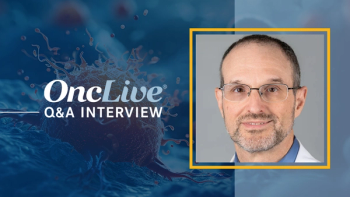
From hedgehog pathway mutations to next-generation sequencing, Vernon Sondak, MD, outlines a practical framework for complex BCC and CSCC workup.
Experts recap of the most pivotal lung cancer data to surface at the 2026 ASCO Annual Meeting.
Ficerafusp alfa plus pembrolizumab generated a 54% ORR and 21.7-month median DOR in first-line HPV-negative recurrent or metastatic HNSCC.
EPCORE FL-1 showed that epcoritamab/lenalidomide/rituximab yielded superior efficacy vs lenalidomide/rituximab across follicular lymphoma populations.
Azacitidine plus venetoclax and ivosidenib produced robust responses and induced high rates of MRD negativity in IDH1-mutated newly diagnosed AML.
Baseline ctDNA positivity was associated with inferior DFS regardless of treatment arm in the phase 3 KEYNOTE-564 trial.

Alexander Kutikov, MD, FACS, discusses the role of focal therapy in RCC management.

The in vivo CAR T-cell therapy KLN-1010 produced deep MRD-negative responses in relapsed/refractory multiple myeloma.

Real-world data showed zanubrutinib was associated with longer time to next treatment and improved overall survival vs acalabrutinib in treatment-naive CLL.

In case you missed any, check out our recap of the episodes of OncLive On Air that aired in May 2026.

The research offers an early view into challenges that health systems across the globe will likely face as extreme heat becomes more common.
The FDA has accepted for review an sBLA for adjuvant atezolizumab plus chemotherapy in stage III dMMR/MSI-H colon cancer.
Marwan G. Fakih, MD, discusses how updated OS data from POD1UM-303 cement frontline retifanlimab plus chemotherapy as the standard of care in advanced SCAC.

Experts highlight the most interesting and potentially paradigm-shifting head and neck cancer data to come out of the 2026 ASCO Annual Meeting.
Megan Kruse, MD, discusses CDK4/6 inhibitor decision-making for patients with HR-positive breast cancer and future directions for oral SERD and ADC use.