
Subcutaneous amivantamab produced a 42% objective response rate and a 15% complete response rate in patients with recurrent/metastatic HNSCC.
Subcutaneous amivantamab produced a 42% objective response rate and a 15% complete response rate in patients with recurrent/metastatic HNSCC.

The phase 2 ZZFIRST trial met its primary PSA response end point with enzalutamide plus talazoparib in high-volume mHSPC, though the triplet showed added toxicity.
Neoadjuvant PD-1–based immunotherapy plus chemotherapy produced pCRs across 3 cohorts in resectable locally advanced HNSCC.
Dostarlimab monotherapy produced a 27% response rate in PD-L1–positive recurrent/metastatic head and neck squamous cell carcinoma
Watch a highlight reel of breast cancer data from ASCO 2026 that experts anticipate will have the biggest impact on the field.
Experts shared the key data that stood out in GU oncology at the 2026 ASCO Annual Meeting.

Experts shared the key data that stood out in hematologic oncology at the 2026 ASCO Annual Meeting.
Pumitamig plus chemotherapy generated strong responses across NSCLC subtypes and PD-L1 levels with manageable safety in ROSETTA Lung-02.
Experts unpack key melanoma data shared during the 2026 ASCO Annual Meeting.
ASCO 2026 highlights show dostarlimab may deliver curative potential in dMMR endometrial cancer, while novel ADCs and fasting reshape ovarian care.
Experts recap of the most pivotal lung cancer data to surface at the 2026 ASCO Annual Meeting.
Real-world data showed zanubrutinib was associated with longer time to next treatment and improved overall survival vs acalabrutinib in treatment-naive CLL.
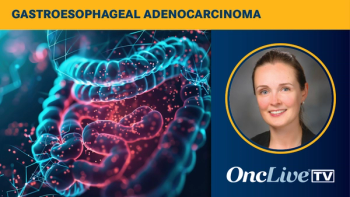
Elena Elimova, MD, discusses data from a HERIZON-GEA-01 PD-L1 subgroup analysis in HER2-positive gastroesophageal adenocarcinoma.
Experts highlight the most interesting and potentially paradigm-shifting head and neck cancer data to come out of the 2026 ASCO Annual Meeting.
Oncology experts provide commentary on the meeting's biggest and most impactful presentations across the GI cancer continuum.
ASCO 2026 genitourinary experts unpack key prostate and bladder cancer data, revealing practice-changing takeaways and what they mean for patient care.
Experts highlight some top hematologic oncology data presented at ASCO 2026, including from key studies in multiple myeloma and diffuse large B-cell lymphoma.
Breast cancer data from ASCO 2026 confirm the clinical benefits of several investigational treatment approaches across disease subtypes.
First-line zanubrutinib improved real-world treatment duration, time to next treatment, and survival in older chronic lymphocytic leukemia.
Varegacestat reduced the risk of disease progression or death by 84% vs placebo in progressing desmoid tumors.
Atrial fibrillation was associated with real-world cardiovascular and health care resource utilization burden in CLL/SLL.
Dato-DXd led to benefits in terms of TFST, PFS2, and TSST vs chemotherapy in frontline TNBC.
Post-surgery ctDNA status was prognostic for distant recurrence in early TNBC, and the prognostic value of ctDNA status per WGS outperformed pCR status.
Sintilimab plus adjuvant capecitabine did not improve 2-year PFS outcomes vs capecitabine alone in NPC with suboptimal response to induction chemotherapy.

First-line asandeutertinib improved intracranial iORR and IPFS vs osimertinib in EGFR-mutated NSCLC with brain metastases.

Selinexor plus ruxolitinib produced higher SVR35 rates than ruxolitinib alone in JAK inhibitor-naive myelofibrosis.
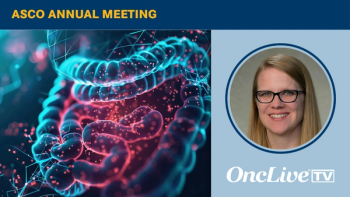
Jennifer Eads, MD, discusses data for the CAR T-cell therapy CHM-2101 in relapsed/refractory GI cancers.
Zanidatamab plus tislelizumab and chemotherapy improved PFS and OS in HER2-positive mGEA regardless of PD-L1 status by TAP score or CPS.
John Mascarenhas, MD, discusses key data from the SENTRY trial of selinexor plus ruxolitinib in JAK inhibitor–naïve myelofibrosis.
TALAPRO-3 showed talazoparib plus enzalutamide cut progression or death risk by 52% in HRR-altered mCSPC vs enzalutamide alone.