

Hematologic Oncology
Latest News
Advertisement
Latest Videos
CME Content































Advertisement
More News
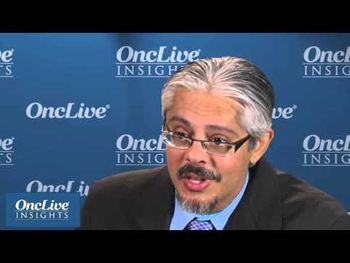


One of the central reasons that curing cancer has been so problematic is the dysfunction of TP53, the single most common genetic alteration in cancer.

While major accomplishments in blood and marrow transplantation (BMT) were being made around the country, the first BMT program at Wake Forest Baptist came into view, a vision brought to life by David D. Hurd, MD.
Anthony S. Stein, MD, professor and staff physician, Hematologic Malignancies and Stem Cell Transplantation Institute, City of Hope, discusses a phase II study examining blinatumomab in relapsed/refractory patients with Philadelphia chromosome-positive B-precursor acute lymphoblastic leukemia.
Guiseppe Visani, MD, director, Hematology and Stem Cell Transplant Center at AORMN, Pesaro, Italy, discusses a phase II study examining the efficacy of tosedostat plus low-dose cytarabine in elderly patients with acute myeloid leukemia.

It is obviously impossible to summarize all of the significant data from the 2015 ASH Annual Meeting in this column, but I would like to highlight several key emerging trends that continue to illustrate the palpable ongoing revolution happening in cancer care and beyond.
Yogenthiran Saunthararajah, MD, Department of Hematologic Oncology and Blood Disorders at Cleveland Clinic, professor of Medicine, co-leader, Developmental Therapeutics Program of the Case Comprehensive Cancer Center, discusses mechanisms of resistance to 5-azacytidine and decitabine in patients with myelodysplastic syndromes-acute myeloid leukemia.

Monotherapy with blinatumomab demonstrated high complete remission or CR with partial hematological recovery rates in adult patients with Philadelphia chromosome-positive and -negative B-cell precursor acute lymphoblastic leukemia.

Two CD19-targeted chimeric antigen receptor-modified T-cell therapies demonstrated complete response rates ranging from 90% to 100% in patients with high-risk acute lymphoblastic leukemia.

Updated findings from early stage clinical trials exploring chimeric antigen receptor-modified T-cell therapies continue to highlight the effectiveness of these approaches for patients with non-Hodgkin lymphoma.

Patients with FLT3-mutated acute myeloid leukemia lived significantly longer when treated with the multikinase inhibitor midostaurin compared with placebo.
David P. Steensma, MD, senior physician, associate professor of Medicine, Harvard Medical School, Dana-Farber Cancer Institute, discusses a phase III study comparing midostaurin with placebo in combination with daunorubicin cytarabine induction, high-dose cytarabine consolidation, and as maintenance therapy in newly diagnosed patients with acute myeloid leukemia (AML) with FLT3 mutations.

Gene therapy has the potential to deliver long-lasting remissions for patients with advanced B-cell malignancies who already have undergone an allogeneic hematopoietic stem cell transplant.
Marcel R.M. van den Brink, MD, PhD, provides an overview of four notable studies being presented at the 2014 American Society of Hematology (ASH) Meeting and Exposition.
Advertisement
Advertisement
Trending on OncLive
1
Single-Center, Retrospective Data Show Low Rate of Lifileucel Infusion Following Referral in Advanced Melanoma
2
Long-Term Cilta-Cel Data Show Low Rates of PFS Events in Standard-Risk R/R Myeloma
3
Real-World Data Support Clinical Benefit With Lifileucel in Previously Treated Advanced Melanoma
4
Dr Riedell on the Long-Term Efficacy of Tisa-Cel in R/R Follicular Lymphoma
5