




Mantle Cell Lymphoma
Latest News
Advertisement
Latest Videos




CME Content
































Advertisement
More News

Matthew S. McKinney, MD, discusses the expanding role of BTK inhibitors in mantle cell lymphoma.

Brad S. Kahl, MD, discusses personalizing frontline treatment in mantle cell lymphoma, clinical trials further examining BTK inhibitors, and research opportunities with CAR T-cell therapy.

Brad S. Kahl, MD, discusses the potential utility of frontline CAR T-cell therapy in mantle cell lymphoma.
Patients with newly diagnosed mantle cell lymphoma who were 65 years of age or older had worse progression-free survival and overall survival at 1 and 2 years compared with patients under the age of 65 years.

Harry Paul Erba, MD, PhD, discusses the evolution of treatment in mantle cell lymphoma.
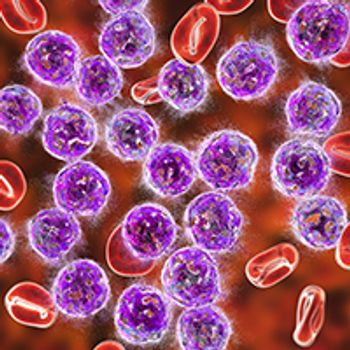
Autologous hematopoietic stem-cell transplantation maintained its long-term efficacy over interferon alfa in patients with mantle cell lymphoma, confirming its place as the standard frontline treatment in this population.
Peter Riedell, MD, discusses the rationale to evaluate survival outcomes after transplant in mantle cell lymphoma.

Brad S. Kahl, MD, discusses a potential limitation of frontline combination strategies with BTK inhibitors in mantle cell lymphoma.
Michael Wang, MD, discusses the impact of acalabrutinib in patients with mantle cell lymphoma, the implications of the phase 2 ACE-LY-004 trial, and the challenges faced with treating those who harbor TP53 mutations.
Michael Wang, MD, discusses the significance of p53 mutations in mantle cell lymphoma.

Brad S. Kahl, MD, discusses patient selection for intensive vs non-intensive treatment strategies in mantle cell lymphoma.

Brad S. Kahl, MD, discusses the potential utility of BTK inhibitor–based combinations in the frontline setting of mantle cell lymphoma.
Pirtobrutinib elicited encouraging responses across all dose levels in patients with mantle cell lymphoma and other non-Hodgkin lymphoma who previously received all classes of available therapy, with benefit observed independent of prior therapy received, according to data from the phase 1/2 BRUIN study.

Michael Wang, MD, discusses the use of acalabrutinib in the phase 2 ACE-LY-004 trial in mantle cell lymphoma.

Peter Riedell, MD, discusses the importance of identifying early relapse in patients with high-risk mantle cell lymphoma.
More tailored selection processes, which have placed a greater emphasis on patient-specific characteristics, such as risk and genomic status, and made possible with a growing number of treatment options, have led to optimized therapeutic decisions for patients with hematologic malignancies.

Anita Kumar, MD, discusses future directions with pirtobrutinib in mantle cell lymphoma.

For patients with mantle cell lymphoma who have progressed after treatment with a BTK inhibitor such as ibrutinib, there is an unmet need for the development of safe and effective targeted therapies to improve otherwise dismal outcomes.

Anita Kumar, MD, discusses efforts made to address areas of unmet need in mantle cell lymphoma.

Peter Martin, MD, discusses the importance of designing clinical trials for real-world utility in mantle cell lymphoma.
Acalabrutinib monotherapy continued to be highly active and safe in patients with relapsed/refractory mantle cell lymphoma with longer-term follow-up.

Anita Kumar, MD, discusses navigating CAR T-cell therapy–related toxicities in mantle cell lymphoma.

The combination of loncastuximab tesirine-lpyl and ibrutinib displayed encouraging antitumor activity with a manageable safety profile in patients with relapsed/refractory diffuse large B-cell lymphoma and mantle cell lymphoma.

Jae Park, MD, discusses the factors to consider when selecting among the available CAR T-cell therapies for the treatment of patients with mantle cell lymphoma.

Anita Kumar, MD, discusses the improved efficacy of venetoclax when used in combination with ibrutinib compared with venetoclax or ibrutinib alone in mantle cell lymphoma.
Advertisement
Advertisement
Trending on OncLive
1
Single-Center, Retrospective Data Show Low Rate of Lifileucel Infusion Following Referral in Advanced Melanoma
2
Long-Term Cilta-Cel Data Show Low Rates of PFS Events in Standard-Risk R/R Myeloma
3
Real-World Data Support Clinical Benefit With Lifileucel in Previously Treated Advanced Melanoma
4
Dr Riedell on the Long-Term Efficacy of Tisa-Cel in R/R Follicular Lymphoma
5