
Laleh Melstrom, MD, MS, discusses using molecular testing to guide treatment selection for patient with gastrointestinal cancers.

Your AI-Trained Oncology Knowledge Connection!
Laleh Melstrom, MD, MS, discusses using molecular testing to guide treatment selection for patient with gastrointestinal cancers.
Afsaneh Barzi, MD, PhD, discusses the frontline use of FOLFOXIRI plus bevacizumab and subsequent therapies in patients with metastatic colorectal cancer.
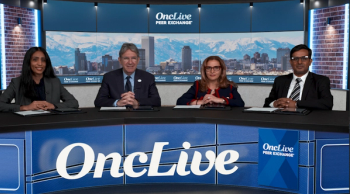
Analyze risks and complications associated with allo-HSCT, including graft-versus-host disease, infections, relapse, and regimen-related toxicities.
This presentation will detail the supportive therapies and interventions provided to patients before, during, and after undergoing allo-HSCT. The speaker will also discuss management of treatment side effects and comorbidities to optimize patient outcomes.
Delve into the pre-transplant conditioning regimens such as chemotherapy and radiation used to prepare and immunosuppress patients to prevent graft rejection prior to allogeneic hematopoietic stem cell transplantation.
Tycel Phillips, MD, discusses the potential advantages of treating patients with relapsed/refractory mantle cell lymphoma in the phase 3 GLOBRYTE trial.
Sumanta Kumar Pal, MD, FASCO, discusses the rationale for treating patients with zanzalintinib in relapsed/refractory clear cell renal cell carcinoma.
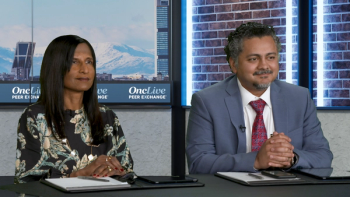
Amrita Krishnan, MD, and Saad Z. Usmani, MD, MBA, FACP, offer their perspectives on the role of stem cell transplant and MRD testing in patients with newly diagnosed multiple myeloma.
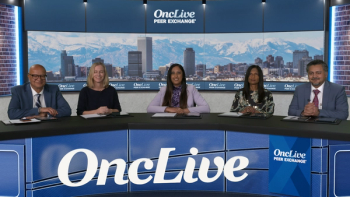
Clinical insights on the definition of high-risk multiple myeloma and the treatment of patients with high risk disease, including how the results from the IsKia trial might impact practice.
Experts in multiple myeloma discuss highlights from the ASH 2023 meeting around transplant-eligible NDMM with particular focus on the PERSEUS and GRIFFIN trials and the clinical implications of the results of these studies.
Tycel Phillips, MD, discusses the rationale for the phase 3 GLOBRYTE trial examining glofitamab in patients with relapsed/refractory mantle cell lymphoma.
Alexey Danilov, MD, PhD, discusses how further research may address unmet needs in chronic lymphocytic leukemia or mantle cell lymphoma.
Dedication to his patients and the field of hematology spanning decades has led Stephen J. Forman, MD, to break down barriers for treating patients with leukemia and lymphoma.
Maurie Markman, MD, highlights inroads made with immunotherapy, antibody-dependent cytotoxic agents, and molecular testing across oncology.
In this final episode of OncChats: Assessing the Promise of AI in Oncology, Toufic A. Kachaamy, MD, and Douglas Flora, MD, LSSBB, FACCC, discuss a roadmap of artificial intelligence (AI) advances in the next 5 to 10 years.
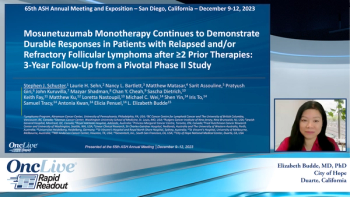
Elizabeth Budde, MD, PhD, presents data from the 3-year follow-up from a pivotal phase II study investigating mosunetuzumab monotherapy in patients with relapsed and/or refractory follicular lymphoma after ≥2 prior therapies.
Elizabeth Budde, MD, PhD, presents data from on mosunetuzumab plus polatuzumab vedotin in patients with relapsed/refractory large B-cell lymphoma.
Drs Simeone and Fakih discuss the main objective and design of the observational BASECAMP-1 study and how it functions alongside the EVEREST-1 study, which is evaluating the autologous CAR T-cell therapy A2B530 in patients with CEA-expressing solid tumors that have lost HLA-A*02 expression.
In this eighth episode of OncChats: Assessing the Promise of AI in Oncology, Toufic A. Kachaamy, MD, and Douglas Flora, MD, LSSBB, FACCC, explain how artificial intelligence tools are being developed to match the right patient to the right drug on the right clinical trial.
Experts discuss what role allogeneic transplants play in hematologic malignancies, specifically in AML and ALL.
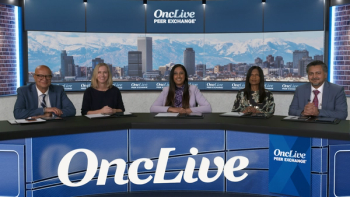
A panel of experts discuss the evolving landscape of newly diagnosed multiple myeloma.
Revumenib demonstrated clinically meaningful activity, including high response and minimal residual disease negativity rates, in heavily pretreated patients with KMT2A-rearranged acute leukemia.
NX-2127 showcased early efficacy in the form of responses with an acceptable toxicity profile in patients with relapsed or refractory B-cell malignancies, according to data from the ongoing phase 1 NX-2127-001 trial.
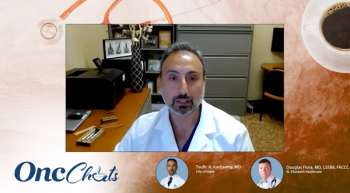
In this seventh episode of OncChats: Assessing the Promise of AI in Oncology, Toufic A. Kachaamy, MD, and Douglas Flora, MD, LSSBB, FACCC, discuss how artificial intelligence tools may be utilized to improve wait time for treatment, to provide more time for provider-patient interactions, and more.
Odronextamab produced durable responses and a generally manageable safety profile in patients with relapsed/refractory diffuse large B-cell lymphoma.
Brexucabtagene autoleucel is safe and effective in real-world patients with relapsed/refractory mantle cell lymphoma, regardless of the presence of high-risk features.
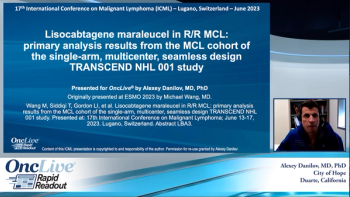
Alexey Danilov, MD, PhD, reviews data from the TRANSCEND NHL 001 study investigating lisocabtagene maraleucel in patients with relapsed/refractory mantle cell lymphoma.
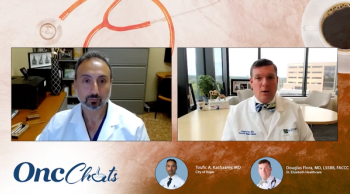
In this sixth episode of OncChats: Assessing the Promise of AI in Oncology, Toufic A. Kachaamy, MD, and Douglas Flora, MD, LSSBB, FACCC, discuss potential opportunities to leverage artificial intelligence tools in cancer screening, diagnosis, staging, and prognosis.
This commentary examines the use of words and expressions in the oncology domain and the implications of different interpretations by patients and their families from professionals employing this language, including academic authors and members of their clinical teams.
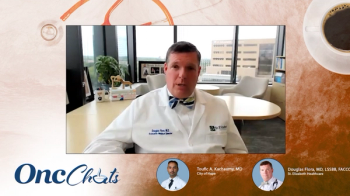
In this fifth episode of OncChats: Assessing the Promise of AI in Oncology, Toufic A. Kachaamy, MD, and Douglas Flora, MD, LSSBB, FACCC, discuss the need for evidence to support the utilization of different artificial intelligence tools in healthcare.