







Breast Cancer
Latest News
Advertisement
Latest Videos







CME Content

































Advertisement
More News

Debu Tripathy, MD, discusses a decision-making framework for sequencing therapies for HER2-positive metastatic breast cancer.

A gel formulation of tamoxifen is equally as effective with fewer side effects when compared with oral tamoxifen in women with ductal carcinoma in situ.
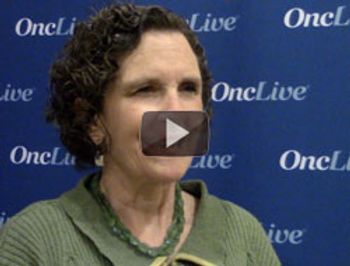
Joyce A. O'Shaughnessy, MD, discusses the evolving area of breast cancer subtype-specific cytotoxic agents.

The 2nd Annual Giants of Cancer Careâ„¢ Awards were presented at a ceremony held on May 30 in Chicago. The event recognized 16 oncology heroes whose groundbreaking contributions to the field have improved the lives of patients with cancer.

Patients with small, node-negative, HER2-positive breast cancer tumors had a low risk of invasive recurrence after 5 years

The antibody-drug conjugate T-DM1 (ado-trastuzumab emtansine; Kadcyla) will have an impact on the entire spectrum of care for patients with metastatic HER2-positive breast cancer, resulting in a greater emphasis on patient selection protocols and testing.

Cardiac events associated with trastuzumab are mostly reversible and outweighed by significant extensions in OS and PFS for patients with HER2-positive breast cancer, according to analyses from several clinical trials exploring the drug.

As gatekeepers of the cell cycle, the cyclin-dependent kinases are often implicated in the progression of cancer and make prime targets for therapy.
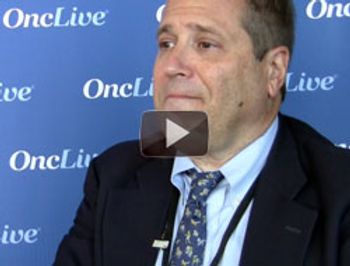
Adam M. Brufsky, MD, PhD, discusses the effect of prior trastuzumab on eribulin mesylate in combination with trastuzumab as first-line treatment for HER2-positive locally recurrent or metastatic breast cancer.
Robert L. Kirkman, MD, President and CEO, Oncothyreon, discusses the evaluation of ONT-380, an oral HER2-specific inhibitor, for the treatment of patents with HER2-positive metastatic breast cancer.

The FDA has issued a drug safety communication regarding the risk of intoxication with the intravenous ethanol-containing chemotherapy docetaxel.
Edith A. Perez, MD, discusses a genomic analysis of immune function genes and clinical outcome in the NCCTG (Alliance) N9831 adjuvant trastuzumab trial.

Julie R. Gralow, MD, director, Breast Medical Oncology, Seattle Cancer Care Alliance, clinical research division, member, Fred Hutchinson Cancer Care Center, professor, Medical Oncology Division, University of Washington School of Medicine, discusses toxicities observed in the SWOG S0307 trial, which examined bisphosphonates as adjuvant therapy in primary breast cancer.

The first time Christina T. Giuliano, MD, saw a digital mammogram, she knew the extra clarity and detail would profoundly improve the diagnostic process.

Charles M. Perou, PhD, discusses a trial (CALGB 40601) presented at the 2014 ASCO Annual Meeting that analyzed gene expression signatures in patients with HER2-positive breast cancer treated with weekly paclitaxel and trastuzumab with or without lapatinib.

The FDA has approved gadobutrol (Gadavist) injection for intravenous use with breast MRI to detect and identify the extent of disease
Aleix Prat, MD, PhD, medical oncologist, Vall D'Hebron Institute of Oncology, Barcelona, Spain, discusses the differences between EndoPredict and Prosigna.

At the recent National Comprehensive Cancer Network (NCCN) 19th Annual Conference, experts discussed this year's updates to the NCCN Clinical Practice Guidelines in Oncology. The meeting also included reviews of NCCN Task Force reports on issues in supportive care. We asked eleven NCCN panel members to select the most significant updates and insights presented at the conference.

A joint analysis of two phase III trials involving a total of 4690 premenopausal women with hormone-receptor–positive (HR+) breast cancer demonstrated that adjuvant use of the aromatase inhibitor (AI), exemestane, reduced relative risk of developing subsequent invasive cancer by 28% compared with tamoxifen when both agents were combined with ovarian function suppression (OFS).

A dual HER2-blockade strategy that added lapatinib to trastuzumab for the adjuvant treatment of women with early breast cancer failed to demonstrate a significant improvement in DFS over the standard therapy with trastuzumab alone.

Mark D. Pegram, MD, from the Stanford University Medical Center, discusses a phase II study of margetuximab in patients with relapsed or refractory advanced breast cancer whose tumors express HER2 at the 2+ level by immunohistochemistry and lack evidence of HER2 gene amplification by FISH.

Denise A. Yardley, MD, hematologist/oncologist, Sarah Cannon Research Institute discusses a pilot study to assess safety, pharmacokinetics, and effects on circulating estrogens in women with advanced hormone-positive breast cancer when given enzalutamide plus exemestane.

Adding goserelin to chemotherapy for women with early-stage hormone receptor (HR)-negative breast cancer helps both to preserve their fertility and to prolong their survival.

The dosing frequency of zoledronic acid can be reduced by 67% without compromising efficacy and safety in women with breast cancer and bone metastases.
The ballots are in, and 16 leading researchers whose discoveries have propelled the field of cancer treatment forward will be honored during the 2014 Giants of Cancer Care award ceremony on May 30 at Riva Restaurant on Navy Pier in Chicago.
Advertisement
Advertisement
Trending on OncLive
1
Single-Center, Retrospective Data Show Low Rate of Lifileucel Infusion Following Referral in Advanced Melanoma
2
Real-World Data Support Clinical Benefit With Lifileucel in Previously Treated Advanced Melanoma
3
Long-Term Cilta-Cel Data Show Low Rates of PFS Events in Standard-Risk R/R Myeloma
4
Dr Riedell on the Long-Term Efficacy of Tisa-Cel in R/R Follicular Lymphoma
5