





Lung Cancer
Latest News

January 11th 2017
By Silas Inman
The FDA has granted a priority review to a supplemental biologics license application for pembrolizumab in combination with pemetrexed plus carboplatin as a treatment for patients with metastatic or advanced non-squamous non–small cell lung cancer, regardless of PD-L1 expression and without EGFR or ALK mutations.
Advertisement
Latest Videos








CME Content

































Advertisement
More News

Raffit Hassan, MD, head of Thoracic and Solid Tumor Immunotherapy Section at the National Cancer Institute Center for Cancer Research discusses immunotherapy in malignant pleural mesothelioma.

Roy S. Herbst, MD, PhD, professor of Medicine, chief of Medical Oncology, Yale Cancer Center and Smilow Cancer Hospital, discusses the impact that immunotherapy has had on the frontline treatment of patients with lung cancer.

Paul A. Bunn, Jr, MD, professor of Medicine in Medical Oncology and head of the Division of Medical Oncology at the University of Colorado, discusses the current role of precision medicine in lung cancer.

Nicolas Girard, MD, professor of Respiratory Medicine and Thoracic Oncology at the Claude Bernard University in Lyon, France, and senior attending physician in the Thoracic Oncology Service of the Hospices Civils de Lyon, discusses the optimal methods to maximize the outcomes of crizitonib (Xalkori) when used as a treatment for patients with non-small cell lung cancer (NSCLC).

Hatim Husain, MD, assistant professor of Hematology-Oncology at The University of California San Diego Moores Cancer Center, discusses his study on monitoring the emergence of EGFR T790M ctDNA in urine from EGFR-mutated NSCLC.

David Carbone, MD, PhD, director of the James Thoracic Center, and professor of Medicine at The Ohio State University Comprehensive Cancer Center, discusses the effectiveness of different therapies to treat patients with lung cancer.

Mark G. Kris, MD, a medical oncologist at Memorial Sloan Kettering Cancer Center, discusses what the future holds for the development of immunotherapy and targeted therapy in the treatment of patients with lung cancer.

Plasma- and urine-based assays designed to detect actionable mutations in patients with non–small cell lung cancer are changing the face of treatment for these patients.
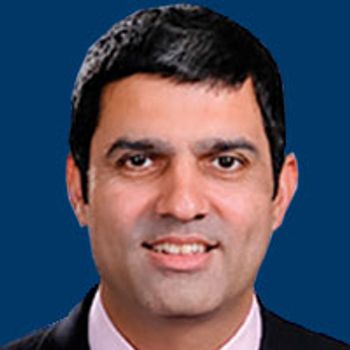
Molecular testing is done for patients with non–small cell lung cancer to determine what genetic abnormalities are present. If a common-enough mutation is detected—such as EGFR or ALK—then patients are able to receive a targeted agent matched to that driver.












Osimertinib, an EGFR tyrosine kinase inhibitor (TKI), is quickly emerging as a therapeutic option for patients with EGFR-mutant non-small cell lung cancer (NSCLC) who develop the acquired resistance mutation T790M.

Frontline therapy for patients with ALK-positive non–small cell lung cancer is poised to change in the coming years, as researchers continue to explore agents beyond crizotinib.

The Committee for Medicinal Products for Human Use has recommended approval of alectinib as a treatment for patients with metastatic ALK-positive non—small cell lung cancer following progression on crizotinib.

The Committee for Medicinal Products for Human Use (CHMP) has recommended approval of frontline pembrolizumab for the treatment of patients with metastatic non–small cell lung cancer whose tumors do not harbor EGFR or ALK mutations.
Advertisement
Advertisement
Trending on OncLive
1
Single-Center, Retrospective Data Show Low Rate of Lifileucel Infusion Following Referral in Advanced Melanoma
2
Long-Term Cilta-Cel Data Show Low Rates of PFS Events in Standard-Risk R/R Myeloma
3
Real-World Data Support Clinical Benefit With Lifileucel in Previously Treated Advanced Melanoma
4
Dr Riedell on the Long-Term Efficacy of Tisa-Cel in R/R Follicular Lymphoma
5