
Benjamin P. Levy, MD leads a live CFS discussion with Kamel Abou Hussein, MD and Victoria Rizk, MD on the evolving therapeutic landscape in breast cancer.
Benjamin P. Levy, MD leads a live CFS discussion with Kamel Abou Hussein, MD and Victoria Rizk, MD on the evolving therapeutic landscape in breast cancer.
Benjamin P. Levy, MD, and Jonathan W. Lee, MD, MSc discuss advances in EGFR-Mutant, HER2-Positive, and Oncogene-Driven NSCLC Highlighted at CFS.
Welcome to The Show and After-Show with Andrew Svonavec and Kristie L. Kahl, your essential guide to the 43rd Annual Chemotherapy Foundation Symposium (CFS).
Diane Reidy-Lagunes, MD, discusses key trials that have expanded the treatment paradigm for patients with neuroendocrine tumors.
Yelena Y. Janjigian, MD, discusses the significance of the FDA approval of zolbetuximab plus chemotherapy for HER2–, CLDN18.2+ gastric/GEJ adenocarcinoma.
Anna Weiss, MD, discusses the significance of various imaging modalities in patients with breast cancer.
Roy S. Herbst, MD, PhD, discusses advances in EGFR inhibition throughout the past several decades in patients with lung cancer.
Yelena Y. Janjigian, MD, highlights key takeaways and data from 2024 in the gastric and GEJ cancer field.
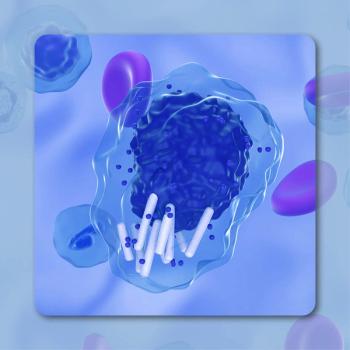
Nicole Lamanna, MD, highlights various clinical trials underway evaluating new treatment options for patients with chronic lymphocytic leukemia.
When evaluating real-world experience, differences in race/ethnicity and among elderly patients with DLBCL appeared different from those seen in clinical trials, highlighting the need for consideration in these patient populations.
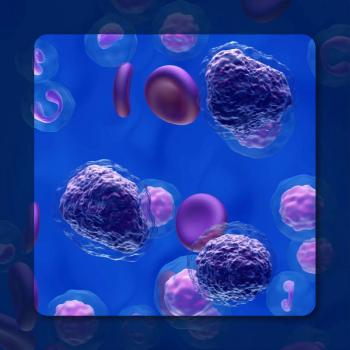
Advancements in FL treatment, including BTK inhibitors and CAR T-cell therapies, offer new hope for relapsed or refractory cases.
Improvements in screening, systemic therapy, and precision medicine have reduced breast cancer mortality and morbidity, and further progress will hinge on the use of ctDNA and CTCs for disease monitoring, continued development of novel antiestrogenic agents, and movement of ADCs and immunotherapy into expanded settings and indications.
Howard I. Scher, MD, discusses the evolution of molecular testing mechanisms in patients with prostate cancer and highlights the importance of making patient-centered decisions based on test results.
Howard I. Scher, MD, sheds light on various research programs he has led or has been heavily involved with that have helped change the course of prostate cancer treatment over the years.
Komal Jhaveri , MD, FACP, discusses the rationale behind the ongoing clinical development of elacestrant and other endocrine therapies in patients with estrogen receptor–positive metastatic breast cancer.
The combination of enfortumab vedotin-ejfv plus pembrolizumab represents a chemotherapy-free regimen that could alter the standard of care in the frontline treatment of all patients with metastatic urothelial carcinoma.
David Braun, MD, PhD, discusses the findings from the phase 3 CONTACT-03 trial investigating immunotherapy rechallenge in patients with renal cell carcinoma and the implications of these findings on the RCC treatment paradigm.
Douglas A. Tremblay, MD, discusses the prevalence of myelodysplastic syndrome/myeloproliferative neoplasm overlap syndromes and the evolving treatment paradigm for these diseases.
Research has continued to focus on developing novel therapies and bringing new treatments to the sarcoma treatment paradigm.
The mitigation and management of toxicities is a key component of treating patients with biliary tract cancers with targeted therapies.
Maurie Markman, MD, discusses the importance of designing clinical trials for patients with ovarian cancer that are based on real-world data and consider the increasing complexity of treatment sequencing in this disease.
Although advancements were “simple” to track for more than 40 years and left few questions open for evaluation in the ovarian cancer treatment paradigm, new questions have begun to develop surrounding the complexity of care.
Gilles Salles, MD, PhD, expands on how data from recent clinical trials have helped shift the treatment paradigm for patients with diffuse large B-cell lymphoma.
Nicole Lamanna, MD, discusses treatment options for patients with chronic lymphocytic leukemia who develop resistance to a prior treatment.
Along with the combination of venetoclax and obinutuzumab, the BTK inhibitor–based regimens of zanubrutinib monotherapy and acalabrutinib plus obinutuzumab represent the preferred options in the National Comprehensive Cancer Network Guidelines for the first-line treatment of patients with chronic lymphocytic leukemia without 17p deletions or TP53 mutations.
Ranee Mehra, MD, discusses the significance of 5-year follow-up data and the subgroup analysis from KEYNOTE-048, the benefits and limitations of IO therapy in head and neck squamous cell carcinoma, and research aiming to expand the role of IO combination regimens in this space.
Joshua Brody, MD, discusses unmet needs in patient subgroups within Hodgkin lymphoma, recent advancements in the use of antibody-drug conjugates such as brentuximab vedotin and anti–PD-1 therapies in earlier lines of therapy, and future avenues for expanding the use of immunotherapy in this tumor type.
Joshua Brody, MD, discusses key follow-up data from the phase 3 ECHELON-1 trial in classical Hodgkin lymphoma.
Stephen V. Liu, MD, discusses efforts to develop atezolizumab-based combination therapies for patients with small cell lung cancer.
Sapna Patel, MD, reviews several key studies across stages of melanoma and emerging targeted therapies for patients with BRAF mutations.