




Non-Hodgkin Lymphoma
Latest News
Advertisement
Video Series
Latest Videos
Shorts
1:24
Golcadomide Plus Rituximab Drives Durable Responses in R/R Follicular Lymphoma
2 months ago
by
Daniel Morillo, MD
0:48
Investigating Golcadomide in R/R Follicular Lymphoma
2 months ago
by
Daniel Morillo, MD

0:52
Pathology or Pastry at WCCL 2026!
3 months ago
by
Amy Musiek, MD(+2 more)

0:28
Seeing if Experts Can Get on the Same Wavelength at WCCL 2026!
4 months ago
by
Jade Cury-Martins, MD, PhD(+1 more)
1:06
Stopping Mogamulizumab Treatments in Patients with SS After Achieving CR
4 months ago
by
Marie Beylot-Barry, MD, PhD
0:57
The Significance of the phase 3 frontMIND Data in High-Risk DLBCL
4 months ago
by
Bhavana Bhatnagar, DO
1:47
Managing Mogamulizumab-Associated Rash in CTCL
5 months ago
by
Brad Haverkos, MD
0:52
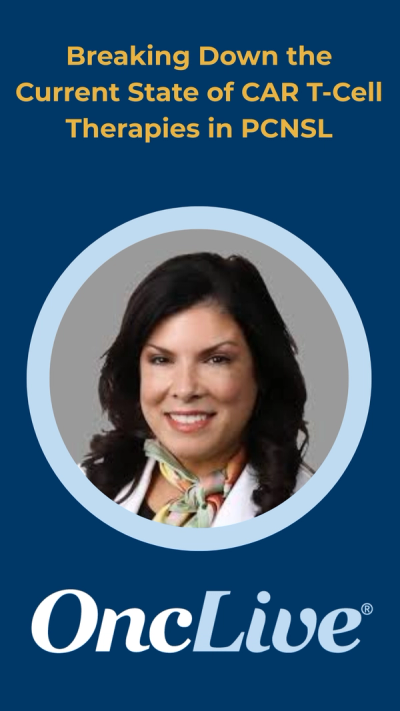
Breaking Down the Current State of CAR T-Cell Therapies in PCNSL
5 months ago
by
Ashley Sumrall, MD

1:11
The Evolution of Follicular Lymphoma Management
6 months ago
by
Amitkumar Mehta, MD
3:48
OncLive News Roundup for the Week of 3/8
7 months ago
by
Chris Ryan(+1 more)
Podcasts































































Advertisement
More News

The top 5 OncLive TV videos of the week cover insights in ovarian cancer, breast cancer, head and neck cancer, pancreatic cancer, and follicular lymphoma.
Antibodies directed against TNFR2, a regulator in the tumor microenvironment that promotes tumor cell proliferation, have shown promise in T-cell lymphoma and ovarian cancer.

In case you missed any, read a recap of the episodes of OncLive On Air that aired in July 2026.

Docirbrutinib generated responses in patients with relapsed/refractory CLL/SLL, MCL, and other non-Hodgkin lymphomas.

A rituximab biosimilar has been approved by the FDA.

Overall survival was the sole US primary end point of the phase 3 EPCORE DLBCL-1 trial evaluating epcoritamab and was not met.

Higher EO2463-induced CD8 T-cell expansion was associated with significantly longer PFS in indolent non-Hodgkin lymphoma.
The IL-10–expressing anti-CD19 CAR T-cell therapy produced a 92.9% complete response rate and a 92.9% 1-year overall survival rate in high-risk relapsed/refractory DLBCL.

Experts shared the key data that stood out in hematologic oncology at the 2026 ASCO Annual Meeting.

Readouts across LBCL, relapsed/refractory myeloma, and CALR-mutated myelofibrosis anchored the hematology data presented at EHA 2026.

In case you missed any, check out our recap of the episodes of OncLive On Air that aired in June 2026.

Hematologic oncology experts outline the top data and themes to emerge from the 2026 EHA Congress

The European Commission has approved epcoritamab plus lenalidomide and rituximab for relapsed or refractory follicular lymphoma.
Epcoritamab plus lenalidomide reduced the risk of disease progression or death vs R-GemOx in relapsed/refractory DLBCL in the EPCORE DLBCL-4 trial.
The top 5 OncLive TV videos of the week cover insights in breast cancer, lymphoma, melanoma, prostate cancer, and ovarian cancer.

IV ST-001 nanoFenretinide produced a 28% response rate in heavily pretreated cutaneous T-cell lymphoma in a first-in-human phase 1a trial.
Real-world treatment with pegylated interferon alfa-2a tolerable, and treatment-related AEs were manageable in patients with cutaneous T-cell lymphoma.
Julia Scarisbrick, MD, explains how better recognition of mogamulizumab-associated rash is moving the drug earlier in the mycosis fungoides and Sézary treatment course.
Julia Scarisbrick reviews real-world data showing mogamulizumab eased itch, pain, flaking, sleep, and fatigue in MF and Sézary syndrome as early as 4 weeks.

Translational profiling tied CCR4 loss, IL enrichment, and BCL-2 upregulation to mogamulizumab resistance; venetoclax may be a combination partner.

Real-world mogamulizumab reduced skin symptoms and improved health-related quality of life in patients with mycosis fungoides and Sézary syndrome.
Dibotatug was deemed tolerable and produced robust responses across subgroups of patients with relapsed/refractory cytotoxic T/NK cell lymphomas.
Christiane Querfeld, MD, PhD, discusses why early symptom relief drives adherence in mycosis fungoides and Sézary syndrome, and reframing MAR as an immune flare helps patients stay the course.
Christiane Querfeld, MD, PhD, discusses how targeted sequencing data show Sézary syndrome responds to mogamulizumab better than mycosis fungoides.
Jan P. Nicolay, MD, PhD, explains how early single-cell data suggest mogamulizumab resistance switches on anti-apoptotic survival proteins.
Advertisement
Advertisement
Trending on OncLive
1
FDA Approves Tucatinib Plus Trastuzumab/Pertuzumab as First-Line Maintenance in Advanced HER2+ Breast Cancer
2
VIR-5500 Receives FDA Fast Track Designation in mCRPC
3
Iberdomide Plus Daratumumab/Dexamethasone Yields Significant PFS Benefit in R/R Myeloma
4
FDA Approves Atezolizumab Plus Chemo for Stage III dMMR Colon Cancer
5