
Non-Hodgkin Lymphoma
Latest News
Advertisement
Latest Videos









































Advertisement
More News
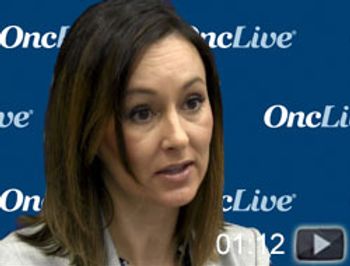
Loretta J. Nastoupil, MD, Department of Lymphoma and Myeloma, Division of Cancer Medicine, The University of Texas MD Anderson Cancer Center, discusses an early-phase trial looking at the triplet regimen of TGR1202, ublituximab, and ibrutinib (Imbruvica) in patients with chronic lymphocytic leukemia (CLL) and non-Hodgkin lymphoma (NHL).
Patients with newly diagnosed mantle cell lymphoma assigned to frontline chemotherapy had a survival advantage when they were able to receiver higher dose intensities of bortezomib (Velcade).
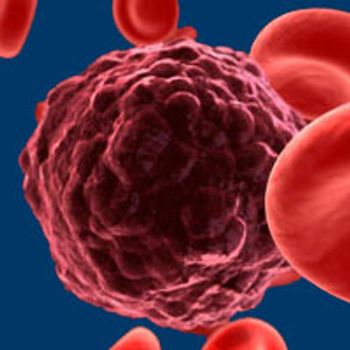
Researchers in China have concluded that mutation of the SF3B1 gene is “significantly associated” with poorer progression-free survival and overall survival in patients with chronic lymphocytic leukemia.
Long-term results from the Nordic MCL2 and MCL3 trials showed patients with mantle cell lymphoma who are positive for minimal residual disease following allogenic stem cell transplant had significantly shorter survival.
David J. Andorsky, MD, medical oncology/hematology, Rocky Mountain Cancer Centers, discusses the phase IIIb randomized MAGNIFY study of lenalidomide (Revlimid) plus rituximab (Rituxan) followed by maintenance therapy in relapsed/refractory non-Hodgkin lymphoma, focusing on a cohort of patients with follicular lymphoma.
The FDA has granted a priority review to a new drug application for acalabrutinib for patients with previously-treated mantle cell lymphoma.
The FDA has granted acalabrutinib a breakthrough therapy designation for patients with previously-treated mantle cell lymphoma.
Kite Pharma has submitted a Marketing Authorization Application to the European Medicines Agency for axicabtagene ciloleucel (axi-cel) to treat 3 forms of non-Hodgkin lymphoma.

Treatment with CD19 chimeric antigen receptor-modified T-cell therapy induced a high response rate in patients with high-risk, ibrutinib-refractory chronic lymphocytic leukemia.




Sattva S. Neelapu, MD, discusses the latest results for axicabtagene ciloleucel (KTE-C19) for transplant-ineligible patients with relapsed/refractory non-Hodgkin lymphoma and the CAR T-cell therapy’s potential to be a new standard of care.
Loretta Nastoupil, MD, discusses the positive interim analysis and shared her thoughts on areas of future investigation for patients with relapsed follicular lymphoma.

The European Medicines Agency's Committee for Medicinal Products for Human Use has recommended approval of obinutuzumab in the frontline setting for the treatment of patients with follicular lymphoma.
Matthew J. Matasar, MD, attending physician, Memorial Sloan Kettering Cancer Center, discusses antibody drug conjugates in B-cell malignancies.
Herve Tilly, MD, PhD, Centre Henri Becquerel, discusses a study of polatuzumab vedotin combined with rituximab (Rituxan), cyclophosphamide, doxorubicin and prednisone (PLOA-R-CHP) in patients with previously untreated diffuse large B-cell lymphoma.
Advertisement
Advertisement
Trending on OncLive
1
Ifinatamab Deruxtecan BLA Voluntarily Withdrawn in Previously Treated Extensive-Stage SCLC
2
Etentamig Improves Response and PFS vs Standard Therapies in Triple-Class Exposed Relapsed/Refractory Myeloma
3
Tegavivint Plus Osimertinib Shows Early Activity in First-Line EGFR-Mutated NSCLC
4
FDA Approves Lirafugratinib for Pretreated, Locally Advanced or Metastatic Cholangiocarcinoma
5