
Non-Hodgkin Lymphoma
Latest News
Advertisement
Latest Videos









































Advertisement
More News
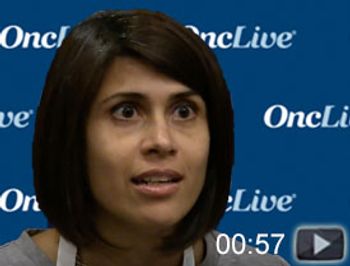
Reem Karmali, MD, assistant professor of medicine (hematology and oncology), Feinberg School of Medicine, Northwestern University, discusses the FDA approval of axicabtagene ciloleucel (KTE-C19; axi-cel) for the treatment of patients with non-Hodgkin lymphoma.

Narendranath Epperla, MD, discusses the evolving treatment landscape for patients with follicular lymphoma and mantle cell lymphoma.
Treatment with copanlisib led to a median progression-free survival of 11.2 months and objective response rate of 59.2% in patients with relapsed/refractory indolent lymphoma.
Jane N. Winter, MD, professor of medicine, Division of Hematology/Oncology, Northwestern University, discusses the promise of chimeric antigen receptor (CAR) T-cell therapy in hematologic malignancies.

Multivariate analysis of the Nordic MCL2 and MCL3 trials showed that the presence of TP53 mutations predicted worse overall survival in younger patients with mantle cell lymphoma.
Jane N. Winter, MD, professor of medicine, Division of Hematology/Oncology, Northwestern University, discusses response in follicular lymphoma.
Survival for patients with grade 1 to 2 follicular lymphoma is now measured in decades to coincide with improvements in therapy.

Treatment with the BCL-2 inhibitor venetoclax (Venclexta) led to negative minimal residual disease (MRD) status in 40% of evaluable patients with relapsed/refractory chronic lymphocytic leukemia.

Treatment with the autologous anti-CD19 CAR T-cell therapy axicabtagene ciloleucel significantly improved outcomes in refractory non-Hodgkin lymphoma compared with standard therapies.

Patients with refractory chronic lymphocytic leukemia achieved a high-response rate with CD19-targeted CAR T-cell therapy JCAR014.

The combination of venetoclax and rituximab significantly improved progression-free survival compared with rituximab plus bendamustine in patients with relapsed or refractory chronic lymphocytic leukemia (CLL),
The FDA has granted an accelerated approval to copanlisib (Aliqopa) as a treatment for patients with relapsed follicular lymphoma who have received at least 2 least prior systemic therapies.
The FDA has granted a priority review to a supplemental biologics license application for obinutuzumab (Gazyva) in combination with chemotherapy, followed by obinutuzumab alone, for the first-line treatment of patients with follicular lymphoma.
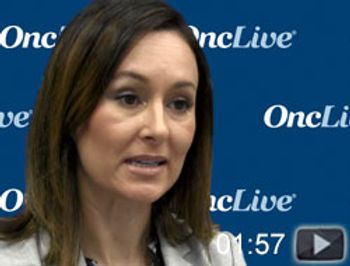
Loretta J. Nastoupil, MD, Department of Lymphoma and Myeloma, Division of Cancer Medicine, The University of Texas MD Anderson Cancer Center, discusses efficacy findings of a study investigating the combination of pembrolizumab (Keytruda) and rituximab (Rituxan) in patients with relapsed follicular lymphoma.
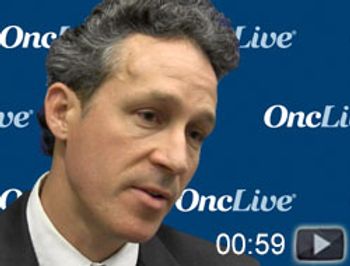
David J. Andorsky, MD, medical oncology/hematology, Rocky Mountain Cancer Centers, discusses the next steps of the phase IIIb randomized MAGNIFY study of lenalidomide (Revlimid) plus rituximab (Rituxan) followed by maintenance therapy in relapsed/refractory non-Hodgkin lymphoma, focusing on a cohort of patients with follicular lymphoma.
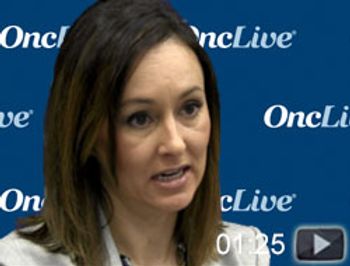
Loretta J. Nastoupil, MD, Department of Lymphoma and Myeloma, Division of Cancer Medicine, The University of Texas MD Anderson Cancer Center, discusses the questions researchers are currently facing with TGR1202 in patients with chronic lymphocytic leukemia (CLL).

The FDA has granted a priority review to a supplemental biologics license application for brentuximab vedotin (Adcetris) for the treatment of patients with cutaneous T-cell lymphoma.
Advertisement
Advertisement
Trending on OncLive
1
Ifinatamab Deruxtecan BLA Voluntarily Withdrawn in Previously Treated Extensive-Stage SCLC
2
Etentamig Improves Response and PFS vs Standard Therapies in Triple-Class Exposed Relapsed/Refractory Myeloma
3
Tegavivint Plus Osimertinib Shows Early Activity in First-Line EGFR-Mutated NSCLC
4
FDA Approves Lirafugratinib for Pretreated, Locally Advanced or Metastatic Cholangiocarcinoma
5