Toni K. Choueiri, MD, discusses recent advancements and shares his insight on the future treatment landscape of patients with kidney cancer.
Toni K. Choueiri, MD, discusses recent advancements and shares his insight on the future treatment landscape of patients with kidney cancer.

Heather Dalton, MD, discusses the developing standard of care for the frontline treatment of patients with ovarian cancer.
Paul A. Hamlin, MD, discusses exciting updates from the 2017 ASH Annual Meeting throughout the large cell lymphoma space, as well as other advances on the horizon.
Michael J. Mauro, MD, discusses updates presented at the 2017 ASH Annual Meeting and the advances that are on the horizon for patients with chronic myeloid leukemia.

Frederick L. Locke, MD, discusses the ongoing ZUMA-2 trial investigating axi-cel for patients with mantle cell lymphoma.
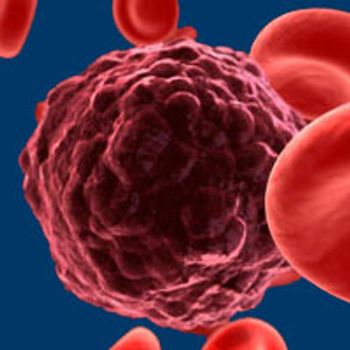
Alison J. Moskowitz, MD, discusses the latest treatment advances across subtypes of lymphoma.
Nadine M. Tung, MD, discusses the role of PARP inhibitors for patients with BRCA-positive breast cancer and the importance of genetic testing.

Lindsay West, MD, discusses the relationship between low-fat or high-fat diets and endometrial cancer and how these can be investigated further.
Jeanne M. Palmer, MD, discusses the current treatment landscape for patients with polycythemia vera and highlighted the impact that ruxolitinib has had on the second-line treatment setting.
Adjuvant treatment of patients with intermediate- and high-risk melanoma has changed drastically in the past decade, according to John M. Kirkwood, MD.
Thomas E. Stinchcombe, MD, discussea existing and emerging first-line regimens coming through the pipeline for the treatment of patients with non–small cell lung cancer.
Mark J. Mann, MD, discusses the developing treatment landscape for patients with nonmetastatic CRPC.

The ongoing phase IIIb PRONOUNCE trial is seeking to determine if the gonadotropin-releasing hormone receptor antagonist degarelix (Firmagon) is more likely to reduce cardiovascular events in patients with advanced prostate cancer and CVD versus the GnRH agonist receptor leuprolide.
There are multiple therapeutic options in development for the treatment of patients with HER2-positive breast cancer, further adding to the regimens available, explains Frances Valdes-Albini, MD.

The incidence of neuroendocrine tumors has increased 5-fold over the past 30 years, making it the second most prevalent diagnosis in gastrointestinal (GI) malignancies.
Mark D. Pegram, MD, discusses the evolving treatment paradigm of HER2-positive breast cancer.
Heather Han, MD, discusses emerging approaches for combating endocrine resistance in patients with ER-positive breast cancer.
Alan Skarbnik, MD, shares his insight on the latest updates in chronic lymphocytic leukemia presented at the 2017 ASH Annual Meeting.
Tanios Bekaii-Saab, MD, discusses emerging treatments offering hope to patients with pancreatic cancer.
Bert H. O’Neil, MD, discusses the role of molecular testing throughout GI cancers and highlights the current and developing treatment landscape for patients with colorectal cancer.
Jared Weiss, MD, shares his insight on challenges in the field of non–small cell lung cancer, such as optimal sequencing.

Veda Giri, MD, discusses the developing role of genetic testing for the screening and management of patients with prostate cancer.
Jeffrey Melson Clarke, MD, discusses the latest developments with biomarkers in NSCLC.
Renier J. Brentjens, MD, PhD, discusses the emergence of BCMA as a target for CAR T-cell therapy and other next steps for the field.
Andre Goy, MD, discusses the excitement surrounding acalabrutinib, as well as emerging ibrutinib combination strategies for the treatment of patients with mantle cell lymphoma.
John Gordan, MD, PhD, discusses the challenges of treating patients with biliary tract cancers and novel therapies in development.
Neil E. Kay, MD, discusses the available options and sequencing challenges for patients with relapsed/refractory chronic lymphocytic leukemia, as well as next steps for advancing outcomes for this patient population.
Ann H. Klopp, MD, PhD, discusses optimizing the use of chemoradiation and the future of the treatment landscape in endometrial cancer.
Alan P. Venook, MD, discusses the significance of the findings of the international IDEA study investigating doses of FOLFOX for patients with colon cancer.
Heather Greene, NP, discusses the safety profile for patients with lung cancer receiving immunotherapy, and the importance for reporting immune-related adverse events.
January 13th 2017
January 16th 2017
January 20th 2017