
Non-Hodgkin Lymphoma
Latest News
Advertisement
Latest Videos









































Advertisement
More News
Results from the phase III SABRINA trial showed that subcutaneous administration of rituximab produced nearly identical response rates and toxicity as IV administration in the first-line treatment of follicular lymphoma.
The first cerebral edema death in the ZUMA-1 CAR T-cell therapy trial was disclosed today by Kite Pharma on a conference call with investors announcing the company’s first quarter financial results.

Sattva S. Neelapu, MD, discusses the ZUMA-1 trial and the potential impact of these results on patients with non-Hodgkin lymphoma.
Stephen M. Ansell, MD, PhD, discusses the potential of immunotherapy agents in lymphoma, ongoing clinical trials, and where this blends in with chimeric antigen receptor (CAR) T-cell therapy.
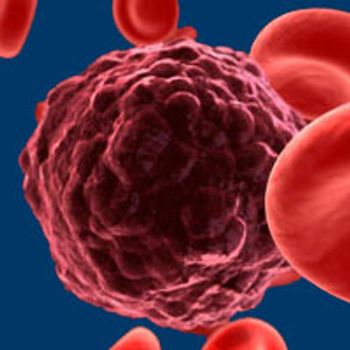
Achieving a complete response following ABVD chemotherapy offered the best chance for survival for patients with chronic lymphocytic leukemia who developed Hodgkin lymphoma following Richter transformation, according to a retrospective study published in the American Journal of Hematology.

The FDA has granted a breakthrough therapy designation to tisagenlecleucel-T (CTL019) for use as a treatment for adult patients with relapsed/refractory diffuse large B-cell lymphoma after the failure of at least 2 prior therapies.
Nathan Fowler, MD, discusses the current management of high-risk follicular lymphoma and ongoing developments in the field.

Frederick L. Locke, MD, discusses the ZUMA-1 trial in non-Hodgkin lymphoma and the next steps going forward.
Gilles Salles MD, PhD, Centre Hospitalier Lyon-Sud, discusses new agents being investigated for patients with follicular lymphoma.
According to results from the phase II CHRONOS-1 trial, a majority of patients with relapsed or refractory indolent lymphoma responded to treatment with the PI3K dual-isoform inhibitor copanlisib.
The flexibility of CAR T cells to perform multiple functions was associated with the level of clinical activity elicited for patients with advanced non-Hodgkin’s lymphoma, according to a retrospective analysis presented at the 2017 AACR Annual Meeting.
Results of a phase II trial showed that more than 80% of patients with refractory non-Hodgkin lymphoma achieved objective responses to treatment with the chimeric antigen receptor (CAR) T-cell therapy axicabtagene ciloleucel.
Sattva S. Neelapu, MD, associate professor, The University of Texas MD Anderson Cancer Center, discusses primary results of the ZUMA-1 trial investigating axicabtagene ciloleucel (KTE-C19) in patients with refractory aggressive non-Hodgkin lymphoma.
A biologics license application has been submitted for axicabtagene ciloleucel as a potential treatment for transplant ineligible patients with relapsed or refractory aggressive non-Hodgkin lymphoma.
Darrin M. Beaupre, MD, head of Early Development and Immunotherapy at Pharmacyclics, discusses a trial of ibrutinib (Imbruvica) in diffuse large B-cell lymphoma (DLBCL).
Ahmet Dogan, MD, PhD, chief of Hematopathology Service, Departments of Pathology and Laboratory Medicine at Memorial Sloan Kettering Cancer Center, discusses the updated World Health Organization (WHO) classification and how it impacts treatment decisions for patients with diffuse large B-cell lymphoma (DLBCL).
Nathan Fowler, MD, associate professor, The University of Texas MD Anderson Cancer Center, discusses the differences in response to the same therapy for patients with follicular lymphoma.
Controlling indolent non-Hodgkin lymphoma remains a priority as it has the potential to transform to aggressive or high-grade lymphoma.
Leo I. Gordon MD, discusses results from the TRANSCEND trial and the next steps with chimeric antigen receptor T-cell therapy in non-Hodgkin lymphoma.

Juno therapeutics has shifted its focus toward the development of JCAR017 for relapsed/refractory diffuse large B-cell lymphoma after a series of toxicity-related setbacks culminated in the need to halt the development of JCAR015.
Single-agent ibrutinib induced a response rate of 90% at a median follow-up of 18.1 months in rituximab-refractory patients with Waldenstrom macroglobulinemia, according to results from an open-label substudy of the ongoing phase III iNNOVATE trial published in The Lancet Oncology.
Gilles Salles, MD, PhD, Centre Hospitalier Lyon-Sud, discusses frontline treatment management for patients with follicular lymphoma.
Nathan Fowler, MD, associate professor, The University of Texas MD Anderson Cancer Center, discusses the FLIPI scoring system in follicular lymphoma.
Treatment with axicabtagene ciloleucel demonstrated an objective response rate of 82% and a complete response rate of 54% for patients with aggressive non-Hodgkin lymphoma.
Axicabtagene ciloleucel had an objective response rate of 76% and a complete response rate of 47% in patients with aggressive non-Hodgkin lymphoma followed for at least 1 month.
Advertisement
Advertisement
Trending on OncLive
1
Ifinatamab Deruxtecan BLA Voluntarily Withdrawn in Previously Treated Extensive-Stage SCLC
2
Etentamig Improves Response and PFS vs Standard Therapies in Triple-Class Exposed Relapsed/Refractory Myeloma
3
Tegavivint Plus Osimertinib Shows Early Activity in First-Line EGFR-Mutated NSCLC
4
FDA Approves Lirafugratinib for Pretreated, Locally Advanced or Metastatic Cholangiocarcinoma
5