






Non-Hodgkin Lymphoma
Latest News
Advertisement
Latest Videos




































































Advertisement
More News

Allison C. Rosenthal, DO, hematology consultant, Mayo Clinic, discusses the FDA approval of of ibrutinib (Imbruvica) as a treatment for patients with marginal zone lymphoma (MZL).

The FDA has granted an accelerated approval to ibrutinib as a treatment for patients who require systemic therapy with marginal zone lymphoma following at least one prior anti-CD20-based therapy, based on findings from a single-arm phase II study.
Danelle James, MD, discusses the updated RESONATE-2 data presented at the ASH Annual Meeting and the next steps with ibrutinib in CLL.

The fields of mantle cell lymphoma and diffuse large B-cell lymphoma had a handful of updates presented during the 2016 ASH Annual Meeting.


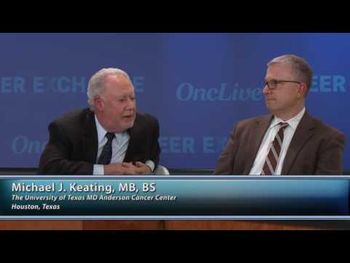







KTE-C19, an investigational CAR T-cell therapy, recently demonstrated positive results for patients with chemorefractory aggressive non-Hodgkin lymphoma.

The regimen of rituximab plus CHOP chemotherapy has been the standard of care for patients with previously untreated diffuse large B-cell lymphoma for several years, and it appears it will remain that way for now, despite recent research to find novel alternatives.
Advertisement
Advertisement
Trending on OncLive
1
Ifinatamab Deruxtecan BLA Voluntarily Withdrawn in Previously Treated Extensive-Stage SCLC
2
Etentamig Improves Response and PFS vs Standard Therapies in Triple-Class Exposed Relapsed/Refractory Myeloma
3
Tegavivint Plus Osimertinib Shows Early Activity in First-Line EGFR-Mutated NSCLC
4
FDA Approves Lirafugratinib for Pretreated, Locally Advanced or Metastatic Cholangiocarcinoma
5