



Non-Hodgkin Lymphoma
Latest News
Advertisement
Video Series


Latest Videos










































Advertisement
More News

The FDA has approved Darzalex Faspro plus VRd for select multiple myeloma and several applications are under regulatory review in lung and GI cancers.

Dr Phillips discusses updated data from the EPCORE NHL-1 trial investigating epcoritamab monotherapy in patients with relapsed/refractory LBCL.

Sofi-cel has received FDA breakthrough therapy designation for heavily pretreated patients with relapsed/refractory T-ALL and T-LBL.
Epcoritamab displayed a significant PFS benefit vs chemotherapy in relapsed/refractory DLBCL.

Treatment with an allogeneic CD19-directed CAR natural killer–cell therapy led to an ongoing complete response at 15 months in Waldenstrom lymphoma.
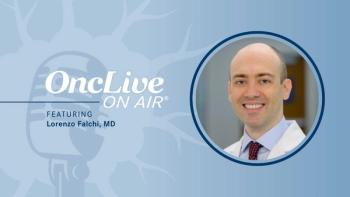
Dr Falchi discusses why the FDA approval of epcoritamab plus lenalidomide/rituximab is clinically meaningful for relapsed/refractory follicular lymphoma.
Lorenzo Falchi, MD, discusses the significance of the FDA approval of epcoritamab plus rituximab and lenalidomide for relapsed/ refractory follicular lymphoma.
A rusfertide NDA for polycythemia vera has been submitted to the FDA, a tafasitamab combination boosts PFS over R-CHOP in DLBCL, and more.

Here is your Q1 2026 preview spotlighting 5 FDA decisions to watch, including upcoming PDUFAs for tabelecleucel, pembrolizumab, and more.

Tafasitamab/lenalidomide added to first-line R-CHOP improved PFS vs R-CHOP alone with no new safety signals in patients with DLBCL.
The FDA cleared narsoplimab for TA-TMA, an NDA seeking approval of bezuclastinib in nonadvanced systemic mastocytosis has been submitted, and more.
Japan’s Ministry of Health, Labour and Welfare has approved tafasitamab plus rituximab and lenalidomide for relapsed/refractory follicular lymphoma.
Here is your cheat sheet to all therapeutic options that were cleared by the FDA in December 2025 spanning tumor types.

Franco Cavalli, MD, has dedicated his life to treating patients, developing drugs, and bringing higher quality cancer care to areas in need of improvement

Glofitamab and epcoritamab were both associated with early disease progression in relapsed/refractory large B-cell lymphoma.
The FDA approved subcutaneous mosunetuzumab for relapsed/refractory follicular lymphoma and granted a pair of breakthrough therapy designations.
The FDA has granted accelerated approval to subcutaneous mosunetuzumab for relapsed/refractory follicular lymphoma after 2 prior therapies.
Experts reflect on pivotal data, emerging agents, and highly-anticipated trends spanning CML, CLL, B-cell lymphomas, and other hematologic malignancies.
Tafasitamab plus lenalidomide and rituximab has been approved by the European Commission in relapsed/refractory follicular lymphoma.

The top 5 OncLive TV videos of the week cover insights in acute myeloid leukemia, follicular lymphoma, multiple myeloma, and Ph+ B-ALL.
With longer median follow-up, talquetamab plus pomalidomide produced an ORR of 85.7% in patients with relapsed/refractory multiple myeloma in MonumenTAL-2.
Experts reflect on pivotal data from the 2025 ASH Annual Meeting that are set to change practice in AML, MZL, FL, and multiple myeloma.
Manali Kamdar, MD, discusses the long-term efficacy findings with lisocabtagene maraleucel in patients with relapsed/refractory large B-cell lymphoma.
GLPG5101 produced responses and had a manageable safety profile in relapsed/refractory non-Hodgkin lymphoma, including mantle cell lymphoma.

Lori A. Leslie, MD, discusses 3-year efficacy findings with epcoritamab plus rituximab and lenalidomide in previously untreated follicular lymphoma.
Advertisement
Advertisement
Trending on OncLive
1
Ifinatamab Deruxtecan BLA Voluntarily Withdrawn in Previously Treated Extensive-Stage SCLC
2
Tegavivint Plus Osimertinib Shows Early Activity in First-Line EGFR-Mutated NSCLC
3
FDA Approves Lirafugratinib for Pretreated, Locally Advanced or Metastatic Cholangiocarcinoma
4
FDA Grants Priority Review to Perioperative Durvalumab Plus Neoadjuvant Enfortumab Vedotin in MIBC
5