

Tucatinib plus HP improved median investigator-assessed PFS by 8.6 months as first-line maintenance vs HP alone in HER2-positive metastatic breast cancer.
Tucatinib plus HP improved median investigator-assessed PFS by 8.6 months as first-line maintenance vs HP alone in HER2-positive metastatic breast cancer.
Samer Alkassis, MD, PhD, discusses how cathepsin protease expression may correlate with survival outcomes to trastuzumab deruxtecan in metastatic breast cancer.
Frontline treatment with T-DXd plus pertuzumab improved QOL vs THP in patients with HER2-positive advanced or metastatic breast cancer.
Nuvisertib demonstrated clinical activity as both a single agent and in combination with momelotinib for patients with relapsed/refractory myelofibrosis.

Erika P. Hamilton, MD, discusses data from HER2CLIMB-05 evaluating tucatinib plus trastuzumab/pertuzumab first-line maintenance in HER2-positive breast cancer.
PRO data from ASCENT-03 showed that the mean change in physical functioning from baseline to week 25 favored sacituzumab govitecan over chemotherapy.
Abemaciclib monotherapy displayed a clinical benefit in some patients with HR+/HER2– breast cancer after CDK4/6 inhibitor therapy.
The multimodal ICM+ model was prognostic for long-term recurrence following treatment in early breast cancer.
Sankalp Arora, MD, discusses the efficacy of azacitidine/venetoclax/gilteritinib in newly diagnosed, adverse-risk, FLT3 wild-type acute myeloid leukemia.
Giredestrant improved invasive disease-free survival vs endocrine therapy in ER-positive, HER2-negative, medium- and high-risk early breast cancer.
Adjuvant AI therapy improved DFS and TTDR vs a SERM in patients with hormone receptor–positive, HER2-positive early breast cancer.
David Rimm, MD, PhD, discusses key conceptual considerations and discrepancies regarding the mechanisms of action of ADCs in breast cancer treatment.
Axi-cel led to durable responses and manageable safety in patients with relapsed/refractory follicular lymphoma.
Manali Kamdar, MD, discusses the long-term efficacy findings with lisocabtagene maraleucel in patients with relapsed/refractory large B-cell lymphoma.
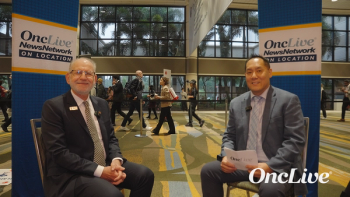
Amandeep Salhotra, MD, and Robert Negrin, MD, sit down with Chandler Park, MD, FACP, to discuss the latest abstracts in graft-vs-host disease presented during the 2025 ASH Annual Meeting & Exposition.
Pelabresib plus ruxolitinib improved primary and secondary efficacy end points vs ruxolitinib alone in JAK inhibitor-naive myelofibrosis.
Anne Vincent-Salomon, PR, MD, PhD, HDR, highlights persistent gaps that continue to challenge reproducibility and clinical interpretation in the diagnostic classification of invasive lobular carcinoma.

Long-term follow-up data from the AGAVE-201 trial showed that safety and survival outcomes with axatilimab were maintained in patients with chronic GVHD.
The in vivo, BCMA-directed CAR T-cell therapy produced initial MRD-negative responses and persistent CAR T-cell expansion in 4 patients with relapsed/refractory myeloma.
GC012F/AZD0120 produced responses in high-risk, transplant-eligible multiple myeloma, as well as transplant-ineligible, newly diagnosed disease.
Early teclistamab discontinuation after deep response showed PFS comparable to continuous therapy in relapsed/refractory myeloma in the LimiTEC trial.
Teclistamab/daratumumab improved survival outcomes and led to deep MRD-negative responses vs daratumumab-based regimens in relapsed/refractory myeloma.
Pitrobrutinib monotherapy showed significant efficacy improvements in first-line CLL/SLL compared with BR treatments.
Zanubrutinib plus venetoclax maintained a 36-month PFS rate of 87% (95% CI, 78.6%–92.4%) in treatment-naive CLL/SLL.
GLPG5101 produced responses and had a manageable safety profile in relapsed/refractory non-Hodgkin lymphoma, including mantle cell lymphoma.
The safety profile associated with MK-1045 administration was manageable with dose interruption and standard medical care.
Zanubrutinib shows sustained 6-year efficacy and safety in treatment-naive CLL/SLL, outperforming BR with durable PFS and high response rates.
Lori A. Leslie, MD, discusses 3-year efficacy findings with epcoritamab plus rituximab and lenalidomide in previously untreated follicular lymphoma.
Fadi Haddad, MD, discusses the efficacy of asciminib in patients with newly diagnosed chronic myeloid leukemia as seen in a phase 2 trial.
Triplet therapy with tagraxofusp/azacitidine/venetoclax led to high remission rates and had a safety profile similar to that of tagraxofusp alone in BPDCN.