

Over a 4-year period, most patients with lower-risk myelofibrosis experienced disease progression, according to the prospective MOST study.
Over a 4-year period, most patients with lower-risk myelofibrosis experienced disease progression, according to the prospective MOST study.

Clinically meaningful activity was found across all subgroups in a posthoc subgroup analysis of patients with MCL treated with liso-cel.

Zanubrutinib/venetoclax elicited a 100% overall response rate in untreated chronic lymphocytic leukemia harboring 17p deletions or TP53 mutations.
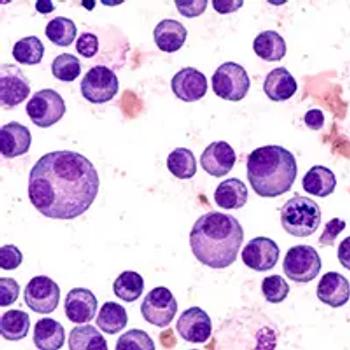
Ide-cel induced improved PFS outcomes in patients with relapsed/refractory multiple myeloma with characteristics including lower tumor burden.

Talquetamab proved safe and effective for relapsed/refractory myeloma, even in patients with comorbidities.

Clinical benefit generated from treatment with lurbinectedin plus irinotecan was noted across sensitive and resistant patient populations with SCLC.

Axi-cel administration was safe and clinically active in relapsed/refractory primary and secondary central nervous system lymphoma.
The strength of mKRAS-specific T-cell responses produced by ELI-002 7P correlated with tumor biomarker responses in pancreatic and colorectal cancer.

A novel radioligand therapy, JNJ-6420, demonstrates potential in treating mCRPCr, delivering sustained responses following only 1-2 doses.
The investigational PROTAC AR degrader ARV-766 showed promising clinical activity and tolerability in patients with metastatic castration-resistant prostate cancer.

MammaPrint high 2 HR-positive/HER2-negative early-stage breast cancer exhibited a heightened immune active state.

Linvoseltamab elicited outcomes equivalent to those seen with teclistamab in patients with triple-class exposed relapsed/refractory multiple myeloma.

Dostarlimab plus carboplatin and paclitaxel improved PFS and OS in dMMR/MSI-H primary advanced or recurrent endometrial cancer.

Pembrolizumab and platinum-based therapy elicited safe and efficacious outcomes in penile squamous cell carcinoma.
Timothy Hughes, MD, MBBS, FRACP, FRCPA discussed findings from the ASC4FIRST trial comparing asciminib vs investigator-selected TKIs in CP-CML.

Partition overall survival data indicated that nivolumab plus cabozantinib extended treatment-free survival vs sunitinib in advanced renal cell carcinoma.
Cretostimogene grenadenorepvec plus pembrolizumab sustains high CR rate in NMIBC according to the phase 2 CORE-001 trial.

Apalutamide/ADT maintains quality of life, demonstrates improved PSA progression-free survival in recurrent prostate cancer according to PRESTO trial.

Trastuzumab deruxtecan improved responses and survival vs T-DM1 in HER2+ metastatic breast cancer after prior exposure to trastuzumab and a taxane.

Retreatment with daratumumab-based regimens led to a similar ORR vs initial daratumumab treatment in relapsed/refractory myeloma.

Treatment cessation of enzalutamide-containing regimens in responding patients had no impact on QOL in biochemically recurrent nmHSPC.

Updated Analysis from Phase 1/2 MajesTEC-1 trial support the use of prophylactic tocilizumab to reduce the risk of cytokine release syndrome associated with outpatient administration of teclistamab.

Ana Christina Garrido-Castro, MD, on sacituzumab govitecan with/without pembrolizumab in metastatic hormone receptor–positive, HER2-negative breast cancer.

Olverembatinib showed antitumor activity in patients with TKI-resistant, SDH-deficient GISTs and paraganglioma.
TTFields therapy plus best supportive care increased time to first intracranial progression by 10.6 months in patients with NSCLC brain metastases.

Jennifer R. Eads, MD, discusses neoadjuvant pCR rates with the addition of nivolumab to neoadjuvant chemoradiation in esophageal/GEJ cancer.

Jean-Marc Classe, MD, PhD, discusses lymphadenectomy omission following cytoreductive surgery after chemotherapy in advanced epithelial ovarian cancer.

Petosemtamab paired with pembrolizumab had early clinical efficacy when used as first-line treatment in select head and neck squamous cell carcinoma

Nivolumab plus ipilimumab and chemotherapy elicited a durable, long-term survival benefit vs chemotherapy alone in metastatic NSCLC.

In patients with NSCLC refractory to anti-PD(L)1 therapy, CAN-2409 (adenovirus) plus valacyclovir co-administered with ICI therapy showed acceptable tolerability and potential for immune modulation