
The overall response rate achieved with ruxolitinib at day 28 proved to be higher than what was achieved with best available therapy in patients with steroid-refractory acute graft-vs-host disease, irrespective of organ involvement.
The 48th Annual Meeting of the EBMT meeting reporter is a publication encompassing the pivotal news presented during the conference, which spans clinical updates in hematologic malignancies.
The overall response rate achieved with ruxolitinib at day 28 proved to be higher than what was achieved with best available therapy in patients with steroid-refractory acute graft-vs-host disease, irrespective of organ involvement.
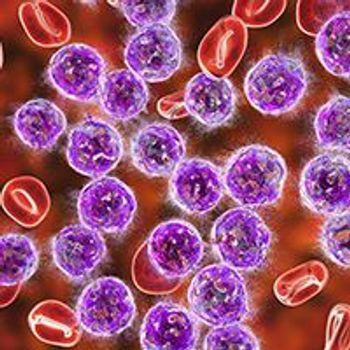
Treatment with a treosulfan-based conditioning regimen led to a superior event-free and overall survival compared with busulfan-based conditioning in patients with acute myeloid leukemia undergoing allogeneic hematopoietic cell transplantation, according to a post-hoc subgroup analysis of the phase 3 MC-FludT.14/L trial.
Pegcetacoplan treatment was associated with hemoglobin stabilization and normalization, as well as a superior change from baseline in hemoglobin levels, which showed a meaningful correction of anemia, in patients with complement inhibitor–naïve paroxysmal nocturnal hemoglobinuria.

Checkpoint inhibitors prior to allogeneic hematopoietic cell transplant improved progression-free survival and relapse incidence in patients with Hodgkin lymphoma, but the treatment did not improve non-relapse mortality or overall survival.
A pediatric patient with severe transplant-associated thrombotic microangiopathy responded to treatment with narsoplimab after experiencing disease progression on eculizumab.

Axicabtagene ciloleucel demonstrated a clinically improvement in quality of life compared with standard of care chemotherapy in the second-line setting for patients with relapsed/refractory large B-cell lymphoma.