
Amin Sobh, PhD, discusses findings from a study investigating the immune surveillance–modulating capabilities of NSD2 overexpression in multiple myeloma.
Amin Sobh, PhD, discusses findings from a study investigating the immune surveillance–modulating capabilities of NSD2 overexpression in multiple myeloma.

Bently P. Doonan, MD, discusses treatment strategies for patients with advanced melanoma who have progressed on checkpoint inhibitors.
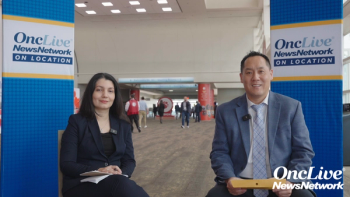
S. Vincent Rajkumar, MD, of Mayo Clinic; Nosha Farhadfar, MD, of Methodist Physician Practices; and Sonali Smith, MD, of University of Chicago Medicine, sit down with Chandler Park, MD, FACP, to discuss the latest in multiple myeloma, graft-vs-host disease, and non-Hodgkin lymphoma, respectively, from the 2024 ASH Annual Meeting.
Ilyas Sahin, MD, discusses the Northstar Response assay and the future of precision oncology in patients with advanced gastrointestinal cancer.
Ilyas Sahin, MD, discusses the potential utility of Northstar Response assay in patients with advanced gastrointestinal cancer.
Ilyas Sahin, MD, discusses an assessment of the Northstar Response in patients with advanced gastrointestinal cancer undergoing active treatment.
Kathryn Hitchcock, MD, PhD, expands on potential clinical implications of the ongoing phase 3 ERAsur trial in metastatic colorectal cancer
Sherise Rogers, MD, MPH, discusses the rationale for investigating irinotecan liposome injection plus 5-fluorouracil, leucovorin, and oxaliplatin in the preoperative treatment of patients with pancreatic adenocarcinoma.
Kathryn Hitchcock, MD, PhD, discusses the rationale for the ongoing phase 3 ERAsur trial investigating total ablative therapy in patients with limited metastatic colorectal cancer and details the methodologies being used in this study.
Bently P. Doonan, MD, discusses the evaluation of targeted inhibition of IRAK-4 with emavusertib in the treatment of metastatic brain melanoma.
Ilyas Sahin, MD, discusses the investigation of milademetan in combination with imipridone ONC201 as a synergistic combination in solid tumors.

Aaron J. Franke, MD, MS, discusses treatment options for patients with uncommon EGFR mutations in non–small cell lung cancer.
Burak Zeybek, MD, discusses key results and clinical implications from the phase 1 NOW trial investigating neoadjuvant olaparib in patients with newly diagnosed, BRCA-mutant ovarian cancer.
In this sixth episode of OncChats: Traveling Through the Lung Cancer Treatment Paradigm, Aaron Franke, MD, discusses the consideration of adverse effects related to treatment with TKIs patients in non–small cell lung cancer.
In this fifth episode of OncChats: Traveling Through the Lung Cancer Treatment Paradigm, Aaron Franke, MD, discusses instances where oral etoposide could be utilized for patients with small cell lung cancer.
Jonathan Chatzkel, MD, discusses the rationale for the phase Ib/II IMMCO-1 trial investigating the combination of atezolizumab plus tivozanib in metastatic castration-resistant prostate cancer and other immunologically cold tumors.
In this fourth episode of OncChats: Traveling Through the Lung Cancer Treatment Paradigm, Aaron Franke, MD, discusses the management of immune-related adverse effects and the goal of mitigating steroid use for patients with lung cancer.
In this third episode of OncChats: Traveling Through the Lung Cancer Treatment Paradigm, Aaron Franke, MD, discusses the expanding role of neoadjuvant therapy in non–small cell lung cancer and efforts to better identify patients who can benefit from curative-intent treatment.

Brian Ramnaraign, MD, discusses the investigation of atezolizumab with tivozanib in castrate-resistant prostate cancer.
In this second episode of OncChats: Traveling Through the Lung Cancer Treatment Paradigm, Aaron Franke, MD, discusses the need for additional circulating biomarkers beyond PD-L1 in non–small cell lung cancer.
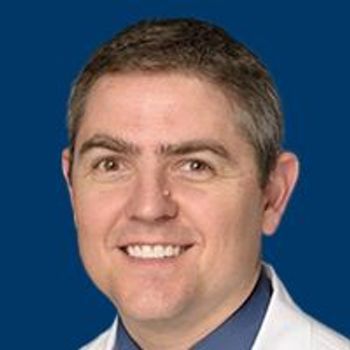
Thomas J. George, MD, FACP, highlights the long-term data from the NRG-GI002 trial, the next steps for exploring subsets of patients who may benefit from the addition of pembrolizumab or veliparib to total neoadjuvant therapy, and what the use of total neoadjuvant therapy has meant for patients with stage II/III locally advanced rectal cancer.
Ilyas Sahin, MD, discusses the background and findings of the phase 2 IMbrave 151 trial in advanced biliary tract cancer.
Sherise Rogers, MD, MPH, discusses the potential of utilizing circulating tumor DNA to help guide second-line treatment decisions in patients with metastatic colorectal cancer.
In this first episode of OncChats: Traveling Through the Lung Cancer Treatment Paradigm, Aaron Franke, MD, discusses the exploration of cellular therapies in non–small cell lung cancer.
Brian Ramnaraign, MD, discusses the evaluation of atezolizumab plus tivozanib in a phase 1b/2 trial in patients with pancreatic, gallbladder, and bile duct cancers.
Thomas J. George, MD, FACP, discusses long-term data from the phase 2 NRG-GI002 trial of total neoadjuvant therapy in locally advanced rectal cancer.
Press Release
Pancreatic cancer often lurks as a silent disease. With no known symptoms, it can progress undetected and spread to other organs.