
Joshua J. Meeks, MD, PhD, explains how enfortumab vedotin plus pembrolizumab is reshaping organ preservation in MIBC.
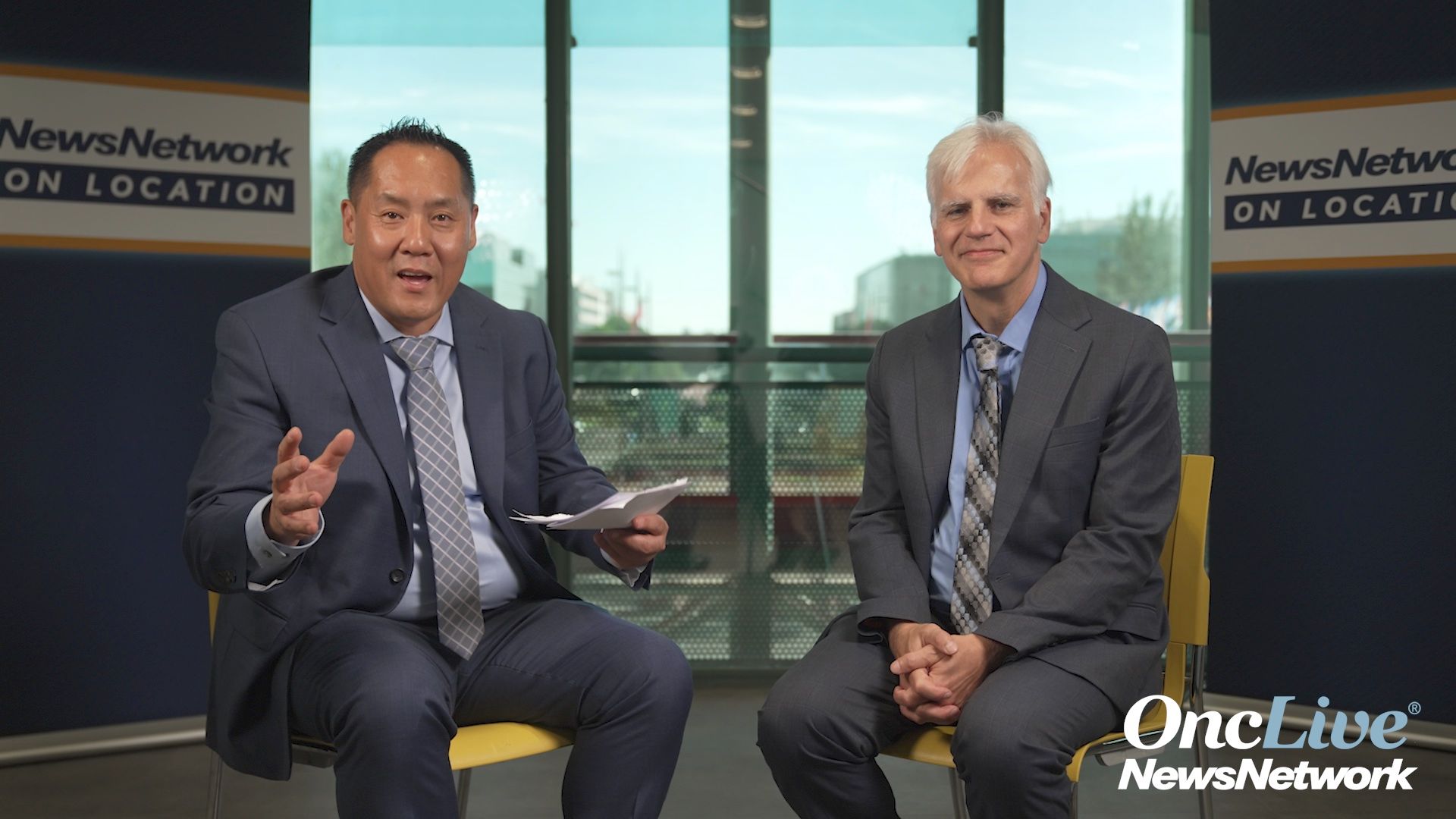
Alexandra Drakaki, MD, PhD, of the UCLA Health Institute of Urologic Oncology, and Guru P. Sonpavde, MD, of AdventHealth, sit down with Chandler H. Park, MD, MSc, FACP, of Norton Cancer Institute, to discuss the latest abstracts in bladder cancer presented during the 2026 ESMO Congress.
In this episode of OncLive News Network: On Location, Chandler H. Park, MD, MSc, FACP, a medical oncologist at Norton Cancer Institute in Louisville, Kentucky, is joined by Alexandra Drakaki, MD, PhD, a professor of hematology/oncology and urology at the UCLA Health Institute of Urologic Oncology in Los Angeles, California, and Guru P. Sonpavde, MD, medical director of Genitourinary Oncology, assistant director of the Clinical Research Unit, and the Christopher K. Glanz Chair for Bladder Cancer Research at the AdventHealth Cancer Institute, to break down the bladder cancer data presented during the opening days of the 2026 ESMO Congress in Madrid, Spain.
The panel begins with perioperative management of muscle-invasive bladder cancer (MIBC), where the phase 3 KEYNOTE-866 and ENERGIZE trials evaluated the addition of a checkpoint inhibitor to neoadjuvant cisplatin-based chemotherapy. The experts consider how these findings sit alongside NIAGARA, which established perioperative durvalumab plus gemcitabine/cisplatin as a standard for cisplatin-eligible patients.
The conversation then turns to enfortumab vedotin (EV) plus pembrolizumab, which is now FDA approved for patients with MIBC regardless of cisplatin eligibility. The panel discusses the first look at the pembrolizumab-alone arm of KEYNOTE-905 and what it reveals about the contribution of the antibody-drug conjugate (ADC). They also cover the first circulating tumor DNA (ctDNA) and quality-of-life analyses from KEYNOTE-B15, along with an exploratory analysis of molecular subtypes from NIAGARA.
The experts also discuss the phase 3 VOLGA trial, presented during the Presidential Symposium, which evaluated neoadjuvant durvalumab plus EV, with or without tremelimumab, in cisplatin-ineligible or cisplatin-declining MIBC. The trial raises questions about the need for adjuvant EV and the role of CTLA-4 blockade.
In non–muscle-invasive disease, the panel reviews data from POTOMAC, which supported the FDA approval of durvalumab plus BCG in BCG-naive, high-risk disease. They also discuss how the growing number of perioperative options is changing the surgical workflow.
Finally, the experts weigh emerging regimens in metastatic urothelial carcinoma, including the sacituzumab govitecan, EV, and zimberelimab triplet from TROPHY-U-01 Cohort 7 and sacituzumab tirumotecan plus pembrolizumab. They consider whether there is room for a triplet or a second ADC alongside first-line EV plus pembrolizumab.