Check out this October recap of OncLive’s coverage of the top news and expert insights in breast cancer.
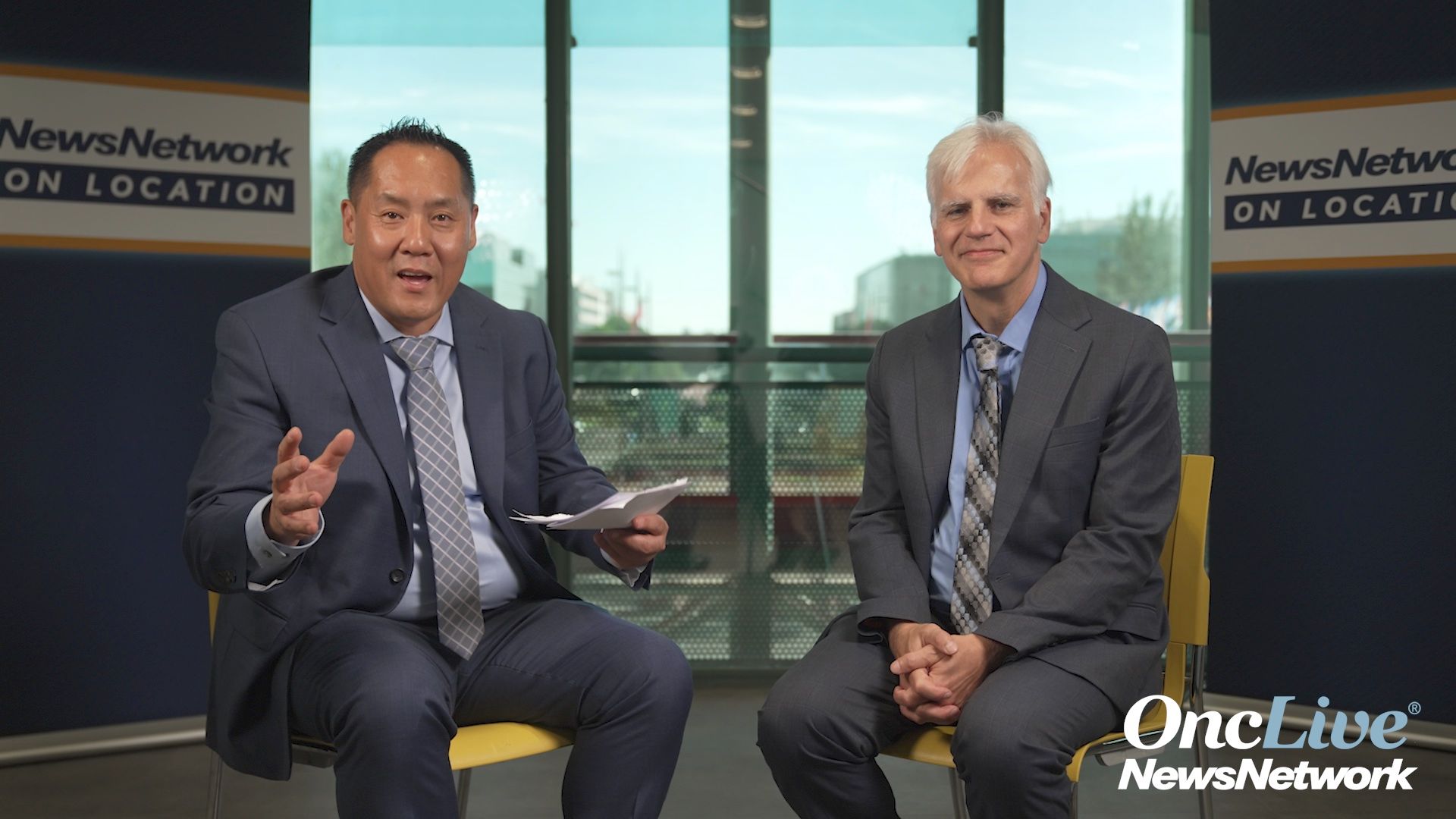
Paolo Tarantino, MD, PhD, of Dana-Farber Cancer Institute and Harvard Medical School, and Andrew W. Hahn, MD, of The University of Texas MD Anderson Cancer Center, sit down with Chandler H. Park, MD, MSc, FACP, of Norton Cancer Institute, to discuss the latest abstracts in breast and prostate cancers presented during the 2026 ESMO Congress.
In this episode of OncLive News Network: On Location, Chandler H. Park, MD, MSc, FACP, a medical oncologist at Norton Cancer Institute in Louisville, Kentucky, is joined by Paolo Tarantino, MD, PhD, of the Breast Oncology Program at Dana-Farber Cancer Institute and Harvard Medical School in Boston, Massachusetts, and Andrew W. Hahn, MD, assistant professor of genitourinary medical oncology at The University of Texas MD Anderson Cancer Center, to discuss breast and prostate cancer data presented at the 2026 ESMO Congress in Madrid, Spain.
In breast cancer, the panel examines PANKU-Breast01, which moved izalontamab brengitecan (iza-bren), a bispecific antibody-drug conjugate (ADC) targeting EGFR and HER3, into HR-positive, HER2-negative metastatic disease. They also cover an exploratory analysis of patients with brain metastases from TROPION-Breast02, which evaluated first-line datopotamab deruxtecan in triple-negative breast cancer. Dr Tarantino, who presented paired-biopsy research on ADC resistance at the meeting, explains why resistance is now a defining question and how clinicians should approach sequencing one ADC after another.
The experts then weigh whether to continue CDK inhibition after progression, drawing on the selective CDK4 inhibitor atirmociclib in FOURLIGHT-1 and overall survival from postMONARCH. They also discuss how adjuvant CDK4/6 inhibitors and oral selective estrogen receptor degraders are reshaping early-stage disease, informed by 6-year data from NATALEE and patient-reported outcomes from lidERA.
In prostate cancer, the conversation turns to high-risk localized disease. Topics include a substudy from PROTEUS, which evaluated perioperative apalutamide around radical prostatectomy; a transcriptome classifier designed to identify very high-risk patients for intensification with an androgen receptor pathway inhibitor; and DASL-HiCaP, which added darolutamide to androgen deprivation therapy and radiation.
In metastatic hormone-sensitive prostate cancer, the panel reviews long-term overall survival with abiraterone from PEACE-1 and the emergence of biomarker-selected therapy. That includes capivasertib for PTEN-deficient disease in CAPItello-281 and talazoparib for tumors with homologous recombination repair alterations in TALAPRO-3. They close with what this means for testing at the time of metastatic diagnosis.