Interim data showed that the BCMA-directed CAR T-cell therapy NXC-201 generated complete responses in relapsed/refractory AL amyloidosis.
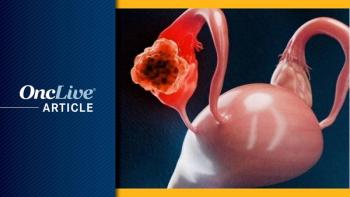
Treatment with liraltagene autoleucel (lira-cel), an the autologous CAR T-cell therapy directed against follicle-stimulating hormone receptor (FSHR), produced stable disease lasting 3 months in a patient with recurrent ovarian cancer, marking the first case of stable disease observed in a phase 1 dose-escalation trial (NCT05316129).1
The patient was treated in the fifth dose cohort and received lira-cel at a dose of 1 × 10⁷ CAR-positive cells/kg following lymphodepletion, which is the highest dose level evaluated in the trial to date, according to a news release from Anixa Biosciences. Stable disease was observed 90 days after treatment. Anixa also reported that multiple patients in the study have survived more than 1 year following treatment, including 1 patient who survived beyond 2 years.
No dose-limiting toxicities have been observed in any patient treated in the trial to date.
Correlative studies evaluating the presence and durability of CAR-positive cells in treated patients are ongoing. The release did not specify a timeline for presentation of additional data from the study.
“As we advance in this trial, we hope to continue observing improved results in patients, from progressive disease to stable disease and eventually to radiological partial response (PR) and hopefully complete response (CR),” Robert M. Wenham, MD, MS, chair of gynecologic oncology at Moffitt Cancer Center in Tampa, Florida, and principal investigator of the trial, stated in a news release. “This result, and the absence of dose-limiting toxicities observed thus far, is encouraging as we continue to treat patients in the current and future dose cohorts."
Lira-cel targets FSHR, which is expressed on ovarian cancer cells and has limited expression in healthy tissues, and it uses follicle-stimulating hormone (FSH) to find to FSHR; notably, FSHR is also expressed on the blood vessels of ovarian and other cancers, pointing to the potential utliziation of lira-cel beyond ovarian cancer.1,2 The CAR T-cell therapy is administered in the peritoneal cavity in order to maximize the concentration of lira-cel where the ovarian cancer spreads.2
The first-in-human, single-center phase 1 study, which is sponsored by Moffitt in collaboration with Anixa, is evaluating lira-cel administered with or without conditioning chemotherapy in patients with recurrent or persistent ovarian, fallopian tube, or primary peritoneal cancer; the trial has an estimated enrollment of 10 patients.3
Investigators are enrolling patients at least 18 years of age with pathologically confirmed invasive epithelial ovarian, primary peritoneal, or fallopian tube carcinoma; patients with borderline serous ovarian tumors and certain sex cord–stromal tumors, including adult-type granulosa cell tumors and Sertoli-Leydig cell tumors, may also enroll. At least 1 prior platinum-based regimen and at least 2 prior chemotherapy regimens are required, and patients must have platinum-refractory or platinum-resistant disease, an ECOG performance status of 2 or lower, and a life expectancy of at least 3 months. Patients must also agree to placement of a surgically placed peritoneal port and a central line catheter.
Key exclusion criteria include bowel obstruction, extensive abdominal adhesions, prior radiotherapy to the abdomen or pelvis, active autoimmune disease, and untreated brain metastases.
Participants receive escalating doses of the FSHR-targeted CAR T cells ranging from 1 x 10⁵ cells to 1 x 10⁷ cells, and investigators are evaluating both intravenous and intraperitoneal infusions.
The primary end point is the maximum tolerated dose. Secondary end points include duration of response, duration of stable disease, and overall survival (OS).
“While this phase 1 study is primarily designed to evaluate safety, we are encouraged by our early anecdotal findings of OS,” Amit Kumar, PhD, chairman and chief executive officer of Anixa Biosciences, added in a news release.1 “In addition, an observation of stable disease for this duration, coupled with multiple patients having surpassed one year of survival following treatment, is very encouraging as we look forward to further evaluating lira-cel at current and future dose levels."
2. Infusion of autologous T cells engineered to target FSH receptor in recurrent ovarian cancer. ClinicalTrials.gov. Accessed October 5, 2026. https://clinicaltrials.gov/study/NCT05316129