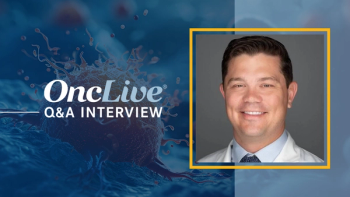
Benjamin Weinberg, MD, discusses the FDA approval of daraxonrasib, RASolute 302 survival data, safety considerations, and future RAS-targeted therapies in pancreatic cancer.
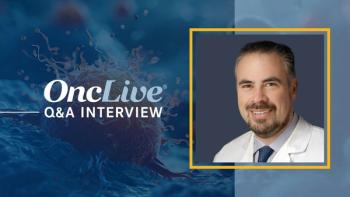
Jill Gilbert, MD, discusses the journey of lifelong learning in hematology/oncology.
There is a particular kind of humility that comes with becoming a hematologist/oncologist. It begins with the realization that no matter how many hours I spend reading, listening, studying, and preparing, there will always be more to learn.
The field is enormous, and it seems to grow larger every day. Diseases that once fit neatly into categories are now divided by molecular signatures, genetic alterations, cytogenetics, immune profiles, and increasingly specific biomarkers. Treatments that were once considered experimental have become standards of care, while new therapies have emerged almost as quickly as we can learn their names. And most of the time, we can't pronounce their names.
There have been moments when I have left a lecture, finished reading about a complicated patient, and felt less knowledgeable than when I started. But perhaps that feeling is not evidence that I am falling behind. Perhaps it is evidence that I am finally beginning to understand the depth of the field I have chosen.
I'm slowly learning that the answer is not to know everything. It is to learn how to learn. The most meaningful education often happens not in the hours spent trying to memorize every guideline or every clinical trial, but in the quiet moments after seeing a patient and realizing there is something I do not know: a mutation I've never encountered, a treatment decision without an obvious answer, a condition that requires me to seek the expertise of someone who has spent years caring for these patients. These moments can initially feel like inadequacy, but I'm learning to see them differently.
Medicine is changing too quickly for any physician to carry the entire field in their head. What matters is having a strong foundation, knowing where the reliable answers live, recognizing when I need help, and remaining curious enough to keep searching.
There will always be another paper to read, another drug to understand, another disease to learn, another patient whose cancer does not behave according to the textbook. I have begun to realize that expertise is not a destination where uncertainty disappears. It is the ability to walk competently through uncertainty without losing curiosity, compassion, or judgment. When I sit across from a patient who is frightened and looking for hope, I will remember that they do not need me to know everything. They need me to care enough to keep searching for the best answer, in a field that changes every day. Perhaps that is what it truly means to be a hematology/oncology physician.