Quality Improvement and EGFR-Mutant Lung Cancer Survivorship Research Help Shape Fellowship Training
Christine Ann Garcia, MD, MPH, discusses error review in fellowship training, survivorship in EGFR+ lung cancer, and nontraditional career paths.
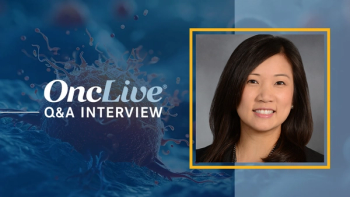
Deepa Rangachari, MD, discusses community oncology training, goal-concordant mentorship, genomic fluency, and multidisciplinary care.
Preparing hematology/oncology fellows for community practice requires deliberate clinical exposure, structured mentorship, and institutional commitment, according to Deepa Rangachari, MD, FASCO.
A national survey of 109 fellowship program leaders found that 81.6% (95% CI, 73.1%-88.4%) believed that community-based training should be available to trainees.1 Although approximately 67% of respondents reported offering community-based clinical experiences, only 30% offered relevant nonclinical training. A separate needs assessment of 125 community and academic-community hybrid practitioners found that 41.6% (binomial 95% CI, 32.8%-50.7%) had received training in a community setting during fellowship.² These findings highlight opportunities to better connect fellowship experiences with subsequent practice.
In an interview with OncLive®, Rangachari discussed the implications of these training gaps, the value of integrated palliative care, and the importance of teaching fellows to interpret genomic reports and collaborate across specialties.
Rangachari is an associate professor of medicine at Harvard Medical School and the director of the Hematology/Oncology Graduate Medical Education and Fellowship Program at Beth Israel Deaconess Medical Center in Boston, Massachusetts.
Rangachari: First and foremost, even though most of the hematology/oncology fellowship training programs in the United States are embedded in academic medical centers, essentially all the responding programs acknowledged that they train some proportion of graduates who end up practicing in community-based settings. Alongside that, many program leaders are aware that there may be some discordance between the opportunities and infrastructure for training in an academic medical center and what is required of fellows once they graduate if they practice in community-based settings.
The third thing our program leaders informed us is that they are aware of this discordance between the training environment and postgraduate practice needs, yet they face real barriers. Sometimes those relate to institutional mission and vision; being an academic center and having graduates whom they are proud of who go on to community-based practices may not be aligned with the mission of the institution itself. They may also face barriers in feeling that they do not have the right faculty experts or collaborators to deliver rigorous, longitudinal training during fellowship for community-based careers.
It was a privilege to lead this survey. We garnered incredible insights. It was a little ironic, frankly, as a leader of an academic training program and an academic cancer center, to try to generate insights about what is needed for community-based practice.
That insight was importan. A lot of the work is happening in one setting, and a lot of the care is happening in another setting. [This survey helped start] more transparent, cross-setting conversations about how to bridge this gap.
First, each training program, along with institutional leaders, has to identify whether [a goal of] training graduates for community-based careers is aligned with its programmatic and institutional vision. If it is, it is important to make that transparent and known through program mission statements, websites, social media, etc., so prospective applicants can identify programs that adhere to certain key objectives: who they are trying to recruit and how they will help train them.
The third thing is to start creating longitudinal clinical training and mentoring experiences embedded in the community with community-based experts. If a program and institution have decided that this aligns with their institutional mission and plan to advertise that, they have to deliver on the training. It is not easy, but one step is that such training must involve longitudinal clinical experiences and mentorship from community-based providers.
[Programs should take] care of patients in the community on a longitudinal, continuing basis to understand what practice in that context looks like, what the unmet needs of the trainee are in anticipating that career, and what the unmet needs of patients in that setting are. Alongside patient care, community-based experts and providers often develop patient-care–adjacent skills, whether in health care administration and clinical operations, patient safety and quality improvement, or medical education. Having those longitudinal patient-care experiences and understanding what adjacent skill set fellows could start developing during training will synergize with a long-term career in the community.
I am incredibly passionate about this and have tried to convert this into passion projects and collaborations. We are living and working in an era when patients with cancer must demand that their best care is not just from cutting-edge therapeutics, but from comprehensive care devoted to their whole well-being.
As a medical oncologist, I take that responsibility seriously. Yet I also have the humility to recognize that I cannot do it all, at the same time, all the time. Having good partnerships with palliative care experts is a critical part of my practice. I am grateful to be at an institution that sees it as a critical part of practice in general.
We have embedded palliative care providers into our oncology clinics. Just the other day, I saw a patient who had started receiving a new oral targeted agent and was having significant gastrointestinal toxicity. There had been multiple communications over the weekend among the patient, the hospice and palliative medicine team, and me about symptom management. We were able to keep the patient at home over the weekend, but when she came to clinic on Tuesday, she needed to be seen by all of us at once.
The existing clinical infrastructure allowed me to go back to the infusion area, where the patient was receiving intravenous fluids and antiemetics. I saw her alongside her longitudinal palliative care provider and, because she was receiving an oral cancer therapy, our clinical pharmacist. The 3 of us and my fellow were able to go together to see the patient, hear from her and her caregivers about her needs, and come up with a plan. Hopefully, if that plan works, she will be well enough to travel to Florida, where she wanted to spend a few weeks with her family.
In terms of training, you cannot have a pathway where you say you are going to teach people things if it does not align with the institutional model and infrastructure. My institution’s model is devoted to embedded palliative care alongside oncology care. Therefore, I can deliver care in that manner, build my own skills and practice in that manner, and train and mentor people who will see, learn, and value that.
Regarding medical education and mentorship, my team and I have been invested in what I call goal-concordant professional development: creating spaces where trainees, who are the future of our hematology/oncology workforce, have the safety and structure to reflect candidly about what they are passionate about, then have the courage and support to pursue those career goals. A lot of mentorship is authentic and organic, yet there is also value in having structure, strategy, and intent in the mentoring program. Then we need to hold ourselves accountable by measuring outcomes: identifying what trainees are passionate about and want to do, making sure they are diversifying their clinical skills and developing research skills that support their academic and scholarly work, and measuring the output.
We call that goal-concordant professional development. Fellows have such diverse opportunities to contribute to the field and improve patients’ lives. It is important to approach each of those career paths with equitable, if not equal, rigor and intent.
If you say you are going to be a laboratory-based physician-scientist, there are well-established ways to develop that career. Over a decade ago, when I started my career with a focus on medical education, there was not a rigorous way to do that within academic hematology/oncology. Today, that is no longer acceptable. Everybody has to have a rigorous path.
On the clinical research side, I am a pragmatic person. Innovation has to be pragmatic at the same time. We are fortunate to have an explosive number of new therapies for patients with lung cancer.
I am interested in the pragmatic applications [of those therapies]. Can we optimize biomarker testing before patients commence lung cancer–directed therapy? Can we study drug pharmacokinetics and dose therapies in ways that allow patients to experience less toxicity or [travel] to the medical center less frequently?
Rigorous training in genomic oncology is a mandatory requirement for anybody participating in the contemporary hematology/oncology patient care workforce. It is impossible to approach this as a rote memorization activity. In collaboration with Richard Haspel, MD, PhD, [of Beth Israel Deaconess Medical Center] and the American Society of Clinical Oncology, we have created a framework for a national curriculum in genomic oncology for hematology/oncology fellows.
All providers, including trainees, have to be informed consumers of genomic information. That is different from rote memorization because the biomarkers that are mandatory, the disease states in which they matter, and [the methods we use] to test for them will continue to evolve rapidly. We can train people to receive genomic oncology reports and understand their operating characteristics, whether the assay is institutional or commercial. What does the report tell you? Importantly, what does it not tell you? To me, that is the fundamental piece of fluency: being an informed consumer of the data, rather than memorizing long lists of 3- and 4-letter gene names.
For example, a next-generation sequencing report tells you about DNA- and/or RNA-level changes. Importantly, it does not tell you about cell surface expression or overexpression of a tumor marker, which may need to be captured through immunohistochemistry or fluorescence in situ hybridization. Even understanding that a patient with lung cancer needs some data defined by DNA/RNA-based changes and separate data defined by immunohistochemistry, and not conflating those needs, would represent adequate genomic fluency. Everything else you can look up.
Multidisciplinary cancer care is no luxury. It is a mandate. That is true for every disease state, but not every specialty has the gift of practicing that way. In lung cancer, across all stages from stage I to stage IV, there can be a role for multimodality care, with engagement from thoracic surgeons, radiation oncologists, interventional pulmonologists, interventional radiologists, and medical oncologists.
In the past, it used to be simplified: stage I, no need for a medical oncologist; stage IV, no need for a surgeon. None of that is true anymore. In an era when multimodality care is standard across stages of disease, it is important to create rigorous infrastructure for how and when those multidisciplinary providers communicate. [It is important for colleagues to] interact and connect directly [with each other], rather than through purely electronic or asynchronous methods, although I know that is a strain for many health care delivery models.
Having all those people in the room at one time is [beneficial]. If there are ways to create models in which they can sit side by side, review images and molecular testing results, converse directly, and provide a consensus recommendation to a patient who is often at a desperate moment in their life, that is preferable to [communication that is] asynchronous, entirely electronic, or piecemeal. Otherwise, the patient first sees the medical oncologist, who says one thing, then hears, [for example], “Let’s see what the surgeon says,” and waits a few more days.
Delivering compassionate, comprehensive expert care means finding ways to bring all those disciplines together directly. That could be a tumor board conducted one or more times a week, or a multi-provider clinic.
Where I work, all day on Tuesdays and Thursdays, the lung cancer team is together in one giant, crowded workroom. It is like a live tumor board all day long, and then we see the patients. Whatever the mechanism, there has to be a way for those providers to connect directly, develop consensus, and deliver a uniform, integrated message back to patients.