Although the phase 3 POD1UM-303/InterAACT 2 trial (NCT04472429) has cemented retifanlimab-dlwr (Zynyz) plus carboplatin and paclitaxel as a frontline standard of care in advanced squamous cell carcinoma of the anal canal (SCAC), it has simultaneously created an urgent and largely unanswered question: what comes next for patients who progress?
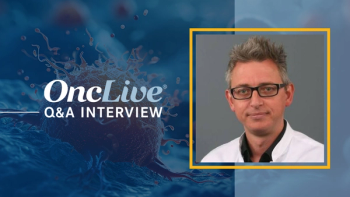
“What we have learned from POD1UM-303 is that you should not count on a sequential approach in this patient population,” Marwan G. Fakih, MD, stated in an interview with OncLive®. “The big question is what happens if [a patient] progresses on retifanlimab maintenance, and I think [that depends on] how far from [the cessation of] systemic therapy [progression] occurred. It opens doors for additional questions in the future.”
In addition to reviewing the updated efficacy data from POD1UM-303 that supported the agent’s FDA approval and informed its frontline positioning, Fakih highlighted the mechanistic rationale for retifanlimab in SCAC and what differentiated its development from other anti–PD-1 agents and addresses how those data reshape sequencing considerations in advanced SCAC.
Fakih serves as a professor in the Department of Medical Oncology & Therapeutics Research; associate director of Clinical Sciences; medical director of the Briskin Center for Clinical Research; division chief of GI Medical Oncology; and co-director of the Gastrointestinal Cancer Program at City of Hope in Duarte, California.
POD1UM-303 Data Support Retifanlimab FDA Approval in Advanced SCAC
- The phase 3 POD1UM-303/InterAACT 2 trial demonstrated a statistically significant improvement in median PFS with retifanlimab plus carboplatin and paclitaxel vs placebo plus carboplatin and paclitaxel (9.3 months vs 7.4 months; HR, 0.63; 95% CI, 0.47-0.84; P = .0006).
- Updated OS data from POD1UM-303 showed a 10-month improvement in median OS with the retifanlimab-containing triplet vs chemotherapy alone (32.8 months vs 22.2 months), providing clinically meaningful evidence in a disease that historically lacked randomized immunotherapy data in the frontline setting.
- Based on POD1UM-303 data, the FDA approved retifanlimab plus carboplatin and paclitaxel for patients with inoperable locally recurrent or metastatic SCAC not previously treated with systemic chemotherapy in May 2025, marking the first approval of an immunotherapy-containing regimen for this indication.
What differentiates retifanlimab mechanistically or clinically from other checkpoint inhibitors already used across gastrointestinal malignancies, and what early data initially supported its development in SCAC?
Retifanlimab is a PD-1–binding antibody, and it was investigated early on in SCAC in the phase 2 POD1UM-202 study [NCT03597295]. In that study, we saw a significant number of disease stabilizations as well as objective responses. What was notable was the durability of not only the objective responses but also the stability of the disease in those patients. Mechanistically, we are binding and blocking PD-1; from that perspective, that results in the invigoration of the immune system and the activation of T cells. Arguably, this is the same mechanism that we see with other PD-1 antibodies, such as pembrolizumab [Keytruda] and nivolumab [Opdivo]. There are no head-to-head studies looking at these agents to say that one is better than the other. From a pharmacokinetics perspective, depending on the dosages, many of these PD-1-binding antibodies can be given anywhere between every 2 weeks, 3 weeks, or 4 weeks—some even every 6 weeks, as we see with pembrolizumab. With retifanlimab, the dosing is on an every-four-week basis. The biggest questions involve the mechanistic differences between PD-1 and PD-L1 binding agents, and from that perspective, we don’t have much data to say whether PD-L1 is as good as PD-1. We know that PD-1 targeting has succeeded in other tumor types where PD-L1 has not. [However], we do believe that not all PD-1 targeting agents are created equal and that there may be subtle differences in the agents that explain variations in activity, but I cannot say that the mechanism of action is different from other anti–PD-1 agents.
What unmet need was POD1UM-303 designed to address?
There was definitely an unmet need because, historically speaking, we did not have any randomized studies looking at PD-1 targeting agents in the setting of advanced SCAC. Our go-to regimen is carboplatin/paclitaxel. Cisplatin and 5-FU had been the default regimen for decades based on phase 2 clinical trials. Previously, we learned that carboplatin and paclitaxel is better tolerated [than carboplatin/paclitaxel] and associated with a numerically better OS and PFS, though it was not statistically different from cisplatin and 5-FU; however, based on the tolerance and the trend toward improved outcomes, that has become the default regimen. With carboplatin and paclitaxel, one would expect a progression-free survival [PFS] around the 6- or 7-month mark. Response rates vary from one study to another, but we expect it to be [approximately] 40%.
The question becomes what to do after carboplatin/paclitaxel, or how we can improve [responses] on it. One of the problems with this regimen is that we cannot [administer] it forever—even if it is working—because of neuropathy. Hence, most patients would receive it capped around 6 months and then [we would] observe, unfortunately, for progression. The unmet need was to see if we can enhance the activity and have a form of maintenance treatment, ideally without major toxicity, in the first line. That would be a perfect place for an immuno-oncology agent because we know from other tumor types that we can have additive or even synergistic activity with systemic chemotherapy. Additionally, if that ends up being a maintenance treatment, it doesn’t have as many adverse effects [AEs] as one would expect with other agents.
What was the design of POD1UM-303?
POD1UM-303 is the first-ever randomized phase 3 clinical trial to incorporate an immunotherapy agent into a systemic chemotherapy backbone. This was a randomized 1:1 clinical trial. Carboplatin and paclitaxel were given for up to 6 months in 6-week cycles [every 4 weeks] in combination with retifanlimab vs carboplatin and paclitaxel again for 6 months in combination with a placebo. It was double-blinded, which reduces the bias. This study was also attractive to patients in that, in the event that the patient who received carboplatin, paclitaxel, and placebo did progress and was unblinded, identifying that they received the placebo, that patient was able to receive retifanlimab monotherapy. The primary end point of this study was PFS. That is definitely appropriate in this setting because you are using a crossover design, and hence you may not see the overall survival [OS] signal in a crossover design.
POD1UM-303 ultimately supported the FDA approval of retifanlimab in combination with chemotherapy for advanced SCAC. What are the latest efficacy and safety data from the study?
The initial data that had been published were related to the PFS data. [The] median PFS was 9.3 months vs 7.4 months for the placebo/carboplatin/paclitaxel arm [HR, 0.63; 95% CI, 0.47-0.84; P = .0006]. This was highly statistically significant with a HR of 0.63. It is also notable to mention here that the overall response rate [ORR] was substantially improved and that we doubled the duration of response from 7 to 14 months. That is very important. That means when you stop your chemotherapy, those patients who are responding continue to derive a very protracted benefit.
The main update is the OS update. The median OS for the carboplatin/paclitaxel plus placebo arm was 22.2 months vs 32.8 months for retifanlimab plus carboplatin/paclitaxel—a 10-month improvement in OS [with retifanlimab vs carboplatin/paclitaxel], which is very notable and clinically extremely meaningful for patients.
POD1UM-303 data provide a strong rationale for introducing retifanlimab in the first-line setting rather than reserving PD-1 blockade for later lines of therapy. How has this altered patient expectations in frontline SCAC, and what are the trade-offs of this shift in strategy, particularly in regard to second-line approaches?
This means that the second line is a big unmet need now. The main reason I say that is that the OS trend continues to be in favor of the frontline carboplatin/paclitaxel/retifanlimab treatment in comparison to carboplatin/paclitaxel followed by retifanlimab in the crossover group. The crossover population didn’t achieve as good an outcome as the patient population that received retifanlimab upfront; I think this means that there may be some synergy in that regard. Also, if we look at the activity of retifanlimab following carboplatin/paclitaxel in the crossover group, the ORR was in the single digits. However, if we look at the magnitude of the increase in the ORR, it was higher in the setting of first-line treatment. I think we lose something by keeping PD-1 targeting for the second line.
The big question is what happens if [a patient] progresses on retifanlimab maintenance, and I think [that depends on] how far from [the cessation of] systemic therapy [progression] occurred. It opens doors for additional questions in the future. I do think that if a patient who had a partial response progresses 8 months after their last dose of carboplatin/paclitaxel, it brings up the question about rechallenging with carboplatin at that time. Unfortunately, we don’t have data to [indicate whether we] should maintain retifanlimab at that point. Those patients are resistant at that point to PD-1 therapy, and whether they go on carboplatin/paclitaxel at that point or an alternative systemic chemotherapy, that would be the appropriate way to go.
How do these data reshape sequencing considerations in advanced SCAC, and do they effectively close the door on using other PD-1 inhibitors such as nivolumab or pembrolizumab after progression on frontline retifanlimab-containing therapy?
I think they do. The mechanism of activity is very similar, and these are all PD-1–targeting agents, so we don’t have data to [indicate] that other PD-1 inhibitors would work in that setting. We also need more clinical trials in the second-line setting to better define the best approach [after progression on retifanlimab]. These patients could be fluoropyrimidine-naive, for example. What is the role of 5-FU in that setting? Should it be given in combination with oxaliplatin if they don’t have neuropathy and they’ve been off carboplatin for a long time, and the progression was more than 6 months from the last dose of carboplatin? Or is there a role for other agents that are not today approved for SCAC? What is the role of irinotecan? What is the role of a full rechallenge with carboplatin/paclitaxel? CTLA-4 has been looked at in the setting of nivolumab/ipilimumab [Yervoy] vs nivolumab in second- and third-line treatments in patients who progressed on prior chemotherapy, and there was no improvement with the combination. I don’t think the standard would be to add a CTLA-4 inhibitor to retifanlimab or to move to nivolumab/ipilimumab into that setting, and I don’t think there’s a need to switch to another PD-1 inhibitor at this point outside of a clinical trial.
What’s next for checkpoint inhibitor combination development in SCAC?
The [opportunity] for our patients is identifying novel treatments rather than continuing to revisit what has existed for the last 20 years. There have to be different strategies that are interrogated in this setting, whether it is different checkpoint inhibitors, antibody-drug conjugates, or cellular therapies. All of these should be on the table, and I think there should be a drive for all of us to have more studies available for our patients in the second line and beyond.
References
- Rao S, Samalin-Scalzi E, Evesque L, et al. POD1UM-303/InterAACT 2: phase III study of retifanlimab with carboplatin-paclitaxel (c-p) in patients (pts) with inoperable locally recurrent or metastatic squamous cell carcinoma of the anal canal (SCAC) not previously treated with systemic chemotherapy (chemo). Ann Oncol. 2024;35(suppl 2):S1217. doi:10.1016/j.annonc.2024.08.2262
- FDA approves retifanlimab-dlwr with carboplatin and paclitaxel and as a single agent for squamous cell carcinoma of the anal canal. FDA. May 15, 2025. Accessed June 10, 2026. https://www.fda.gov/drugs/resources-information-approved-drugs/fda-approves-retifanlimab-dlwr-carboplatin-and-paclitaxel-and-single-agent-squamous-cell-carcinoma
This article was supported in part by Incyte. Content independently developed and published by OncLive