
Kevin Kalinsky, MD, MS, discusses the phase 3 DESTINY-Breast06 trial evaluating trastuzumab deruxtecan in HER2-expressing breast cancer.
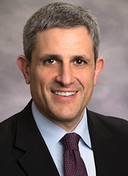
Kevin Kalinsky, MD, MS, is a professor and director of the Division of Medical Oncology in the Department of Hematology and Medical Oncology at Emory University School of Medicine; and the Louisa and Rand Glenn Family Chair in Breast Cancer Research and director of the Glenn Family Breast Center at Winship Cancer Institute of Emory University in Atlanta, Georgia.
Kevin Kalinsky, MD, MS, discusses the phase 3 DESTINY-Breast06 trial evaluating trastuzumab deruxtecan in HER2-expressing breast cancer.
Kevin Kalinsky, MD, MS, discusses his top takeaways from the 2024 ASCO Annual Meeting and 2024 ESMO Congress, as well as where he sees the field of breast cancer evolving into the future.
Kevin Kalinsky, MD, MS, discusses future treatment directions with T-DXd in breast cancer, as well as the evolving role of HER2 classification.
Kevin Kalinsky, MD, MS, discusses AMH levels and responses in premenopausal HR+/HER2–, node-positive breast cancer.

Kevin Kalinsky, MD, MS, discusses the utility of the postMONARCH trial regimen in hormone receptor–positive/HER2-negative advanced breast cancer.
Kevin Kalinsky, MD, MS, on abemaciclib plus fulvestrant in HR-positive/HER2-negative advanced breast cancer after progression on a CDK4/6 inhibitor and endocrine therapy.
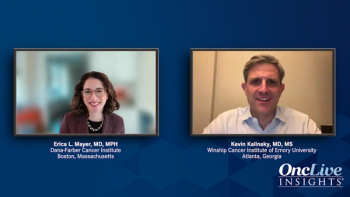
Drs Mayer and Kalinsky conclude their discussion with a look at agents in development and unmet needs for patients with breast cancer and ESR1 mutations.
Medical oncologists discuss oral SERDs, with a focus on the SERENA-2 trial looking at camizestrant in patients with advanced ER+/HER2- breast cancer.
Erica L. Mayer, MD, MPH, discusses the role of elacestrant in the breast cancer treatment landscape and provides clinical insights on its safety profile.
Kevin Kalinsky, MD, MS, gives an overview of recent data from the EMERALD trial investigating elacestrant in patients with ER+/HER2- advanced breast cancer.
Drs Mayer and Kalinsky provide insights and offer their impressions of the PADA-1 trial, focusing on ESR1 mutation monitoring with circulating tumor DNA (ctDNA).
Experts on breast cancer discuss challenges encountered in biomarker testing for patients with breast cancer.
Kevin Kalinsky, MD, MS, and Erica L. Mayer, MD, MPH, discuss testing practices for ESR1 mutations in patients with breast cancer.
The expert panel concludes the program with key takeaways and closing thoughts on the evolving antibody-drug conjugate space.
Experts in breast, lung, and gastric malignancies provide insights on multidisciplinary care in oncology and educating community specialists.
Medical oncologists discuss prospects and challenges in the breast and lung cancer treatment landscapes.
Kevin Kalinsky, MD, MS, discusses key takeaways from the 2023 Bridging the Gaps in Breast Cancer meeting, highlighting questions that continue to persist in the treatment of breast cancer.
Specialists in gastric cancer look to the future treatment landscape and review ongoing research in the disease space.
Clinical insights on best practices for treating patients with TROP2-targeted therapy.
The expert panel discusses TROP2 as a target for patients with cancer who are receiving antibody-drug conjugates.
A review of antibody-drug conjugates approved for treatment of patients with breast, lung, or gastrointestinal cancers.
Insights on managing antibody-drug conjugate toxicities for patients with gastric cancer.
A GI medical oncologist discusses the role of trastuzumab deruxtecan in the gastric cancer treatment space.
A nurse practitioner provides insights on toxicity management strategies for patients with lung cancer who are receiving antibody-drug conjugates.
A medical oncologist reviews the antibody-drug conjugate landscape in lung cancer.
Specialists in breast cancer review toxicity management practices for T-DM1 and trastuzumab deruxtecan [T-DXd].
A breast medical oncologist provides insights on antibody-drug conjugates in the breast cancer space and discusses ongoing research.
The expert panel has a comprehensive discussion about best practices for patient education and the barriers to effective testing.
Medical oncologists review the complexities of molecular testing, including tissue exhaustion, and discuss management approaches.
Comprehensive insights on biomarker testing practices for patients with lung or gastrointestinal cancers.