An FDA advisory committee voted in favor of the benefits of the Galleri MCED test outweighing its risks in patients 50 years of age and older.

Riley Kandel joined MJH Life Sciences in 2025 as a Content Associate for OncLive. Recently graduating from New York University’s Media, Culture, and Communication Program, Riley specializes in digital media production, social strategy, and working alongside AI.
An FDA advisory committee voted in favor of the benefits of the Galleri MCED test outweighing its risks in patients 50 years of age and older.

Brad S. Kahl, MD, discusses TRIANGLE and EA4151 data reshaping ASCT use in frontline MCL, induction intensity, and high-risk disease strategies.

Mary Ann Anderson, MBBS, FRACP, FRCPA, PhD, discusses recent CLL approvals, BTK and BCL-2 inhibitor safety, and individualizing frontline therapy.

A new life-years-saved methodology found blood cancer treatments saved million years of life since 1949, with future gains reliant on funding and access.

Tycel Phillips, MD, discusses sonrotoclax’s FDA approval for mantle cell lymphoma and why the BCL2 inhibitor opens more possibilities.

Experts break down SOHO 2026 and topics at the meeting that will shape hematologic oncology for the rest of the year.
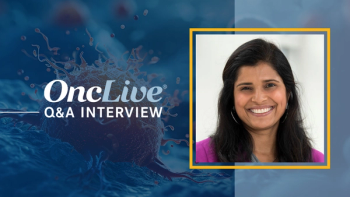
Uma Borate, MBBS, MS, discusses data for different azacitidine and venetoclax schedules from the Beat AML master clinical trial.

R. Lor Randall, MD, FACS, discusses novel precision surgery techniques that are making progress in sarcoma care.
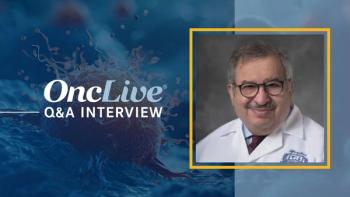
Philip A. Philip, MD, discusses TTFields, the recent approval of this modality in pancreatic cancer, and phase 3 data in locally advanced disease.

Dosing adjustments of ponatinib based on responses increased tolerability in patients with chronic myeloid leukemia according to OPTIC.

Olverembatinib produced progressively deepening cytogenetic and molecular responses in second-line chronic-phase chronic myeloid leukemia.

Patients who received MBTF prior to allo-HSCT achieved promising survival outcomes and manageable safety in relapsed/refractory acute myeloid leukemia.
R. Lor Randall, MD, FACS, discusses what’s next for TGCT treatment and the most important developments to come out of 2026 TGCT Master Workshop.
Neeta Somaiah, MD, discusses the significance of the Peak study and what an approval of bezuclastinib plus sunitinib would mean for GIST.

Faculty convened for a virtual OncLive Scientific Interchange and Workshop to interpret emerging trial data and treatment strategies for systemic mastocytosis.
Paul E. Oberstein, MD, discusses autogene cevumeran, a personalized mRNA vaccine, which is being evaluated for pancreatic ductal adenocarcinoma.

Pooled results from the phase 3 BRUIN CLL-313 and BRUIN CLL-314 trials confirmed the efficacy of pirtobrutinib in treatment-naive CLL.
Jorge Cortes, MD, discusses the FDA approval of orally disintegrating nilotinib tablets for patients with chronic myeloid leukemia.
Paul E. Oberstein, MD, discusses data for an autogene cevumeran–based regimen in pancreatic ductal adenocarcinoma.
Sonrotoclax monotherapy produced durable responses in Chinese patients with relapsed/refractory mantle cell lymphoma.
Mariana C. Stern, PhD, discusses the biggest gaps identified in the 2026 AACR Cancer Disparities Progress Report and what oncologists can do to combat them.
Marc S. Hoffmann, MD, discusses data for sonrotoclax plus zanubrutinib and unmet needs in the mantle cell lymphoma treatment paradigm.
Docirbrutinib generated responses in patients with relapsed/refractory CLL/SLL, MCL, and other non-Hodgkin lymphomas.
Experts go step by step in laying out their thought processes and treatment selections for difficult-to-treat lung cancer cases.
Max Diehn, MD, PhD, breaks down how ctDNA testing for MRD is reshaping prognostic discussions in NSCLC.

Sanja Dacic, MD, PhD, outlines advances that are reshaping molecular profiling in advanced non–small cell lung cancer and how to navigate these changes.
High CR/CRi rates were shown for olverembatinib plus blinatumomab in relapsed/refractory Ph-positive chronic myeloid leukemia and B-ALL.

Data for fixed-duration regimens in CLL suggest benefits over chemoimmunotherapy, but improvements for high-risk patients are still required.
Orelabrutinib produced efficacy improvements vs chemoimmunotherapy in previously untreated chronic lymphocytic leukemia.
Nirav N. Shah, MD, MSHP, and Alexey Danilov, MD, PhD, discuss the phase 2 DAYBreak CLL-201 trial evaluating bexobrutideg in relapsed/refractory CLL.