Saad Usmani, MD, MBA, FACP, FASCO
Articles by Saad Usmani, MD, MBA, FACP, FASCO
Future Research Priorities in Smoldering Multiple Myeloma
BySagar Lonial, MD, FACP, FASCO,Saad Usmani, MD, MBA, FACP, FASCO,Vincent Rajkumar, MD In this closing segment, Dr. Sagar Lonial asks the panel to reflect on the most important unanswered questions that remain in smoldering multiple myeloma research and what evidence is still needed before early treatment strategies are more broadly adopted.
Real World Barriers to Early Treatment in Smoldering Multiple Myeloma
BySagar Lonial, MD, FACP, FASCO,Saad Usmani, MD, MBA, FACP, FASCO,Vincent Rajkumar, MD In this segment, Dr. Sagar Lonial asks the panel to discuss real world challenges that may limit the use of early treatment strategies in patients with high risk smoldering multiple myeloma.
Treatment Sequencing Considerations in Smoldering Multiple Myeloma
BySagar Lonial, MD, FACP, FASCO,Saad Usmani, MD, MBA, FACP, FASCO,Vincent Rajkumar, MD In this segment, Dr. Sagar Lonial asks the panel to discuss how early treatment strategies may influence future therapy options if patients with smoldering multiple myeloma eventually progress to active disease.
Combination Therapy Approaches in Smoldering Multiple Myeloma
BySagar Lonial, MD, FACP, FASCO,Saad Usmani, MD, MBA, FACP, FASCO,Vincent Rajkumar, MD In this segment, Dr. Sagar Lonial asks Dr. Saad Usmani to discuss emerging data evaluating combination treatment strategies in smoldering multiple myeloma. The conversation focuses on studies exploring anti-CD38 antibodies combined with immunomodulatory agents, as well as data involving alternative anti-CD38 therapies such as isatuximab.
Balancing Early Intervention in Smoldering Multiple Myeloma
BySagar Lonial, MD, FACP, FASCO,Saad Usmani, MD, MBA, FACP, FASCO,Vincent Rajkumar, MD In this segment, Dr. Sagar Lonial asks the panel to discuss the potential risks and benefits of early intervention in smoldering multiple myeloma, particularly given that many patients remain asymptomatic for extended periods.
AQUILA Trial Findings in Smoldering Multiple Myeloma
BySagar Lonial, MD, FACP, FASCO,Saad Usmani, MD, MBA, FACP, FASCO,Vincent Rajkumar, MD In this segment, Dr. Sagar Lonial asks Dr. Saad Usmani to discuss the clinical implications of the AQUILA trial, which evaluated daratumumab monotherapy compared with active monitoring in patients with high-risk smoldering multiple myeloma.
Early Treatment Evidence in Smoldering Multiple Myeloma
BySagar Lonial, MD, FACP, FASCO,Saad Usmani, MD, MBA, FACP, FASCO,Vincent Rajkumar, MD In this segment, Dr. Sagar Lonial asks the panel to reflect on how the treatment landscape has evolved for smoldering multiple myeloma and why early therapeutic intervention is increasingly being discussed for selected high-risk patients.
Clinical Decision-Making in High-Risk Smoldering Multiple Myeloma
BySagar Lonial, MD, FACP, FASCO,Saad Usmani, MD, MBA, FACP, FASCO,Vincent Rajkumar, MD In this segment, Dr. Sagar Lonial asks Dr. Vincent Rajkumar how clinicians decide between continued observation and early intervention once a patient is classified as having high-risk smoldering multiple myeloma.
Circulating Tumor Cells as a Biomarker in Smoldering Multiple Myeloma
BySagar Lonial, MD, FACP, FASCO,Saad Usmani, MD, MBA, FACP, FASCO,Vincent Rajkumar, MD In this segment, Dr. Sagar Lonial asks the panel to comment on emerging data presented at recent ASH meetings examining circulating tumor cells as a potential biomarker in smoldering multiple myeloma.
Genomic and Longitudinal Risk Assessment in Smoldering Multiple Myeloma
BySagar Lonial, MD, FACP, FASCO,Saad Usmani, MD, MBA, FACP, FASCO,Vincent Rajkumar, MD In this segment, Dr. Sagar Lonial asks Dr. Saad Usmani to discuss how emerging approaches such as genomic profiling and longitudinal risk assessment may help refine risk stratification in smoldering multiple myeloma.
Strengths and Limitations of the IMWG 20/2/20 Model in Smoldering Multiple Myeloma
BySagar Lonial, MD, FACP, FASCO,Saad Usmani, MD, MBA, FACP, FASCO,Vincent Rajkumar, MD In this segment, Dr. Sagar Lonial asks Dr. Saad Usmani to discuss the clinical utility of the IMWG 20/2/20 model in risk stratification for smoldering multiple myeloma.
Risk Stratification in Smoldering Multiple Myeloma
BySagar Lonial, MD, FACP, FASCO,Saad Usmani, MD, MBA, FACP, FASCO,Vincent Rajkumar, MD In this opening segment, Dr. Sagar Lonial welcomes the audience and frames the discussion around the evolving management of smoldering multiple myeloma, before asking the panel how they currently approach risk stratification in clinical practice.
In this final episode of OncChats: Optimizing the Use of Bispecific Antibodies in Myeloma and Beyond, experts discuss plans for developing guidelines and policies to enhance management of bispecific T-cell engagers across various centers.
In this episode of OncChats: Optimizing the Use of Bispecific Antibodies in Myeloma and Beyond, experts discuss the need for continued evaluation of prophylactic treatments like tocilizumab and antimicrobial measures for bispecific T-cell engagers.
In this episode of OncChats: Optimizing the Use of Bispecific Antibodies in Myeloma and Beyond, experts emphasize the need for comprehensive patient education, effective communication, and specific safety protocols to manage patients receiving bispecific T-cell engagers.
In this episode of OncChats: Optimizing the Use of Bispecific Antibodies in Myeloma and Beyond, experts discuss the challenges and strategies in managing bispecific T-cell engagers in the realm of cancer, emphasizing the importance of community and tertiary care collaboration to handle unique AEs like CRS and the need for well-defined protocols.
In this episode of OncChats: Optimizing the Use of Bispecific Antibodies in Myeloma and Beyond, experts discuss bispecific T-cell engagers, highlighting their effectiveness in treating hematologic malignancies like multiple myeloma, their potential use in solid tumors, and the importance of managing unique toxicities.
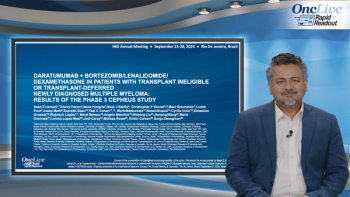
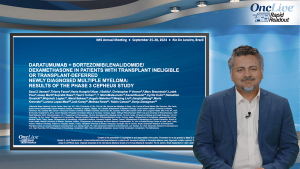
Dr. Saad Usmani discusses the results of the Phase 3 CEPHEUS study, which evaluated the combination of daratumumab with bortezomib/lenalidomide/dexamethasone (D-VRd) in transplant-ineligible or transplant-deferred patients with newly diagnosed multiple myeloma, highlighting its impact on progression-free survival and minimal residual disease negativity.

Saad Z. Usmani, MD, MBA, FACP, FASCO, discusses challenges of integrating bispecific antibodies and CAR T-cell therapies into the community for myeloma.

Saad Z. Usmani, MD, MBA, FACP, FASCO, discusses the efficacy of daratumumab plus VRd in patients with transplant-ineligible or -deferred multiple myeloma.
Dr Usmani details the FDA approval of cilta-cel for patients with relapsed/refractory multiple myeloma who have received at least 1 prior line of therapy.
Saad Z. Usmani, MD, MBA, FACP, FASCO, discusses the risk-benefit profile of ciltacabtagene autoleucel in relapsed/refractory multiple myeloma.
Saad Z. Usmani, MD, MBA, FACP, FASCO, discusses the optimal role for ciltacabtagene autoleucel in relapsed/refractory multiple myeloma.
Saad Z. Usmani, MD, MBA, FACP, FASCO, discusses the FDA approval of cilta-cel for relapsed/refractory multiple myeloma.

Treatment Considerations and Sequencing in Multiple Myeloma
ByKrina K. Patel, MD, MSc,Amrita Krishnan, MD,Caitlin Costello, MD,Saad Usmani, MD, MBA, FACP, FASCO,Rafat Abonour, MD The expert panel concludes their discussion with clinical insights on treatment sequencing and therapeutic decision-making for patients who have relapsed.
CAR T-Cell Therapy in Multiple Myeloma: Role in the Treatment Landscape
ByKrina K. Patel, MD, MSc,Amrita Krishnan, MD,Caitlin Costello, MD,Saad Usmani, MD, MBA, FACP, FASCO,Rafat Abonour, MD A roundtable discussion on the evolving treatment landscape surrounding CAR T-cell therapy in multiple myeloma, with a focus on future directions and the management of adverse events.
GPRC5D-Targeting Bispecifics in Multiple Myeloma
ByKrina K. Patel, MD, MSc,Amrita Krishnan, MD,Caitlin Costello, MD,Saad Usmani, MD, MBA, FACP, FASCO,Rafat Abonour, MD The expert panel discusses recent clinical trial data on GPRC5D-targeting bispecific antibodies and how they apply to the multiple myeloma treatment paradigms.
Adverse Effects Related to Bispecifics in Multiple Myeloma
ByKrina K. Patel, MD, MSc,Amrita Krishnan, MD,Caitlin Costello, MD,Saad Usmani, MD, MBA, FACP, FASCO,Rafat Abonour, MD Comprehensive insights on the adverse effects seen from bispecific antibodies in the treatment of patients with multiple myeloma.
Step-Up Dosing Practices for Bispecifics in Multiple Myeloma
ByKrina K. Patel, MD, MSc,Amrita Krishnan, MD,Caitlin Costello, MD,Saad Usmani, MD, MBA, FACP, FASCO,Rafat Abonour, MD Multiple myeloma specialists compare step-up dosing practices and provide clinical insights on treating patients with multiple myeloma.
Real-World Evidence and Selecting Optimal Bispecifics in Multiple Myeloma
ByKrina K. Patel, MD, MSc,Amrita Krishnan, MD,Caitlin Costello, MD,Saad Usmani, MD, MBA, FACP, FASCO,Rafat Abonour, MD Experts on multiple myeloma discuss how real-world evidence informs treatment selection for patients receiving bispecific antibodies.