Sandy Srinivas, MBBS, Stanford Cancer Center
Articles by Sandy Srinivas, MBBS, Stanford Cancer Center
DNA Alterations and Selection of PARP Inhibitors in mCRPC
ByAlicia Morgans, MD, MPH, FASCO,Matthew Smith, MD, PhD,Sandy Srinivas, MBBS, Stanford Cancer Center,Scott T. Tagawa, MD, MS,Evan Y. Yu, MD Expert perspectives on how DNA alterations may inform the selection and use of PARP inhibitors in metastatic CRPC.
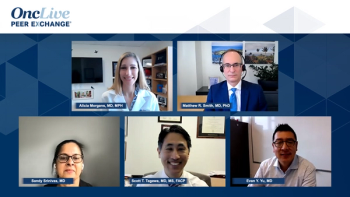
Overview of Therapy for mCRPC: PARP Inhibitors
ByAlicia Morgans, MD, MPH, FASCO,Matthew Smith, MD, PhD,Sandy Srinivas, MBBS, Stanford Cancer Center,Scott T. Tagawa, MD, MS,Evan Y. Yu, MD A broad overview of the armamentarium for metastatic CRPC followed by detailed discussion on the role of PARP inhibitors in this setting.
Interpreting Data From the ARASENS Trial in Metastatic HSPC
ByAlicia Morgans, MD, MPH, FASCO,Matthew Smith, MD, PhD,Sandy Srinivas, MBBS, Stanford Cancer Center,Scott T. Tagawa, MD, MS,Evan Y. Yu, MD Comprehensive insight on results from the ARASENS trial and how panelists will be incorporating what was learned into real-world clinical practice.
Selecting Optimal Therapy for mHSPC: Design of the ARASENS Trial
ByAlicia Morgans, MD, MPH, FASCO,Matthew Smith, MD, PhD,Sandy Srinivas, MBBS, Stanford Cancer Center,Scott T. Tagawa, MD, MS,Evan Y. Yu, MD Focusing on treatment selection factors in metastatic HSPC, panelists consider how the ARASENS trial redefined treatment approaches.
Role of Micronized Abiraterone in Metastatic HSPC
ByAlicia Morgans, MD, MPH, FASCO,Matthew Smith, MD, PhD,Sandy Srinivas, MBBS, Stanford Cancer Center,Scott T. Tagawa, MD, MS,Evan Y. Yu, MD Shared insight on the role of micronized abiraterone in metastatic HSPC and how it may be utilized in practice.
Overview of Treatment for Metastatic HSPC
ByAlicia Morgans, MD, MPH, FASCO,Matthew Smith, MD, PhD,Sandy Srinivas, MBBS, Stanford Cancer Center,Scott T. Tagawa, MD, MS,Evan Y. Yu, MD Expert perspectives on metastatic hormone-sensitive prostate cancer and the current state of the treatment armamentarium.
Factors in Selecting Novel AR-Targeted Therapy for Nonmetastatic CRPC
ByAlicia Morgans, MD, MPH, FASCO,Matthew Smith, MD, PhD,Sandy Srinivas, MBBS, Stanford Cancer Center,Scott T. Tagawa, MD, MS,Evan Y. Yu, MD Comprehensive insight on selecting androgen receptor–targeted therapy for patients with nonmetastatic castration-resistant prostate cancer.
Evolving Treatment Landscape of Nonmetastatic CRPC
ByAlicia Morgans, MD, MPH, FASCO,Matthew Smith, MD, PhD,Sandy Srinivas, MBBS, Stanford Cancer Center,Scott T. Tagawa, MD, MS,Evan Y. Yu, MD Focusing on nonmetastatic castration-resistant prostate cancer, panelists review the current treatment armamentarium and shared decisionmaking.
Optimizing Use of PSMA PET Imaging and PSADT in Prostate Cancer
ByAlicia Morgans, MD, MPH, FASCO,Matthew Smith, MD, PhD,Sandy Srinivas, MBBS, Stanford Cancer Center,Scott T. Tagawa, MD, MS, FACP, Weill Cornell Medicine,Evan Y. Yu, MD, Fred Hutchinson Cancer Research Center Shared insight on the respective roles of PSMA-PET imaging and PSA doubling time in the current prostate cancer treatment paradigm.
Overview of Improvements in Prostate Cancer Management
ByAlicia Morgans, MD, MPH, FASCO,Matthew Smith, MD, PhD,Sandy Srinivas, MBBS, Stanford Cancer Center,Scott T. Tagawa, MD, MS, FACP, Weill Cornell Medicine,Evan Y. Yu, MD, Fred Hutchinson Cancer Research Center Broad discussion on the evolution of care in prostate cancer from both the therapeutic and imaging standpoints.
Nonmetastatic CRPC: Treatment Selection
ByAlicia K. Morgans, MD, MPH, Robert H. Lurie Comprehensive Cancer Center of Northwestern University,Phillip Koo, MD, MD Anderson Cancer Center,Scott T. Tagawa, MD, MS, FACP, Weill Cornell Medicine,Sandy Srinivas, MBBS, Stanford Cancer Center An in-depth discussion regarding experience treating nonmetastatic castration-resistant prostate cancer (CRPC) with apalutamide, enzalutamide, and darolutamide, and factors that impact treatment selection.
Advances in Nonmetastatic CRPC
ByAlicia K. Morgans, MD, MPH, Robert H. Lurie Comprehensive Cancer Center of Northwestern University,Phillip Koo, MD, MD Anderson Cancer Center,Scott T. Tagawa, MD, MS, FACP, Weill Cornell Medicine,Sandy Srinivas, MBBS, Stanford Cancer Center An overview of drug approvals for nonmetastatic castration-resistant prostate cancer (CRPC), and discussion regarding the potential utility of prostate-specific membrane antigen (PSMA) positron emission tomography (PET) to guide treatment decisions.
Oral GnRH Antagonist Therapy for mCSPC
ByAlicia K. Morgans, MD, MPH, Robert H. Lurie Comprehensive Cancer Center of Northwestern University,Phillip Koo, MD, MD Anderson Cancer Center,Scott T. Tagawa, MD, MS, FACP, Weill Cornell Medicine,Sandy Srinivas, MBBS, Stanford Cancer Center Implications of treating patients with metastatic castration-sensitive prostate cancer with relugolix, an oral GnRH antagonist.
mCSPC: Applying New Data into Clinical Practice
ByAlicia K. Morgans, MD, MPH, Robert H. Lurie Comprehensive Cancer Center of Northwestern University,Phillip Koo, MD, MD Anderson Cancer Center,Scott T. Tagawa, MD, MS, FACP, Weill Cornell Medicine,Sandy Srinivas, MBBS, Stanford Cancer Center Recommendations for integrating treatment advances in metastatic castration-sensitive prostate cancer into everyday practice.
Triple Therapy Approaches for mCSPC
ByAlicia K. Morgans, MD, MPH, Robert H. Lurie Comprehensive Cancer Center of Northwestern University,Phillip Koo, MD, MD Anderson Cancer Center,Scott T. Tagawa, MD, MS, FACP, Weill Cornell Medicine,Sandy Srinivas, MBBS, Stanford Cancer Center Potential implications for treating metastatic castration-sensitive prostate cancer with triple therapy based on recently reported data.
ADT Monotherapy in mCSPC
ByAlicia K. Morgans, MD, MPH, Robert H. Lurie Comprehensive Cancer Center of Northwestern University,Phillip Koo, MD, MD Anderson Cancer Center,Scott T. Tagawa, MD, MS, FACP, Weill Cornell Medicine,Sandy Srinivas, MBBS, Stanford Cancer Center The rationale for treating metastatic castration-sensitive prostate cancer with androgen deprivation therapy as monotherapy as the field advances with newer combination approaches.
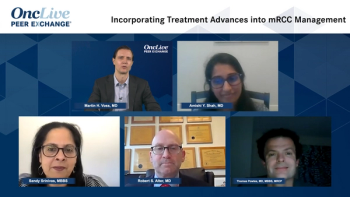
Incorporating Treatment Advances Into mRCC Management
ByMartin H. Voss, MD, Memorial Sloan Kettering Cancer Center,Robert Alter, MD, John Theurer Cancer Center,Thomas Powles, MD, MBBS, MRCP, Barts Cancer Centre,Amishi Y. Shah, MD, MD Anderson Cancer Center,Sandy Srinivas, MBBS, Stanford Cancer Center Expectations regarding the impact of research in metastatic renal cell carcinoma on the use of immunotherapy and targeted agents in routine clinical practice.
Emerging Therapies for Relapsed/Refractory mRCC
ByMartin H. Voss, MD, Memorial Sloan Kettering Cancer Center,Robert Alter, MD, John Theurer Cancer Center,Thomas Powles, MD, MBBS, MRCP, Barts Cancer Centre,Amishi Y. Shah, MD, MD Anderson Cancer Center,Sandy Srinivas, MBBS, Stanford Cancer Center Novel strategies being explored in various stages of clinical trials as potential therapies for relapsed/refractory metastatic renal cell carcinoma.
Relapsed/Refractory mRCC: Sequencing Therapy
ByMartin H. Voss, MD, Memorial Sloan Kettering Cancer Center,Robert Alter, MD, John Theurer Cancer Center,Thomas Powles, MD, MBBS, MRCP, Barts Cancer Centre,Amishi Y. Shah, MD, MD Anderson Cancer Center,Sandy Srinivas, MBBS, Stanford Cancer Center Considerations for how to approach a patient with metastatic renal cell carcinoma previously treated with ipilimumab and nivolumab, followed by nivolumab maintenance.
Treatment Approaches for Relapsed/Refractory mRCC
ByMartin H. Voss, MD, Memorial Sloan Kettering Cancer Center,Robert Alter, MD, John Theurer Cancer Center,Thomas Powles, MD, MBBS, MRCP, Barts Cancer Centre,Amishi Y. Shah, MD, MD Anderson Cancer Center,Sandy Srinivas, MBBS, Stanford Cancer Center An overview of treatment options for previously treated metastatic renal cell carcinoma.
Tissue and Liquid Biopsies in Advanced Prostate Cancer
ByAlicia K. Morgans, MD, MPH, Robert H. Lurie Comprehensive Cancer Center of Northwestern University,Phillip Koo, MD, MD Anderson Cancer Center,Scott T. Tagawa, MD, MS, FACP, Weill Cornell Medicine,Sandy Srinivas, MBBS, Stanford Cancer Center Dr Scott T. Tagawa comments on the pros and cons of liquid and tissue biopsies used to assess patients with advanced prostate cancer.
Precision Medicine in Advanced Prostate Cancer
ByAlicia K. Morgans, MD, MPH, Robert H. Lurie Comprehensive Cancer Center of Northwestern University,Phillip Koo, MD, MD Anderson Cancer Center,Scott T. Tagawa, MD, MS, FACP, Weill Cornell Medicine,Sandy Srinivas, MBBS, Stanford Cancer Center A panel of physicians who work in the field of genitourinary oncology comment on the evolving role of precision medicine in advanced prostate cancer.
Adjuvant Therapy Approaches for Operable RCC
ByMartin H. Voss, MD, Memorial Sloan Kettering Cancer Center,Robert Alter, MD, John Theurer Cancer Center,Thomas Powles, MD, MBBS, MRCP, Barts Cancer Centre,Amishi Y. Shah, MD, MD Anderson Cancer Center,Sandy Srinivas, MBBS, Stanford Cancer Center A summary of current therapies and ongoing investigations of adjuvant therapy for patients with operable renal cell carcinoma.
Therapies Under Investigation for Frontline mRCC
ByMartin H. Voss, MD, Memorial Sloan Kettering Cancer Center,Robert Alter, MD, John Theurer Cancer Center,Thomas Powles, MD, MBBS, MRCP, Barts Cancer Centre,Amishi Y. Shah, MD, MD Anderson Cancer Center,Sandy Srinivas, MBBS, Stanford Cancer Center Novel therapies currently being investigated as frontline options for metastatic renal cell carcinoma.
Favorable-Risk mRCC: Treatment Approaches
ByMartin H. Voss, MD, Memorial Sloan Kettering Cancer Center,Robert Alter, MD, John Theurer Cancer Center,Thomas Powles, MD, MBBS, MRCP, Barts Cancer Centre,Amishi Y. Shah, MD, MD Anderson Cancer Center,Sandy Srinivas, MBBS, Stanford Cancer Center A panel discussion regarding individual preferences for treating favorable-risk metastatic renal cell carcinoma.
Favorable-Risk mRCC: When to Initiate Therapy
ByMartin H. Voss, MD, Memorial Sloan Kettering Cancer Center,Robert Alter, MD, John Theurer Cancer Center,Thomas Powles, MD, MBBS, MRCP, Barts Cancer Centre,Amishi Y. Shah, MD, MD Anderson Cancer Center,Sandy Srinivas, MBBS, Stanford Cancer Center Dr Amishi Y. Shah, of MD Anderson Cancer Center, describes the rationale for active surveillance vs treatment with a novel therapeutic in metastatic renal cell carcinoma.
Intermediate/Poor-Risk mRCC: Treatment Selection
ByMartin H. Voss, MD, Memorial Sloan Kettering Cancer Center,Robert Alter, MD, John Theurer Cancer Center,Thomas Powles, MD, MBBS, MRCP, Barts Cancer Centre,Amishi Y. Shah, MD, MD Anderson Cancer Center,Sandy Srinivas, MBBS, Stanford Cancer Center Factors oncologists should consider prior to selecting a novel treatment approach for metastatic renal cell carcinoma.
Intermediate/Poor-Risk mRCC: I-O/I-O Vs I-O/TKI Therapy
ByMartin H. Voss, MD, Memorial Sloan Kettering Cancer Center,Robert Alter, MD, John Theurer Cancer Center,Thomas Powles, MD, MBBS, MRCP, Barts Cancer Centre,Amishi Y. Shah, MD, MD Anderson Cancer Center,Sandy Srinivas, MBBS, Stanford Cancer Center Variables that impact one’s decision to treat metastatic renal cell carcinoma with an immunotherapy-based regimen that includes a targeted agent vs additional immunotherapy.
I-O/TKI Regimens for Metastatic RCC: Dosing Strategies
ByMartin H. Voss, MD, Memorial Sloan Kettering Cancer Center,Robert Alter, MD, John Theurer Cancer Center,Thomas Powles, MD, MBBS, MRCP, Barts Cancer Centre,Amishi Y. Shah, MD, MD Anderson Cancer Center,Sandy Srinivas, MBBS, Stanford Cancer Center Recommendations for dosing targeted therapy-immunotherapy combinations used to treat patients with metastatic renal cell carcinoma.
The CLEAR Trial in Metastatic RCC
ByMartin H. Voss, MD, Memorial Sloan Kettering Cancer Center,Robert Alter, MD, John Theurer Cancer Center,Thomas Powles, MD, MBBS, MRCP, Barts Cancer Centre,Amishi Y. Shah, MD, MD Anderson Cancer Center,Sandy Srinivas, MBBS, Stanford Cancer Center Characteristics that distinguish the CLEAR trial of lenvatinib plus pembrolizumab as frontline therapy for metastatic renal cell carcinoma from other pivotal trials of immunotherapy plus tyrosine kinase inhibitors.