
Factors that impact the selection of immunotherapy vs chemotherapy for frontline metastatic urothelial cancer.
Factors that impact the selection of immunotherapy vs chemotherapy for frontline metastatic urothelial cancer.
Drs Arlene O. Siefker-Radtke and Scott T. Tagawa explain how they would establish goals of therapy and a treatment algorithm for a patient who presents with metastatic urothelial cancer.
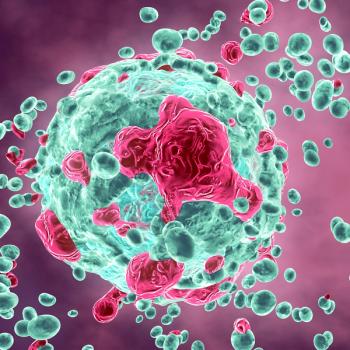
Monoclonal antibodies have played a key role in the development of personalized oncology and have proven antitumor activity through multiple mechanisms, including direct transmembrane signaling leading to apoptosis, complement mediated cytotoxicity, antibody-dependent cellular cytotoxicity, and inhibiting tumor vasculature and stroma.
Scott T. Tagawa, MD, MS, Richard A. Stratton Associate Professor in Hematology and Oncology, associate professor of clinical medicine and urology at Weill Cornell Medicine, and associate attending physician, Weill Cornell Medical Center/NewYork-Presbyterian Hospital, discusses ongoing research with 225Ac-J591 in metastatic castration-resistant prostate cancer.
Scott T. Tagawa, MD, MS, discusses the utility of beta and alpha emitters in targeting PSMA in prostate cancer.
Scott T. Tagawa, MD, MS, discusses remaining questions regarding treatment selection and PSMA imaging in metastatic castration-resistant prostate cancer.
Scott T. Tagawa, MD, MS, discusses the safety profile of novel monoclonal antibody 225Ac-J591 in metastatic castration-resistant prostate cancer.
Scott T. Tagawa, MD, MS, discusses preliminary data with 225Ac-J591 in metastatic castration-resistant prostate cancer.
Scott T. Tagawa, MD, MS, assistant professor of Medicine, medical director, Genitourinary Oncology Research Program, assistant attending physician, New York-Presbyterian Hospital, discusses the development of immunotherapy for patients with urothelial cancer.