William Wierda, MD, PhD, University of Texas MD Anderson Cancer Center
Articles by William Wierda, MD, PhD, University of Texas MD Anderson Cancer Center
CLL: Final Thoughts
ByWilliam Wierda, MD, PhD, University of Texas MD Anderson Cancer Center,John Allan, MD, Weill Cornell Medicine,Ehab Atallah, MD, Medical College of Wisconsin,Steven Coutre, MD, Stanford University Medical Center,Nicole Lamanna, MD, Herbert Irving Comprehensive Cancer Center,Jennifer Woyach, MD, Ohio State University An expert panel provides their final thoughts about the future of the chronic lymphocytic leukemia (CLL) treatment landscape.
Emerging Agents for R/R CLL
ByWilliam Wierda, MD, PhD, University of Texas MD Anderson Cancer Center,John Allan, MD, Weill Cornell Medicine,Ehab Atallah, MD, Medical College of Wisconsin,Steven Coutre, MD, Stanford University Medical Center,Nicole Lamanna, MD, Herbert Irving Comprehensive Cancer Center,Jennifer Woyach, MD, Ohio State University Experts discuss emerging agents for the treatment of relapsed/refractory (R/R) chronic lymphocytic leukemia (CLL).
PI3K inhibitors for R/R CLL
ByWilliam Wierda, MD, PhD, University of Texas MD Anderson Cancer Center,John Allan, MD, Weill Cornell Medicine,Ehab Atallah, MD, Medical College of Wisconsin,Steven Coutre, MD, Stanford University Medical Center,Nicole Lamanna, MD, Herbert Irving Comprehensive Cancer Center,Jennifer Woyach, MD, Ohio State University An overview of data for PI3K inhibitors for in relapsed/refractory (R/R) chronic lymphocytic leukemia (CLL).
CLL: Venetoclax in the R/R Setting
ByWilliam Wierda, MD, PhD, University of Texas MD Anderson Cancer Center,John Allan, MD, Weill Cornell Medicine,Ehab Atallah, MD, Medical College of Wisconsin,Steven Coutre, MD, Stanford University Medical Center,Nicole Lamanna, MD, Herbert Irving Comprehensive Cancer Center,Jennifer Woyach, MD, Ohio State University Experts in chronic lymphocytic leukemia (CLL) discuss retreating patients with venetoclax.
High-Risk Patients With R/R CLL
ByWilliam Wierda, MD, PhD, University of Texas MD Anderson Cancer Center,John Allan, MD, Weill Cornell Medicine,Ehab Atallah, MD, Medical College of Wisconsin,Steven Coutre, MD, Stanford University Medical Center,Nicole Lamanna, MD, Herbert Irving Comprehensive Cancer Center,Jennifer Woyach, MD, Ohio State University A discussion about treatment for high-risk patients with relapsed/refractory (R/R) chronic lymphocytic leukemia (CLL).
CLL: BTK Inhibitors in the R/R Setting
ByWilliam Wierda, MD, PhD, University of Texas MD Anderson Cancer Center,John Allan, MD, Weill Cornell Medicine,Ehab Atallah, MD, Medical College of Wisconsin,Steven Coutre, MD, Stanford University Medical Center,Nicole Lamanna, MD, Herbert Irving Comprehensive Cancer Center,Jennifer Woyach, MD, Ohio State University Nicole Lamanna, MD, provides an overview of Bruton's tyrosine kinase (BTK) inhibitors for chronic lymphocytic leukemia (CLL) in the relapsed/refractory (R/R) setting.
CLL: GLOW Trial Overview
ByWilliam Wierda, MD, PhD, University of Texas MD Anderson Cancer Center,John Allan, MD, Weill Cornell Medicine,Ehab Atallah, MD, Medical College of Wisconsin,Steven Coutre, MD, Stanford University Medical Center,Nicole Lamanna, MD, Herbert Irving Comprehensive Cancer Center,Jennifer Woyach, MD, Ohio State University Steven Coutre, MD, provides an overview of the phase 3 GLOW trial, as well as other novel and emerging combinations for the treatment of chronic lymphocytic leukemia (CLL).
CLL Therapies: Novel Combinations
ByWilliam Wierda, MD, PhD, University of Texas MD Anderson Cancer Center,John Allan, MD, Weill Cornell Medicine,Ehab Atallah, MD, Medical College of Wisconsin,Steven Coutre, MD, Stanford University Medical Center,Nicole Lamanna, MD, Herbert Irving Comprehensive Cancer Center,Jennifer Woyach, MD, Ohio State University John Allen, MD, provides an overview of data looking at emerging combinations as initial therapy for chronic lymphocytic leukemia (CLL).
BCL2 Inhibitors in Previously Untreated CLL
ByWilliam Wierda, MD, PhD, University of Texas MD Anderson Cancer Center,John Allan, MD, Weill Cornell Medicine,Ehab Atallah, MD, Medical College of Wisconsin,Steven Coutre, MD, Stanford University Medical Center,Nicole Lamanna, MD, Herbert Irving Comprehensive Cancer Center,Jennifer Woyach, MD, Ohio State University Experts discuss the optimal approach for choosing between a Bruton tyrosine kinase (BTK) inhibitor–based therapy vs a BCL2 inhibitor–based regimen for frontline chronic lymphocytic leukemia (CLL) therapy.
ALPINE Study: Zanubrutinib vs Ibrutinib in R/R CLL
ByWilliam Wierda, MD, PhD, University of Texas MD Anderson Cancer Center,John Allan, MD, Weill Cornell Medicine,Ehab Atallah, MD, Medical College of Wisconsin,Steven Coutre, MD, Stanford University Medical Center,Nicole Lamanna, MD, Herbert Irving Comprehensive Cancer Center,Jennifer Woyach, MD, Ohio State University An overview of the h ALPINE trial of zanubrutinib vs ibrutinib in patients with relapsed/refractory chronic lymphocytic leukemia (CLL).
Mitigating Toxicities Associated With BTK Inhibitors
ByWilliam Wierda, MD, PhD, University of Texas MD Anderson Cancer Center,John Allan, MD, Weill Cornell Medicine,Ehab Atallah, MD, Medical College of Wisconsin,Steven Coutre, MD, Stanford University Medical Center,Nicole Lamanna, MD, Herbert Irving Comprehensive Cancer Center,Jennifer Woyach, MD, Ohio State University A continuing discussion about the implications of toxicities with BTK inhibitors.
Safety and Efficacy of BTK Inhibitors in CLL
ByWilliam Wierda, MD, PhD, University of Texas MD Anderson Cancer Center,John Allan, MD, Weill Cornell Medicine,Ehab Atallah, MD, Medical College of Wisconsin,Steven Coutre, MD, Stanford University Medical Center,Nicole Lamanna, MD, Herbert Irving Comprehensive Cancer Center,Jennifer Woyach, MD, Ohio State University A discussion about managing toxicities associated with Bruton tyrosine kinase (BTK) inhibitors for chronic lymphocytic leukemia (CLL).
BTK Inhibitors as Frontline Treatment for CLL
ByWilliam Wierda, MD, PhD, University of Texas MD Anderson Cancer Center,John Allan, MD, Weill Cornell Medicine,Ehab Atallah, MD, Medical College of Wisconsin,Steven Coutre, MD, Stanford University Medical Center,Nicole Lamanna, MD, Herbert Irving Comprehensive Cancer Center,Jennifer Woyach, MD, Ohio State University Leukemia experts provide their personal experience using Bruton tyrosine kinase (BTK) inhibitors to treat patients with chronic lymphocytic leukemia (CLL) in the first-line setting.
Long-Term Experience With Ibrutinib in CLL
ByWilliam Wierda, MD, PhD, University of Texas MD Anderson Cancer Center,John Allan, MD, Weill Cornell Medicine,Ehab Atallah, MD, Medical College of Wisconsin,Steven Coutre, MD, Stanford University Medical Center,Nicole Lamanna, MD, Herbert Irving Comprehensive Cancer Center at Columbia University,Jennifer Woyach, MD, Ohio State University Jennifer Woyach, MD, discusses her experience using ibrutinib for chronic lymphocytic leukemia (CLL) in the first-line setting.
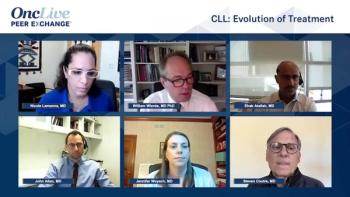
CLL: Evolution of Treatment
ByWilliam Wierda, MD, PhD, University of Texas MD Anderson Cancer Center,John Allan, MD, Weill Cornell Medicine,Ehab Atallah, MD, Medical College of Wisconsin,Steven Coutre, MD, Stanford University Medical Center,Nicole Lamanna, MD, Herbert Irving Comprehensive Cancer Center,Jennifer Woyach, MD, Ohio State University William Wierda, MD, PhD, leads a panel of experts in a discussion pertaining to the treatment of chronic lymphocytic leukemia (CLL), beginning with the evolving treatment landscape.