

Colorectal Cancer
Latest News
Advertisement
Latest Videos























































Advertisement
More News
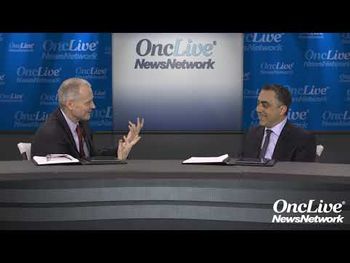

Mohamed E. Salem, MD, highlights ongoing research efforts to potentially improve survival in patients with metastatic colorectal cancer.

A theme of the 2019 NCCN Annual Conference was the expansion of biomarker testing to guide treatment, and a review of brand-new changes for guidelines in colorectal cancer was no different.

Iman Imanirad, MD, discusses these trials in depth and their impact on patients with refractory metastatic colorectal cancer.

Amit Mahipal, MBBS, professor of medicine, Mayo Clinic, discusses the treatment of patients with newly diagnosed metastatic colorectal cancer.

Amit Mahipal, MBBS, discusses navigating the complex treatment paradigm of metastatic colorectal cancer and sheds light on how recent advances are impacting the outlook of those affected by the disease.
The NCCN has updated their clinical practice guidelines for the treatment of patients with colorectal cancer to include the regimen of encorafenib and binimetinib plus EGFR inhibition with either cetuximab or panitumumab as a Category 2a treatment recommendation for patients with BRAF V600E–mutant metastatic colorectal cancer, after failure of 1 or 2 lines of therapy for metastatic disease.

John Strickler, MD, assistant professor of medicine at Duke University School of Medicine, gastrointestinal oncologist, Duke Cancer Institute, discusses therapies for rare variants of relapsed/refractory colorectal cancer.

Michael S. Lee, MD, sheds light on the treatment options available in the metastatic colorectal cancer space and highlights strategies poised to improve patient outcomes.

Yixing Jiang, BM, PhD, associate professor of medicine, director, Gastrointestinal Medical Oncology Marlene Stewart Greenebaum Cancer Center, University of Maryland School of Medicine, discusses the future of immunotherapy in microsatellite stable (MSS) colorectal cancer (CRC).

John Strickler, MD, highlights important data in the metastatic colorectal cancer space and challenges that remain for oncologists working in the field.

John L. Marshall, MD, chief, Division of Hematology/Oncology, Medstar Georgetown University Hospital director, Otto J. Ruesch Center for the Cure of Gastrointestinal Cancer, Georgetown-Lombardi Comprehensive Cancer Center, discusses personalized chemotherapy in the treatment of patients with colorectal cancer.

John L. Marshall, MD, discusses the current and future scope of metastatic colorectal cancer.

The European Medicines Agency’s Committee for Medicinal Products for Human Use has adopted a positive opinion for a new extended dosing schedule for pembrolizumab for all of the PD-1 inhibitor’s monotherapy indications in the European Union.
Douglas A. Nelson, MD, discusses key advances made in the treatment of patients with colorectal cancer and pancreatic cancer, and sheds light on remaining challenges in these paradigms.
Many younger patients see more than one doctor and face misdiagnoses before being given a diagnosis of colorectal cancer.

Michael J. Overman, MD, associate professor, Department of Gastrointestinal Medical Oncology, The University of Texas MD Anderson Cancer Center, discusses the ReDOS study in patients with metastatic colorectal cancer.

Michael Overman, MD, highlights data from pivotal trials presented at the 2019 Gastrointestinal Cancers Symposium and discusses where research efforts should be focused to improve the treatment of patients with colorectal cancer.
Cathy Eng, MD, professor of gastrointestinal medical oncology, The University of Texas MD Anderson Cancer Center, discusses recognizing tumor sidedness in the treatment of patients with metastatic colorectal cancer.

Cathy Eng, MD, FACP, discusses the current treatment options available for patients with metastatic colorectal cancer and highlights recent data in the space.
Byrne Lee, MD, chief, Upper GI and Mixed Tumor Surgery Service, associate professor of surgical oncology, City of Hope, discusses the benefit of cytoreductive surgery in the treatment of patients with metastatic colorectal cancer (mCRC).
Douglas A. Nelson, MD, Department of General Oncology, Division of Cancer Medicine, The University of Texas MD Anderson Cancer Center, discusses novel combination therapies in colorectal cancer (CRC).

Jonathan Mizrahi, MD, hematology/oncology fellow, The University of Texas MD Anderson Cancer Center, discusses bevacizumab (Avastin) as a chemoprotectant in colorectal cancer (CRC).

Pashtoon M. Kasi, MD, MBBS, MS, assistant professor of oncology and senior associate consultant in the Division of Hematology/Oncology at Mayo Clinic, discusses the role of immunotherapy in the treatment of patients with metastatic colorectal cancer.
Advertisement
Advertisement
Trending on OncLive
1
Dr Reiss Binder on the FDA Approval of Daraxonrasib for Metastatic PDAC
2
FDA Approves Daraxonrasib for Metastatic Pancreatic Ductal Adenocarcinoma
3
ASCO Issues Warning Regarding Ifosfamide Shortage for Cancer Care
4
Dr Ayanambakkam on the Safety of Darlifarnib Plus Cabozantinib in RCC KD
5