







































































The FDA has granted fast track designation to ABM-1310 for the treatment of patients with glioblastoma harboring BRAF V600E mutations.

The FDA has granted fast track designation to ABM-1310 for the treatment of patients with glioblastoma harboring BRAF V600E mutations.
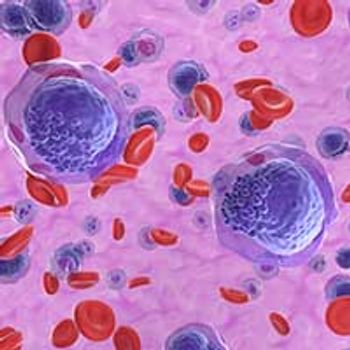
The hematologic neoplasm systemic mastocytosis is marked by the clonal proliferation of mast cells in the skin, bone marrow, gastrointestinal tract, spleen, and/or liver, caused by an activating KIT mutation in the KIT gene.

Stephen M. Ansell, MD, PhD, discusses the successes and challenges of utilizing immune therapy across the landscape of hematologic malignancies, the importance of increasing the understanding of how the immune system functions in patients with lymphoma, and ongoing research of immune therapy for this patient population.
Press Release
Melissa Culligan, RN, MS, PhD candidate, director of Thoracic Surgery Research at Temple Health, was recently honored with the International Association for the Study of Lung Cancer’s Lectureship Award for Nurses and Allied Health Professionals.

The FDA has granted fast track designation to IDE161 for the treatment of adult patients with advanced or metastatic ovarian cancer harboring germline or somatic BRCA1/2 mutations who are platinum resistant and have received prior treatment with antiangiogenic and PARP inhibitor therapies.

Emerging data in the neoadjuvant setting and the expansion of testing in standard practice have presented questions surrounding screening for and developing strategies from variant information in EGFR-mutated resectable non–small cell lung cancer.

Amy W. Zhou, MD, highlights the unique mechanism of action of the JAK1/2 and ACVR1 inhibitor momelotinib and the importance of ongoing investigations of JAK inhibitor combination therapies in myelofibrosis.

Epcoritamab-bysp has been approved by the European Commission and Japan's Ministry of Health, Labour, and Welfare for the treatment of select patients with relapsed/refractory large B-cell lymphoma.

The FDA has issued a complete response letter to the biologics license application seeking the approval of the on-body injector presentation of pegfilgrastim-cbqv, which is a biosimilar of pegfilgrastim.

Guillermo Garcia-Manero, M, discusses key efficacy and safety findings from the COMMANDS trial; the significance of the FDA approval of luspatercept in patients with lower-risk MDS; and considerations for bringing this agent into clinical practice.

Paolo Strati, MD, discusses novel combinations for the treatment of indolent B-cell lymphoma, emphasizes the primary goal of improving the efficacy of immunotherapy and providing patients with chemotherapy-free treatment options, and highlights ongoing trials are investigating various approaches to enhance the activity of lenalidomide/rituximab

The smoldering multiple myeloma treatment paradigm harbors fractures in the consensus regarding the optimal management of this disease, with some experts favoring a watch-and-wait approach and others advocating for early treatment.

First-line treatment with lutetium Lu 177 dotatate plus long-acting octreotide led to a statistically significant and clinically meaningful improvement in progression-free survival compared with high-dose long-acting octreotide alone in newly diagnosed patients with somatostatin receptor–positive, grade 2 and 3, advanced gastroenteropancreatic neuroendocrine tumors.

A team of Dana-Farber researchers has identified a potential new way to assess clinically valuable features of clear cell renal cell carcinoma, a form of kidney cancer, using image processing with deep learning.

Although some community oncologists may think they can do little to abate the reimbursement reform forces that are affecting their practices, there are actions they can, and should, take to influence the success of their value-based care journey that may not be part of the fundamentals of their current practice.

Ezra Rosen, MD, PhD, highlights the early-phase investigation of zotatifin in estrogen receptor-positive metastatic breast cancer, explains the agent’s unique mechanism of action as well as its efficacy and safety in a heavily pretreated population, and underscores the need for improved sequencing of the myriad of treatment options in the post–CDK4/6 inhibitor space.

The 18th Annual New York Lung Cancers Symposium, scheduled for November 11, 2023, as a live meeting in New York, New York, boasts an agenda that covers a broad range of modern clinical topics.

A new agent that subverts myeloma cells from within while also subjecting them to an immune system attack produced impressive responses in combination with dexamethasone in patients with multiple myeloma that had relapsed and stopped responding to all currently available therapies
Circulating tumor DNA status at the time of postoperative minimal residual disease is a prognostic factor of recurrence for patients with radically resected stage II to IV colorectal cancer

The European Commission has granted marketing authorization for Enrylaze for use as a component of a multi-agent chemotherapeutic regimen for the treatment of patients with acute lymphoblastic leukemia and lymphoblastic lymphoma in adult and pediatric patients 1 month and older who developed hypersensitivity or silent inactivation to E. coli–derived asparaginase.

The first-line combination of pembrolizumab, lenvatinib, pemetrexed, and platinum-containing chemotherapy did not meet the dual primary end points of overall survival and progression-free survival compared with pembrolizumab plus pemetrexed and platinum-containing chemotherapy in patients with metastatic, nonsquamous non–small cell lung cancer in whom EGFR-, ALK- or ROS1-directed therapies were not indicated.

Treatment with the combination of enfortumab Vedotin and pembrolizumab led to an improvement in overall survival and progression-free survival compared with chemotherapy in previously untreated patients with locally advanced or metastatic urothelial cancer who were eligible for cisplatin- or carboplatin-containing chemotherapy.

Datopotamab deruxtecan elicited a statistically significant and clinically meaningful improvement in progression-free survival compared with chemotherapy in patients with inoperable or metastatic hormone receptor–positive, HER2-low or HER2-negative breast cancer.
Neoadjuvant treatment with nivolumab plus platinum-based chemotherapy, followed by surgery and adjuvant nivolumab monotherapy, generated a statistically significant and clinically meaningful improvement in event-free survival vs neoadjuvant chemotherapy plus placebo, followed by surgery and adjuvant placebo, in patients with resectable stage IIA to IIIB non–small cell lung cancer.

Ajai Chari, MD, discusses selecting between CAR T-cell therapies and bispecific antibodies in multiple myeloma, expands on the factors that can help inform these decisions, and highlights the need for additional data to help inform sequencing and potential combinations for these therapies.