
Updated INDIGO data reveal that vorasidenib continues to showcase improved efficacy over placebo in patients with IDH1/2-mutated diffuse glioma.
Updated INDIGO data reveal that vorasidenib continues to showcase improved efficacy over placebo in patients with IDH1/2-mutated diffuse glioma.
Tovorafenib generated durable drug holiday responses in pediatric patients with BRAF-altered relapsed/refractory low-grade glioma.

Early safety findings from the phase 2b RESTORE study (NCT03862430) of NanO2 plus radiation and temozolomide in newly diagnosed glioblastoma were shared.
J. Bradley Elder, MD, discusses blinded early-safety data from a phase 2b trial of IGV-001 in patients with newly diagnosed glioblastoma.
Rimas V. Lukas, MD, discusses the efficacy of eflornithine plus lomustine in recurrent IDH-mutant anaplastic astrocytoma per 2021 WHO diagnostic criteria.
IGV-001, an autologous cell immunotherapy, demonstrated an acceptable safety profile in patients with newly diagnosed glioblastoma.
Diane Reidy-Lagunes, MD, discusses key trials that have expanded the treatment paradigm for patients with neuroendocrine tumors.
Yelena Y. Janjigian, MD, discusses the significance of the FDA approval of zolbetuximab plus chemotherapy for HER2–, CLDN18.2+ gastric/GEJ adenocarcinoma.
Paolo Caimi, MD, discusses the rationale behind evaluating LMY-920, a novel BAFF CAR T-cell therapy, in relapsed/refractory non-Hodgkin lymphoma.
Jennifer Scalici, MD, discusses data for IMNN-001plus chemotherapy in advanced ovarian cancer.
Steven H. Lin, MD, PhD, discusses the safety of NKTR-255 in enhancing immune recovery post-chemoradiation in locally advanced NSCLC.
Anna Weiss, MD, discusses the significance of various imaging modalities in patients with breast cancer.
Roy S. Herbst, MD, PhD, discusses advances in EGFR inhibition throughout the past several decades in patients with lung cancer.
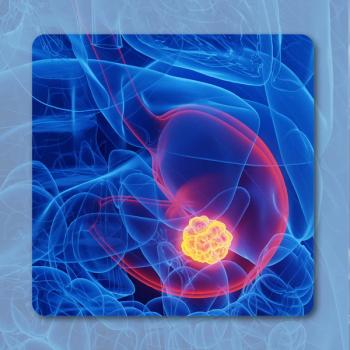
Yelena Y. Janjigian, MD, highlights key takeaways and data from 2024 in the gastric and GEJ cancer field.
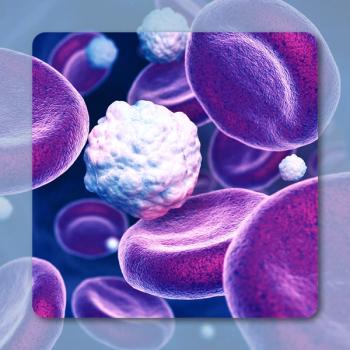
Transposon-engineered BAFF ligand–based CAR T cells induced responses with a tolerable safety profile among 3 patients with relapsed/refractory B-cell NHL.
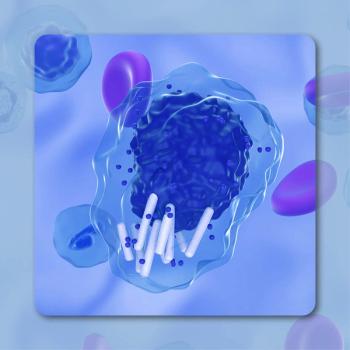
Nicole Lamanna, MD, highlights various clinical trials underway evaluating new treatment options for patients with chronic lymphocytic leukemia.

When evaluating real-world experience, differences in race/ethnicity and among elderly patients with DLBCL appeared different from those seen in clinical trials, highlighting the need for consideration in these patient populations.
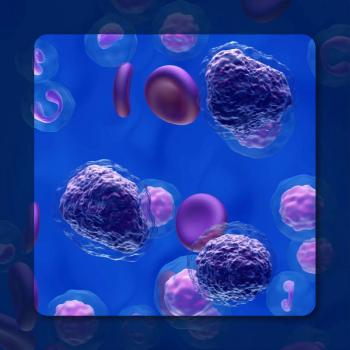
Advancements in FL treatment, including BTK inhibitors and CAR T-cell therapies, offer new hope for relapsed or refractory cases.
Victor Moreno, MD, PhD, discusses insights into the pharmacodynamic activity of CLN-619 for patients with advanced solid tumors.
RP1 plus nivolumab generated responses in advanced melanoma that progressed on or after prior anti–PD-1 therapy.

The investigational PRAME-targeted T-cell therapy IMA203 generated responses in melanoma and other solid tumors,

Phase 1 data showed the potential for invikafusp alfa as a precision cancer immunotherapeutic agent in solid tumors after exposure to PD-(L)1 therapy.
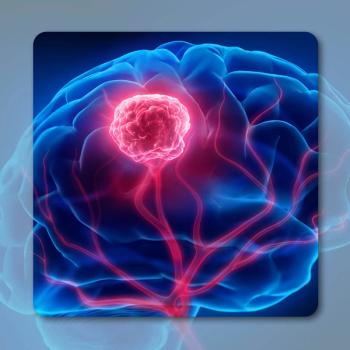
Patients with newly diagnosed glioblastoma had improved survival when treated with TTFields plus temozolomide and pembrolizumab.

E-602 plus cemiplimab elicited preliminary antitumor activity and had a tolerable safety profile in PD-(L)1–resistant solid tumors.
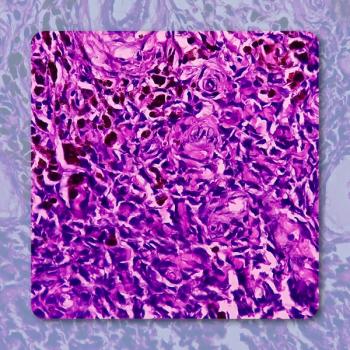
Administration of fixed-dose CAR T cells followed by escalating doses of UB-TT170 led to changes in cytokine levels in relapsed/refractory osteosarcoma.

THIO plus cemiplimab displayed durable activity in patients with advanced checkpoint inhibitor–resistant NSCLC.

Treatment with magrolimab plus docetaxel led to peripheral CD47 saturation in patients with advanced NSCLC, which correlated with improved outcomes.
Co-formulated vibostolimab and pembrolizumab plus chemotherapy failed to improve OS in the first line vs atezolizumab plus chemotherapy in ES-SCLC.
The biomarker analysis of patients enrolled on part B of the CheckMate 914 trial explored the effects of PD-L1 and KIM-1 expression.
Preclinical data suggest that DLL3-TOPAbody has antitumor activity and could provide a survival advantage in DLL3-expressing tumor cells, including SCLC.