

There remains a significant unmet need for better treatments that prolong life and preserve the quality of life in women with metastatic breast cancer.
There remains a significant unmet need for better treatments that prolong life and preserve the quality of life in women with metastatic breast cancer.
Here is your snapshot for all therapeutic options that were approved by the FDA in March 2025 spanning tumor types.

The top 5 OncLive videos of the week cover insights in multiple myeloma, HER2+ breast cancer, non¬–muscle-invasive bladder cancer, and ovarian cancer.
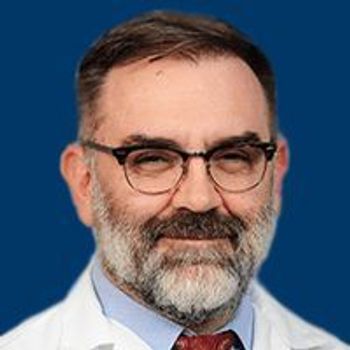
Jeffrey Zonder, MD, emphasizes the importance of identifying MGUS and evaluating nonspecific symptoms to improve the detection of multiple myeloma.

Mohammed Najeeb Al Hallak, MD, MS explores treatment considerations in advanced pancreatic, colorectal, and neuroendocrine cancers.
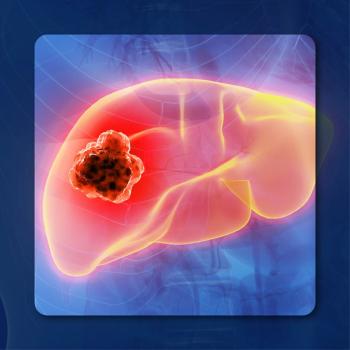
Mohammed Najeeb Al Hallak, MD, MS, discusses patient-specific factors to consider during the selection of frontline systemic therapy for HCC.

Mohammed Najeeb Al Hallak, MD, MS, and Sakti Chakrabarti, MD, discuss ongoing research in gastrointestinal cancers.

Mohammed Najeeb Al Hallak, MD, MS, and Sakti Chakrabarti, MD, discuss research building upon approved combinations in unresectable hepatocellular carcinoma.
Mohammed Najeeb Al Hallak, MD, MS, and Sakti Chakrabarti, MD, on trastuzumab deruxtecan–based regimens in advanced HER2-positive GI cancers.
Mohammed Najeeb Al Hallak, MD, MS, and Sakti Chakrabarti, MD, on final overall survival data from the KEYNOTE-811 trial.
Mohammed Najeeb Al Hallak, MD, MS, and Sakti Chakrabarti, MD, on data for neoadjuvant nivolumab plus ipilimumab in dMMR colon cancer.
Mohammed Najeeb Al Hallak, MD, MS, and Sakti Chakrabarti, MD, on tremelimumab/durvalumab vs atezolizumab/bevacizumab in unresectable HCC.
Mohammed Najeeb Al Hallak, MD, MS, and Sakti Chakrabarti, MD, on 5-year data for tremelimumab plus durvalumab in unresectable HCC.
Press Release
The new process checking system makes sure the right drugs are dispensed, improving patient safety.
Jeffrey Zonder, MD, discusses the outcomes of the phase 3 PERSEUS trial in patients with relapsed/refractory multiple myeloma.
Jeffrey Zonder, MD, discusses notable unmet needs that remain to be addressed in the treatment of patients with relapsed/refractory multiple myeloma.
As the treatment paradigm in urothelial cancer expands to include agents directed at various targets, NECTIN-4 has emerged as a promising treatment target.
Abhinav Deol, MD, discusses ongoing and potential research avenues for improving the use of CAR T-cell therapy in multiple myeloma.
Abhinav Deol, MD, discusses the sequencing of CAR T-cell therapies with other readily available agents in multiple myeloma.
Press Release
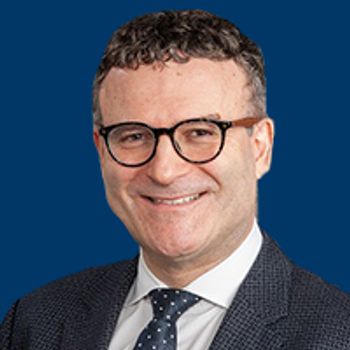
The Barbara Ann Karmanos Cancer Institute, part of Grand Blanc-based McLaren Health Care and a National Cancer Institute-designated Comprehensive Cancer Center, in conjunction with Wayne State University, have named Boris C. Pasche, MD, PhD, FACP, President & Chief Executive Officer and Chair of the Department of Oncology at the Wayne State University School of Medicine.
Jeffery Zonder, MD, leader, multiple myeloma sub-committee, Barbara Ann Karmanos Cancer Institute, professor of medicine, Departments of Hematology and Oncology, Wayne State University School of Medicine, discusses ongoing research in multiple myeloma taking place at the Barbara Ann Karmanos Cancer Institute.
Jeffery Zonder, MD, discusses the real-world use of ixazomib-based therapy for patients with relapsed/refractory multiple myeloma as seen in the INSURE study.

Before sharing clinical pearls for the treatment of prostate cancer, key opinion leaders reflect on the potential use of immune checkpoint inhibitors in mCRPC.
Expert panelists consider the real-world application of PARP inhibitor data in patients with metastatic castration-resistant prostate cancer.
Andrew Kin, MD, discusses clinical implications of the FDA approval for teclistamab-cqyv in relapsed/refractory multiple myeloma.
Comprehensive insight on the evolving role of PARP inhibitors in metastatic castration-resistant prostate cancer and clinical trials in this setting.
Expert oncologists briefly review the current treatment paradigm of metastatic castration-resistant prostate cancer (mCRPC).
Jeffery Zonder, MD, discusses the management of toxicities associated with bispecific antibodies in patients with multiple myeloma.

An increased focus on long-term and genomic analyses on established treatments in prostate cancer have revealed new opportunities for patients across disease states.
Closing out their segment on metastatic hormone-sensitive prostate cancer, panelists review other treatment modalities being investigated in clinical trials.