Experts delineate the latest developments and lingering questions in bladder and renal cancers, covering pivotal trials, emerging therapies, and optimal management approaches.
Experts delineate the latest developments and lingering questions in bladder and renal cancers, covering pivotal trials, emerging therapies, and optimal management approaches.
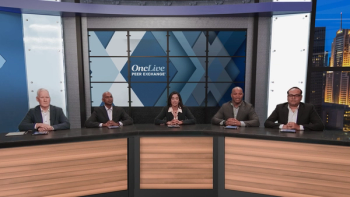
The expert panel discusses ongoing research and offers closing thoughts on the future of HR+/HER2- breast cancer treatment.
Panelists share clinical insight into how to approach treatment selection among ADCs in HR+/HER2- metastatic breast cancer both now and in the future, given the currently available options and additional ADCs in development.
Dr Gadi discusses recent data updates on the TROP-2–directed antibody-drug conjugate (ADC) sacituzumab govitecan (SG), including analyses performed in patients with HER2-low disease.
Experts on HR+/HER2- breast cancer discuss biomarker testing approaches, including sampling considerations and timing of testing.
Dr Vidal expands on use of PI3K/AKT/mTOR pathway inhibitors following frontline progression, focusing on the PI3K inhibitor alpelisib for patients with PIK3CA mutations, as well as capivasertib, an AKT inhibitor in development.
A focused discussion on trials that may address disease progression on first-line therapy, including those on ET and CDK4/6 inhibitor rechallenge and novel combination strategies.
Experts share how they approach management of patients with disease progression on first-line endocrine therapy, with a focus on ESR1 mutation testing and identifying who might be suitable for treatment with the oral SERD elacestrant.
Timothy Pluard, MD, discusses recent data from an age-based subgroup analysis of RIGHT Choice, which compares the efficacy of combination ribociclib/ET versus chemotherapy in the first-line treatment of HR+/HER2- advanced breast cancer.
Gregory Vidal, MD, PhD, presents ASCO 2023 data from the SONIA trial, which assessed the efficacy of CDK4/6 inhibitors when given as part of a combination with endocrine therapy (ET) in either the first- or second-line setting.
Experts on HR+/HER2- breast cancer review recent real-world data on CDK4/6 inhibitors and share excitement about first-line trials that have not yet read out.
The expert panel reviews CDK4/6 inhibitor options in the HR+/HER2- metastatic breast cancer (mBC) setting and previous data supporting their use.
A comprehensive discussion on approaches to optimizing treatment selection and dosing in HR+/HER2- breast cancer.
VK Gadi, MD, PhD, shares his strategies for managing adverse events related to abemaciclib in the treatment of HR+/HER2- breast cancer.
Experts on HR+/HER2- breast cancer review data updates on adjuvant therapies from the 2023 ASCO Annual Meeting.
A discussion on the use of circulating tumor DNA (ctDNA) as a prognostic biomarker in HR+/HER2- breast cancer.
The expert panel reviews data updates on neoadjuvant therapy in HR+/HR2- early breast cancer and discusses the role of CDK4/6 inhibition in this setting.
Experts on HR+/HER2- breast cancer discuss unmet needs in the early-stage setting.
A panel of expert oncologists review standard-of-care treatment approaches for HR+/HER2- early breast cancer and genetic testing practices when utilizing PARP inhibitors.

Updated data from key trials in non–small cell lung cancer continue to demonstrate the superiority of immunotherapy and targeted therapy regimens for non–small cell lung cancer treatment, but the optimal use of these agents in the adjuvant vs neoadjuvant settings is still contested.

Gregory Vidal, MD, PhD, discusses racial disparities in the treatment of patients with breast cancer.

Gregory Vidal, MD, PhD, discusses the impact of the phase 3 KATHERINE trial in HER2-positive breast cancer.
Gregory Vidal, MD, PhD, including the evolution of treatment options for HER2-low breast cancer, emerging antibody-drug conjugates in triple-negative disease, and the viability of HER3 as an emerging target in breast cancer
Lee S. Schwartzberg, MD, discusses the culmination of research with androgen-targeted agents in metastatic androgen receptor–positive, estrogen receptor–positive breast cancer and ongoing research that could lead to a paradigm shift in the second-line setting.
Dr. Schwartzberg discusses the rationale to evaluate enobosarm in androgen receptor-positive, estrogen recepetor-positive advanced breast cancer, phase 2 data with the agent, and expectations for the ongoing phase 3 ARTEST trial in this population.

Results from a partnership to address disparities and enhance the quality of breast cancer care atMemphis-based West Cancer Center & Research Institute were announced today.

Genentech, a member of the Roche Group, today announced the creation of the Advancing Inclusive Research® Site Alliance.
Axel Grothey, MD, discusses the potential utility of circulating tumor DNA as a marker for rechallenging patients with treatment in colorectal cancer.
Axel Grothey, MD, discusses the potential role of circulating tumor DNA testing in screening patients for early-stage colorectal cancer.
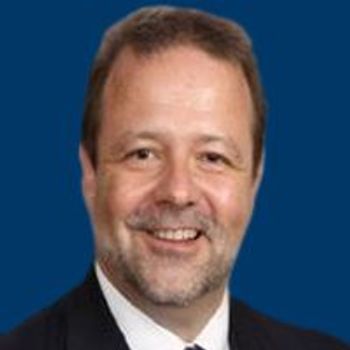
Axel Grothey, MD, discusses the potential applications for ctDNA in CRC and shed light on the updated analysis from the pivotal IMbrave150 trial in advanced hepatocellular carcinoma.