TKI-based regimens were associated with higher rates of disease control in metastatic translocation renal cell carcinoma.
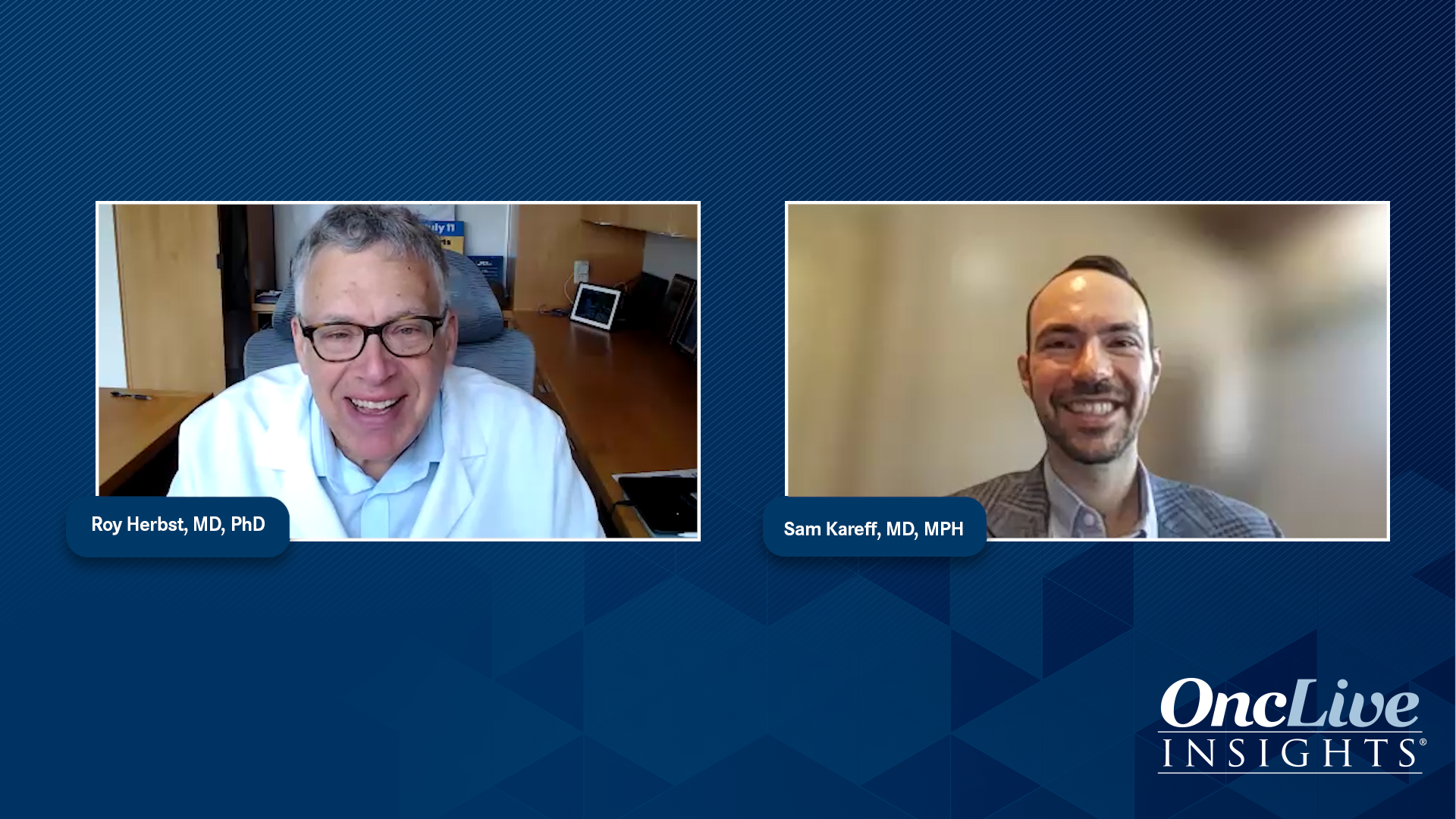
Dr. Roy Herbst introduces the program and presents clinical scenario 1: a 61-year-old woman with a 4-week history of dry cough, CT-confirmed 3.2 cm spiculated right lower lobe nodule, no mediastinal lymphadenopathy, SUVmax 6.8 on PET/CT, and negative brain MRI. She undergoes video-assisted thoracoscopic surgery right lower lobectomy with mediastinal lymph node dissection, yielding a 3.4 cm invasive adenocarcinoma, R0 margins, pN0, staged IIA (T2bN0M0) based on visceral pleural invasion.
Dr. Roy Herbst introduces the program and presents clinical scenario 1: a 61-year-old woman with a 4-week history of dry cough, CT-confirmed 3.2 cm spiculated right lower lobe nodule, no mediastinal lymphadenopathy, SUVmax 6.8 on PET/CT, and negative brain MRI. She undergoes video-assisted thoracoscopic surgery right lower lobectomy with mediastinal lymph node dissection, yielding a 3.4 cm invasive adenocarcinoma, R0 margins, pN0, staged IIA (T2bN0M0) based on visceral pleural invasion. Next-generation sequencing (NGS) returns an EGFR exon 19 deletion with PD-L1 tumor proportion score (TPS) of 60%; the treating oncologist had already initiated adjuvant chemoimmunotherapy before results returned. Following tumor board recommendation, immunotherapy is discontinued and the patient completes platinum-based chemotherapy alone. Surveillance CT shows no evidence of recurrent disease.
Dr. Kareff sets the historical context for adjuvant EGFR-mutated NSCLC treatment: for decades, platinum-based chemotherapy was the only systemic option after complete resection, offering a modest absolute survival benefit. ADAURA demonstrated that 3 years of adjuvant osimertinib with or without prior chemotherapy produced a disease-free survival (DFS) benefit first, followed by an overall survival (OS) benefit now reported at the 8-year landmark, solidifying targeted adjuvant therapy as a standard component of the treatment continuum.
Both panelists agree that initiating immunotherapy before complete NGS results is inadvisable in 2026. PD-L1 TPS alone is insufficient to guide adjuvant systemic therapy; at minimum, EGFR, ALK, and ROS1 testing must be available, as EGFR-mutated tumors generally do not benefit from immunotherapy and may be harmed by it. Dr. Kareff endorses the tumor board's recommendation to discontinue immunotherapy promptly upon return of the EGFR result, allow tyrosine kinase inhibitor (TKI) washout, and proceed with adjuvant osimertinib. Dr. Herbst notes that at his institution, NGS results typically return within 2 to 3 weeks, generally before a patient is ready for adjuvant systemic therapy. Dr. Kareff acknowledges turnaround variability in hybrid community-academic settings and emphasizes the importance of factoring NGS timing into upfront planning. Both agree that stage 2 and above warrants adjuvant chemotherapy before targeted therapy in patients who can tolerate it, with more individualized shared decision-making for earlier stages.