Articles by Samuel Kareff, MD, MPH
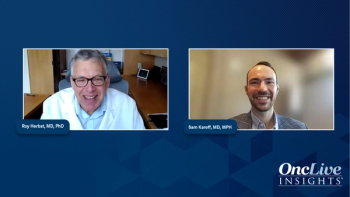
Dr. Herbst identifies post-progression management as the central ongoing challenge in EGFR-mutated NSCLC: even with highly effective first-line targeted therapy, median duration of response in the metastatic setting is approximately 22 to 24 months, and the disease invariably acquires resistance.
Dr. Herbst asks about clinical trial data combining local therapy with targeted therapy in EGFR-mutated NSCLC.
Dr. Kareff presents clinical scenario 2: a 68-year-old man, former light smoker (10 pack-years, quit 20 years prior), with a 2-month history of headaches and word-finding difficulty.
Dr. Herbst asks Dr. Kareff about other targetable alterations now supported by adjuvant therapy data in NSCLC.
Dr. Herbst turns to the 8-year ADAURA overall survival data presented at the World Lung Conference, noting the trial's original primary endpoint was DFS, with OS first reported at ASCO approximately 3 years prior and now updated with 8 years of follow-up.
Dr. Herbst asks Dr. Kareff about the real clinical challenge of managing osimertinib toxicity across a 3-year adjuvant course, noting a fundamental difference from the metastatic setting where patients are symptomatic at baseline and often feel dramatically better when targeted therapy starts.
Dr. Herbst, reflecting on nearly 30 years of EGFR inhibitor research, asks Dr. Kareff how he applies the ADAURA paradigm in practice. Dr. Kareff frames the conversation around the optimism that comes with identifying an actionable mutation: for patients with resected stage IB through IIIA EGFR-mutated NSCLC, he opens the adjuvant osimertinib discussion by communicating that the mutation qualifies them for targeted therapy shown to reduce recurrence risk and improve survival.
Dr. Roy Herbst introduces the program and presents clinical scenario 1: a 61-year-old woman with a 4-week history of dry cough, CT-confirmed 3.2 cm spiculated right lower lobe nodule, no mediastinal lymphadenopathy, SUVmax 6.8 on PET/CT, and negative brain MRI. She undergoes video-assisted thoracoscopic surgery right lower lobectomy with mediastinal lymph node dissection, yielding a 3.4 cm invasive adenocarcinoma, R0 margins, pN0, staged IIA (T2bN0M0) based on visceral pleural invasion.
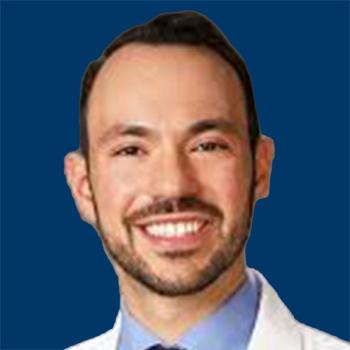
Samuel A. Kareff, MD, MPH, shares his reflections on the benefits, challenges, and critical elements of effective mentorship in hematology/oncology.
Dr Kareff discusses the intersections between early-phase clinical research and meaningful mentorship experiences during oncology/hematology fellowship.
Samuel Kareff, MD, MPH, discusses the treatment of patients with non–small cell lung cancer.
