
Opinion|Videos|July 22, 2024
AE Management for Combination Regimens in Advanced RCC
Author(s)Martin H. Voss, MD, Moshe Ornstein, MD
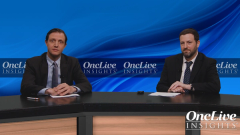
The key opinion leaders engage in discussion on dose reduction and treatment duration rates in the context of the CLEAR study, which investigated lenvatinib plus pembrolizumab in advanced renal cell carcinoma (RCC), addressing important aspects such as optimal starting doses, the potential for reverting to higher doses, and the implications of these strategies on overall treatment efficacy and patient outcomes.
Advertisement
Episodes in this series
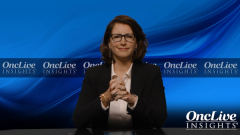
- Please comment on dose reduction and treatment duration rates in the CLEAR study and real-world experience. (
Motzer JCO 2024 ).
- What are the typical starting doses for lenvatinib and pembrolizumab in your practice?
- What is your approach to dose reductions and reverting to higher doses in your practice?
- What are some commonly observed adverse events with IO-TKI regimens?
- What strategies do you implement to mitigate and monitor for common side effects?
- What interventions help promote early AE detection and proactive mitigation?
Advertisement
Related to this article
The NCCN update adds locally advanced CSCC to the category 2A listing cosibelimab received in metastatic disease in 2025.

In TASKIN, the 12-month OS rate was 61.3% with vilamakitug vs 55.7% with placebo plus trifluridine/tipiracil.

The 510(k) clearance covers an MRI-derived AI risk score for stage I to IIIA disease; the high-risk category carried an HR of 2.81 for recurrence.
The FDA has approved dostarlimab for MSI-H or dMMR locally advanced rectal cancer.

The FDA accepted an NDA for UGN-103 for recurrent low-grade intermediate-risk NMIBC, with a target action date of June 14, 2027.

Ulrich Steidl, MD, PhD, has finalized his Montefiore Einstein Comprehensive Cancer Center senior leadership team.

The CirCLIQ Injector approval for subcutaneous isatuximab in multiple myeloma is the first anticancer treatment delivered via an on-body injector in Japan.

The top 5 OncLive TV videos of the week cover insights in multiple myeloma, HR+ breast cancer, CAR T-cell therapy, CLL, and oral SERDs.
Advertisement
Advertisement
Trending on OncLive
1
FDA Clears TumorSight Risk, an MRI-Derived AI Recurrence Tool for HR+, HER2– Breast Cancer
2
Vilamakitug Meets OS Threshold in Phase 1/2 Refractory mCRC Trial
3
Dr Cercek on the FDA Approval of Dostarlimab for dMMR/MSI-H Locally Advanced Rectal Cancer
4
Weigh Benefit Against Burden: Defining Lurbinectedin’s Role in a Shifting Small Cell Lung Cancer Landscape
5