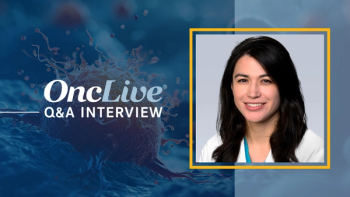
Elise A. Chong, MD, discusses real-world liso-cel efficacy and safety, outpatient use, and future directions in relapsed/refractory mantle cell lymphoma.

Tycel Phillips, MD, discusses how CAR T-cell therapies and bispecific antibodies could further affect mantle cell lymphoma management.
Although mantle cell lymphoma (MCL) research has focused heavily on BTK inhibitor–based regimens, continued work on alternative treatments such as chimeric antigen receptor (CAR) T-cell therapies, bispecific antibodies, and other novel agents is necessary for the field, according to Tycel Phillips, MD. He also underscored the logistical challenges that may accompany the further integration of treatments such as CAR T-cell therapies into the MCL treatment paradigm.
Phillips looked at specific Bruton tyrosine kinase (BTK) inhibitor-based regimens such as acalabrutinib (Calquence) combined with bendamustine (Treanda) and rituximab (Rituxan; ECHO),
In an interview with OncLive®, Phillips explained why trials comparing BTK inhibitor–based regimens to alternative treatments are necessary to uncover the impact of early BTK inhibitor use, while also discussing how CAR T-cell therapies and bispecific antibodies could affect the shifting treatment paradigm.
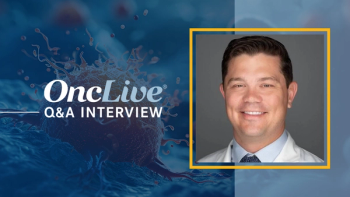
Phillips is an associate professor in the Department of Hematology and Hematopoietic Cell Transplantation in the Division of Lymphoma at City of Hope in Duarte, California.
Phillips: Both [available CAR T-cell therapy] treatments—[brexucabtagene autoleucel (Tecartus) and lisocabtagene maraleucel (Breyanzi)]—seem to be effective options in patients who progress on a BTK inhibitor. Obviously, CAR T-cell therapy has a little bit more durable data with the 2 products [approved].
However, I do think that will likely change in the future with bispecific antibodies. If we looked at where [CAR T-cell therapies] will fit in earlier lines of therapy, due to accessibility, bispecifics may be a more feasible option, but we’re still a little way away from that happening, mainly because the uptake of bispecifics in the community space is not as robust as it has been in academic centers.
To truly change the treatment paradigm, we need more utilization of these medications and a structured team approach on how to manage and deal with some of the toxicities that come with them in the community space. If I had to predict the future, I would say bispecifics will probably be the treatment that will make the biggest impact in the population of patients with untreated MCL compared with CAR T-cell therapy, mainly because of the logistics and the cost of CAR T-cell therapy as it stands right now.
There are newer formulations and ways of trying to deliver CAR T-cell products, but until a lot of these other newer methods take hold, the biggest anchor to commercializing CAR T in a community space will be the requirements of hospitalization and accreditation, which we don’t have to deal with for bispecific antibodies.
We’ve made a lot of leaps and bounds. Moving forward until we can get some of these other things sorted out, it would probably be in the best interest of the [MCL] field itself to have an alternative option that we can utilize in the frontline space besides BTK inhibitors. It would be nice to see a randomized study using other drugs besides BTK inhibitors and comparing those to some of these BTK inhibitor–based regimens that we have.
[For example, we could compare alternative treatments such as] approved [BTK inhibitor-based regimens], such as ECHO, and others that are in the NCCN guidelines like BOVen, to see how regimens that utilize other novel agents compared to these regimens [and] if actually having BTK inhibitors in the frontline space is worth the concern that some of us have about the impact of using this treatment early. [Specifically, evaluating what impact early BTK inhibitor treatment] will have on the duration of remission for some of our patients.
[Considering patients with] MCL being such a small population compared with [those with] some of the other lymphoma subtypes, it’s a little bit harder to get these randomized trials up, started, and completed. In large B-cell lymphoma, [for example], in the next 3 to 4 years, [there will] likely be 6 to 7 frontline studies that are reading out with a multitude of different options. We don’t really have that plethora or buffet of options in MCL, but it would be nice to have a randomized study comparing some of these BTK inhibitor–based frontline regimens [to alternative treatment options] to see if they are comparable without the concern about what happens at relapse.