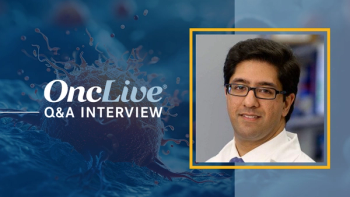
Following 2024 FDA label expansions for ciltacabtagene autoleucel (cilta-cel; Carvykti) and idecabtagene vicleucel (ide-cel; Abecma), CAR T-cell therapy has become an option in earlier lines of therapy for patients with relapsed/refractory multiple myeloma, with cilta-cel notably approved as early as the second line.1,2 However, implementation of this treatment modality in earlier lines could still be improved, according to Hamza Hashmi, MD.
“In general, there is substantial room for additional utilization [of CAR T-cell therapy in multiple myeloma], largely not because of clinical ineligibility, but because of some of the referral and access gaps that we see in our practice,” Hashmi said.
In an interview with OncLive®, Hashmi outlined how the use of CAR T-cell therapy has evolved in multiple myeloma management with the earlier-line approvals of cilta-cel and ide-cel; addressed work being done to improve access and referral gaps; and explained sequencing considerations for CAR T-cell therapy with other classes of agents, such as bispecific antibodies and CELMoDs.
Hashmi is an assistant attending physician at Memorial Sloan Kettering Cancer Center (MSKCC) in New York, New York.
OncLive: Following the second-line approval of cilta-cel and the third-line approval of ide-cel in 2024, how have you seen CAR T-cell therapies integrated into earlier lines of treatment for patients with relapsed/refractory multiple myeloma?
Hashmi: There is a cilta-cel second-line approval based on [data from the phase 3] CARTITUDE-4 trial [NCT04181827], and the ide-cel third-line approval [is based on data from] the [phase 3] KarMMa-3 study [NCT03651128]. The utilization [of CAR T-cell therapy in earlier lines] in general has grown, but [it] remains well below where clinical eligibility would suggest it could be. The utilization also varies significantly by site; [in particular], referral centers have meaningfully higher use [of CAR T-cell therapy] than mixed primary and specialty campuses. I also believe that Black patients, unfortunately, are significantly less likely to receive CAR T-cell therapy than their White counterparts.
For patients with relapsed/refractory multiple myeloma, are there particular subgroups where you may prefer an earlier-line CAR T-cell therapy approach? How does standard-risk vs high-risk disease factor into this conversation?
Patients most often categorized as ideal referrals for early CAR T-cell therapy are those with functionally high-risk multiple myeloma. That means multiple myeloma that is primary refractory or has relapsed within 18 months of frontline therapy. The logic behind that is that these patients tend to have the most to gain from a highly effective, deep-response therapy early on, since the disease biology predicts poor response to sequential conventional regimens we have.
That said, risk status cuts both ways, depending on the line of therapy. For instance, earlier-line, high-risk disease is where the CAR T-cell therapy efficacy over standard of care [SOC] is the most [pronounced], and CAR T-cell therapy has shown superior efficacy in earlier lines of treatment for all [patients with] functional high-risk myeloma. Having said that, in later-line, high-risk patients, outcomes with CAR T-cell therapy are less favorable. In one analysis done at MSKCC, we looked at patients who received CAR T-cell therapy as a later-line [treatment] and had functionally high-risk disease, and [these patients] had inferior outcomes compared with those who did not have functionally high-risk disease.3
The big predictors of outcomes are extramedullary disease and high disease burden, which develop as the patients received multiple different lines of therapy in their treatment course. In simpler words, higher-risk disease biology tends to [outweigh] the benefit of CAR T-cell therapy the longer it’s delayed, which is the core argument moving CAR T-cell therapy into earlier lines in these patients, rather than saving it for later lines.
Finally, looking at standard-risk disease, with the data that we have available from CARTITUDE-4 with a 3-year follow-up, a [30-month] progression-free survival [rate] of [71.0%] with a single, one-time treatment points toward a potential cure for these standard-risk patients.4 [This supports] an argument to utilize [earlier] CAR T-cell therapy not only for patients with functionally high-risk [disease], but for the standard-risk patients, as well.
In your view, what factors help make a patient an ideal CAR T-cell therapy candidate?
[Patients] should meet certain criteria for appropriate eligibility for CAR T-cell therapy. Ideally, that patient should be younger than 80 years of age, [but] we have given CAR T-cell therapy to [patients] older than 80. Those [older] patients tend to have a risk for neurological complication. Patients who are eligible for CAR T-cell therapy should have adequate heart, kidney, and lung function, but that doesn’t mean they need to have pristine organ health before they become eligible for CAR T-cell therapy; the eligibility criteria for organ fitness for CAR T-cell therapy is less stringent compared with [autologous stem cell] transplant. These patients should have a caregiver available 24/7 for at least a 2-week period while they are staying at academic site for their CAR T-cell therapy.
An important element to take into account is the disease relapse and its kinetics. If I have a patient who has an aggressive disease [that] relapses with very high paraprotein levels, [has] impaired organ function with the kidneys and cytopenias, [has] extramedullary disease that is truly symptomatic, or [has] circulating plasma cells, they have very aggressive disease, and I would prefer to have them receive a bispecific antibody rather than a CAR T-cell therapy, given the time constraints that are in place for the collection of CAR T cells, the vein-to-vein time, and the need for effective bridging therapy for these patients.
Earlier CAR T-Cell Therapy in R/R Multiple Myeloma
- CAR T-cell therapy is approved in earlier lines of therapy for relapsed/refractory multiple myeloma, but real-world use lags behind eligibility.
- Updated CARTITUDE-4 data show cilta-cel improves OS vs SOC, supporting earlier treatment.
- Access barriers are easing, with the FDA dropping REMS requirements for CAR T-cell therapy and International Myeloma Working Group guidance favoring CAR T-cell therapy before bispecific antibody–based therapy.
An ideal patient [for CAR T-cell therapy] would be someone who is less than 80 years [of age], has adequate organ health, has a caregiver available, and has a disease that is relapsing but not at an explosive pace. Finally, [the] patient [should be] familiar with the safety profile of CAR T-cell therapy and acknowledge [the risk] of some of the late-onset neurological and enterocolitis complications that exist.
As longer-term data are reported for cilta-cel from CARTITUDE-4 and ide-cel from KarMMA-3, how do these help further support CAR T-cell therapy decision-making in clinical practice?
The biggest shift that we have seen with the long-term follow-up now available on CARTITUDE-4 is the emergence of an overall survival [OS] benefit, not just the PFS [benefit]. Cilta-cel has shown significant OS benefit with [30-month rate of 76.4%] compared with [63.8%] with SOC.5 This has made cilta-cel amongst one of those few treatment options at first relapse that actually extended OS. What we have also noticed with long-term follow-up of CARTITUDE-4 is that the standard-risk patients get significant benefit...again reinforcing that even biologically favorable patients with standard-risk myeloma can significantly benefit from earlier CAR T-cell therapy [vs] waiting.
What strategies could improve the earlier implementation of CAR T-cell therapy in relapsed/refractory multiple myeloma, particularly for community oncologists?
Arguably, the biggest current [barriers] that we have when it comes to having CAR T-cell therapy accessible to all of our patients in the United States [US] are largely non-clinical. There are many different facets to these barriers, and we can approach this in a systematic way. It starts off with having some barriers around awareness and outdated perceptions, where community providers may believe that for a patient [to be] an appropriate CAR T-cell therapy candidate, [they have] to be of certain age and health. If a patient has been previously deemed transplant ineligible, there’s a misperception that they are also ineligible for CAR T-cell therapy. There’s also a misperception that CAR T-cell therapy should be reserved for patients who have a late-line myeloma relapse and should not be given to patients with early-line relapses, as they may lose this option later down the lane.
Finally, there are some concerns about toxicities of CAR T-cell therapy that no longer reflect our current treatment landscape and practice patterns. There are some logistical and travel burdens, as well, where geographic distance is a real obstacle for many patients needing to commute more than 2 hours to certified CAR T centers. There are also some referral losses over the requirement of patients having a 24/7 caregiver available.
There have been some efforts made [to address these gaps]. There is some financial support available for patients and caregivers. I also believe that many patients in [the US], especially if they belong to a certain ethnic background or are in social economically deprived regions, never actually have a conversation regarding the safety, efficacy, or role of CAR T-cell therapy in the treatment landscape of myeloma.
There have been some efforts made on that front, especially when it comes to access for CAR T-cell therapy, as well as implementing community and academic collaboration. For instance, the Risk Evaluation and Mitigation Strategies [REMS] requirement has been taken off by the FDA, so centers are not required to be REMS certified, and patients are not required to stay at academic CAR T center sites for more than 2 weeks.6,7 They can also start driving beyond 2 weeks [after treatment]. There still needs [to be] long-term safety monitoring and reporting, but many of these changes actually helped us facilitate or improve access to CAR T-cell therapy.
Similarly, there have been some modifications of the Foundation for the Accreditation of Cellular Therapy [FACT] criteria as well, where they are aligning with community sites that have the capability to administer CAR T-cell therapy. That will eventually help with the capacity concerns that exist at academic sites; all of these patients who are becoming eligible for CAR T-cell therapy for myeloma, lymphoma, and leukemia may not actually be able to access the therapy due to [centers] not having enough leukapheresis slots available. By channeling those patients and giving their CAR T-cell therapy in the community sites, we can help address some of these capacity concerns at academic sites.
With bispecific antibody–based regimens moving up to the early-relapsed setting and other novel agents, such as CELMoDs, also primed to affect the treatment paradigm, what do these changes mean for the role of CAR T-cell therapy in earlier lines of therapy?
This is a generally unsettled territory right now, and I do believe the sequencing order matters not just theoretically, but practically. We know that use of bispecific antibodies prior to leukapheresis for CAR T-cell therapy does increase the risk of CAR T-cell manufacturing failure and out-of-specification products. It should be avoided if feasible, meaning if CAR T-cell therapy is even a plausible future option for a patient, then consideration should be given to given to sequencing CAR T-cell therapy before a bispecific rather than after. That is what we at the International Myeloma Working Group has provided as guidance: favoring CAR T-cell therapy first in [the] relapsed [setting] when both CAR T-cell therapy and bispecific antibodies are an option.8
Having said that, the right choice for a patient depends on additional patient- and disease-specific risk factors, as well. CELMoDs, in my own opinion, are an excellent sandwich strategy, rather than simply competing with CAR T-cell therapy for a position [in the treatment paradigm. [CELMoDs] like mezigdomide [CC-92480] and iberdomide [Zenbexus] are increasingly being explored as bridges between these T-cell–engaging therapies, and investigators have proposed using CELMoDs in a sandwich position between CAR T-cell therapy and bispecific antibodies. CELMoDs are also in development in combination with bispecific and trispecific antibodies before and after CAR T-cell therapy.
The goal behind all of these strategies of sandwiching the CELMoDs is to meaningfully improve the safety and efficacy profile of T-cell–redirecting therapy. There is a biological rationale behind this, in that immunomodulatory drugs and CELMoDs are thought to increase the T-cell fitness in terms of proliferation and persistence, which could theoretically improve CAR T-cell therapy or bispecific antibody performance, if used to prime T-cell function around either one of the therapies.
There is the concern that [since the] community adoption of bispecific regimens [is growing because] bispecific antibodies are easier to deliver outside major [treatment] centers, this could hamper referral discussions and reduce CAR T-cell therapy access. Some community oncologists may default to what they can deliver locally, rather than referring a patient for a therapy that has good survival data as of now. These novel agents are moving earlier, and the practical selection question increasingly becomes less of CAR T-cell therapy vs a bispecific antibody vs a CELMoD. [A key question is:] In what order does an early bispecific antibody or CELMod either consolidate or complicate a later CAR T-cell therapy option?
References
- Carvykti is the first and only BCMA-targeted treatment approved by the US FDA for patients with relapsed or refractory multiple myeloma who have received at lease one prior line of therapy. News release. Johnson & Johnson. April 5, 2024. Accessed August 13, 2026. https://www.jnj.com/media-center/press-releases/carvykti-is-the-first-and-only-bcma-targeted-treatment-approved-by-the-u-s-fda-for-patients-with-relapsed-or-refractory-multiple-myeloma-who-have-received-at-least-one-prior-line-of-therapy
- US FDA approves Bristol Myers Squibb and 2seventy bio’s Abecma for triple-class exposed relapsed or refractory multiple myeloma after two prior lines of therapy. News release. Bristol Myers Squibb and 2seventy bio. April 4, 2024. Accessed August 13, 2026. https://news.bms.com/news/corporate-financial/2024/U.S.-FDA-Approves-Bristol-Myers-Squibb-and-2seventy-bios-Abecma-for-Triple-Class-Exposed-Relapsed-or-Refractory-Multiple-Myeloma-After-Two-Prior-Lines-of-Therapy/default.aspx
- Hashmi H, Sebastian T, Rajeeve S, et al. Functionally high-risk disease is associated with poor outcomes after late-line CAR T-cell therapy for multiple myeloma. Blood Cancer J. 2026;16(1):74. doi:10.1038/s41408-026-01494-y
- Costa L, Oriol A, Dytfeld D, et al. Long-term progression-free survival benefit with ciltacabtagene autoleucel in standard-risk relapsed/refractory multiple myeloma. Presented at: 2026 Transplantation & Cellular Therapy Meetings; February 4-7, 2026; Salt Lake City, UT. Abstract 191.
- Einsele H, San-Miguel J, Dhakal B, et al. Cilta-cel in lenalidomide-refractory multiple myeloma (CARTITUDE-4): an updated analysis including overall survival from an open-label, multicentre, randomised, phase 3 trial. Lancet Oncol. 2026;27(2):254-268. doi:10.1016/S1470-2045(25)00653-9
- FDA eliminates Risk Evaluation and Mitigation Strategies (REMS) for autologous chimeric antigen receptor CAR T cell immunotherapies. FDA. June 27, 2025. Accessed August 13, 2026. https://www.fda.gov/news-events/press-announcements/fda-eliminates-risk-evaluation-and-mitigation-strategies-rems-autologous-chimeric-antigen-receptor
- U.S. Food and Drug Administration approves streamlined patient monitoring requirements and removal of REMS programs within Bristol Myers Squibb’s cell therapy labels. News release. Bristol Myers Squibb. June 26, 2025. Accessed August 13, 2026. https://news.bms.com/news/corporate-financial/2025/U-S--Food-and-Drug-Administration-Approves-Streamlined-Patient-Monitoring-Requirements-and-Removal-of-REMS-Programs-within-Bristol-Myers-Squibbs-Cell-Therapy-Labels/default.aspx
- Costa LJ, Banerjee R, Mian H, et al. International myeloma working group immunotherapy committee recommendation on sequencing immunotherapy for treatment of multiple myeloma. Leukemia. 2025;39(3):543-554. doi:10.1038/s41375-024-02482-6