
Opinion|Videos|April 6, 2026
Clinical Efficacy and Combination Therapy Development
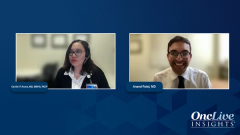
Dr. Patel discusses clinical trial efficacy data from KOMET-001 evaluating ziftomenib safety and preliminary efficacy in R/R NPM1-mutated AML and AUGMENT-101 results for revumenib.
Advertisement
Episodes in this series
Dr. Patel discusses clinical trial efficacy data from KOMET-001 evaluating ziftomenib safety and preliminary efficacy in R/R NPM1-mutated AML and AUGMENT-101 results for revumenib. Both studies demonstrate encouraging results with meaningful responses in heavily pretreated patients, particularly those previously receiving venetoclax. Many patients achieve excellent disease control enabling safe transplant progression, with manageable safety profiles providing excellent opportunities for NPM1-mutated relapsed disease management.
KOMET-001 demonstrated 23% to 25% complete remission rates with 35% overall response rates, whereas AUGMENT-101 showed 23% complete remission with count recovery rates and over 60% overall responses in heavily pretreated patients. Dr. Patel notes remarkably similar response rates across both studies, with median time to response of approximately 2 months requiring patient support through several therapy weeks before assessing drug effectiveness. Initial leukocytosis worsening may occur, emphasizing the importance of supporting patients through 6 to 8 weeks before determining therapeutic efficacy.
Caveats include duration of response typically lasting several weeks, particularly without allogeneic transplant consolidation after achieving remission. Median overall survival from therapy initiation ranges 4 to 5 months, indicating continued work needed in this space. However, achieving 25% remission rates in heavily pretreated patients, particularly as transplant bridges for eligible candidates, represents vital clinical practice incorporation considerations. Recent combination therapy presentations at ASH 2025 demonstrate improved responses, depth, and durability when combining menin inhibitors with other chemotherapy options, with KOMET-007 frontline setting responses reaching 80-90% with rapid responses and durable remissions.
Advertisement
Related to this article
Here is your cheat sheet to all therapeutic options that were cleared by the FDA in September 2026 spanning tumor types.

The FDA approved tucatinib plus trastuzumab and pertuzumab as maintenance for advanced HER2-positive breast cancer after induction.
The c-Met–directed ADC was designated for EGFR wild-type nonsquamous NSCLC after platinum chemotherapy and anti–PD-(L)1 therapy.
Dana-Farber’s Xin Gu, PhD, and Nicholas Polizzi, PhD, received NIH New Innovator Awards for high-risk, high-reward research.
The c-Met–directed ADC-based combination was designated for mCRC previously treated with fluoropyrimidine, irinotecan, oxaliplatin, and anti-VEGF therapy.
Pooled data from 3 randomized trials showed ropeginterferon alfa-2b improved responses vs phlebotomy alone but not vs hydroxyurea in polycythemia vera.
Experts break down key multiple myeloma data and trends from the 23rd Annual IMS Meeting.
Firmonertinib did not significantly improve BICR-assessed PFS vs platinum/pemetrexed chemotherapy in first-line EGFR exon 20–mutant NSCLC in FURVENT trial.
Advertisement
Advertisement
Trending on OncLive
1
FDA Approves Tucatinib Plus Trastuzumab/Pertuzumab as First-Line Maintenance in Advanced HER2+ Breast Cancer
2
FDA Grants Breakthrough Therapy Designation to Telisotuzumab Adizutecan Plus Bevacizumab in Refractory mCRC
3
Firmonertinib Fails to Meet PFS End Point in First-Line EGFR Exon 20 Insertion–Mutant NSCLC
4
FDA Grants Breakthrough Therapy Designation to Temab-A in Previously Treated c-Met–Expressing Nonsquamous NSCLC
5