The top 5 OncLive TV videos of the week cover insights in breast cancer, PV, myeloma, and CLL.

Adam D. Cohen, MD, discusses the mechanism of action of cevostamab in relapsed/refractory multiple myeloma.
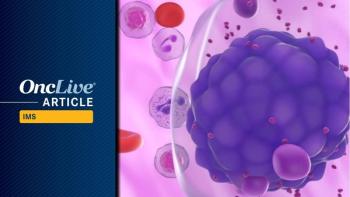
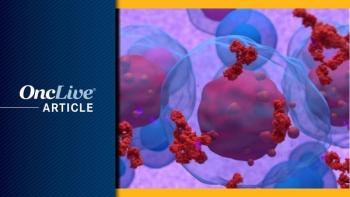
One end of the [Cevostamab] molecule attaches to CD3 on T cells, the other end [binds] to the FcRH5 protein on the myeloma cells, and it basically brings the T cells to the myeloma cells [and] activates the T cells where they can then kill [the myeloma].
Adam D. Cohen, MD, a professor of medicine in the Division of Hematology-Oncology at the Hospital of the University of Pennsylvania, a member of the Abramson Cancer Center, as well as director of Myeloma Immunotherapy and co-director of the Amyloidosis Program at the University of Pennsylvania, discussed the mechanism of action of the FcRH5 x CD3 bispecific antibody, cevostamab (BFCR4350A; RG 6160), which was evaluated in a phase 1 trial (NCT03275103) in patients with relapsed/refractory multiple myeloma.
Cevostamab is a T-cell–engaging bispecific antibody, Cohen explained, with the molecule binding CD3 to T cells on one end whereas the other binds to FcRH5 on myeloma cells, physically bridging the two, and subsequently activating recruited T cells and killing the malignant cells within the patient. FcRH5 is a membrane protein that is near-ubiquitously expressed on myeloma cells, which made it an attractive target for the first-in-class agent.
In the phase 1 trial, cevostamab was administered intravenously, according to Cohen. Cevostamab was given to patients initially as a 4-hour infusion and, once tolerated, was reduced to a 2-hour infusion, he noted. Subsequent studies are evaluating subcutaneous administration of the agent, Cohen added.
Cohen also pointed out as with other bispecific antibodies, cevostamab requires step-up dosing to mitigate the risk of cytokine release syndrome (CRS) and neurotoxicity. Identifying the optimal step-up schedule to limit the risk of high-grade or severe CRS was a central objective of the phase 1 trial, he explained. According to data published in Nature Medicine, initiating treatment with a 0.3/1.2/3.6-mg triple step-up priming regimen at the recommended phase 2 dose yielded a favorable CRS profile, with events that were primarily confined to the first cycle and limited to grade 1 or 2.