Revumenib added to intensive chemotherapy produced deep, MRD-negative remissions with a manageable safety profile in newly diagnosed AML.

Lorenzo Falchi, MD, discusses key unmet needs and important next steps for diffuse large B-cell lymphoma research.
“It’s easy to imagine more than one [study evaluating new frontline treatment options for DLBCL] being positive. [These positive data] will generate a lot of thinking and a little confusion. We’re going to spend a lot of time trying to figure out which patient is the right candidate for which treatment.”
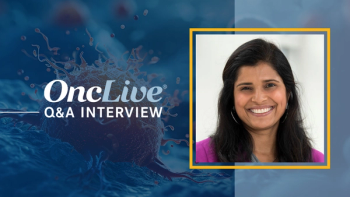
Lorenzo Falchi, MD, an assistant attending physician at Memorial Sloan Kettering Cancer Center, discussed diffuse large B-cell lymphoma (DLBCL) research and how he anticipates ongoing trials and data to play out as the number of therapies in the field expands.
Falchi began by pointing out the number of unmet needs currently in DLBCL management, noting that emerging drugs and treatments tend to generate more questions than they answer. The translation of therapeutic advances from later lines of therapy into the frontline setting are where a majority of the field’s research is focused, he added. Moreover, Falchi explained that many new treatments are being evaluated in combination with chemoimmunotherapy regimens like R-CHOP (rituximab [Rituxan] plus cyclophosphamide, doxorubicin, vincristine, and prednisone).
Falchi anticipates data from these trials evaluating new frontline combinations in DLBCL to be positive, a moment which he feels may spark extra layers of consideration for the field. Following positive data from these trials, figuring out which treatments are best suited for specific patients will be important for the field to prioritize, he said.
In terms of next steps for developing later-line treatments, Falchi underscored the importance of offering treatments that are comparable to CAR T-cell therapy to patients in this setting. He highlighted logistical concerns associated with CAR T-cell therapies, noting issues with scalability and patient proximity to CAR T-cell therapy centers. Bispecific antibody–based combinations are treatment options that Falchi underscored as potential alternatives for patients with DLBCL in the second-line setting who have issues accessing CAR T-cell therapies.