Monthly etentamig significantly improved response and PFS over standard available therapies in the phase 3 CERVINO trial, with low rates of high-grade CRS.
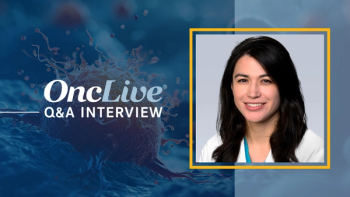
Jan P. Nicolay, MD, PhD, explains why some patients stop responding to mogamulizumab comes down to the tumor shedding its target and new survival mechanisms the cell switches on.
Often we see the loss of the target, CCR4 — and without the target being expressed, the cell is not recognized anymore. So we want to understand: is mogamulizumab itself triggering this resistance through molecular changes, or are there cellular processes specific to some patients but not others?
Many patients receiving mogamulizumab for mycosis fungoides and Sézary may respond then relapse — and the field still cannot reliably predict who will benefit or why the drug stops working.
Jan P. Nicolay, MD, PhD, a cutaneous lymphoma physician-scientist at University Medical Center Mannheim and the German Cancer Research Center (DKFZ), is trying to close that gap by tracing mogamulizumab response and resistance back to the cell biology of the malignant T cell itself.
Speaking at the
CCR4, mogamulizumab’s target, is the skin-homing receptor that draws malignant T cells into the skin. But it is not expressed only on tumor cells. Nicolay noted that CCR4 also sits on regulatory T cells, so depleting CCR4-positive cells does two things at once: it clears the malignant population and removes the regulatory T cells that would otherwise suppress antitumor immunity.
That dual effect is part of why the antibody can work, and part of why response is biologically more complicated than simply hitting an expressed target.
The harder problem is secondary resistance — patients who respond, then see disease activity and tumor burden climb again. A frequent finding, Nicolay said, is loss of the target. Once the malignant cell no longer expresses CCR4, mogamulizumab can no longer recognize it, and the drug stops acting.
The central question his group is pursuing is whether mogamulizumab itself drives that change through molecular alterations, or whether intrinsic cellular processes — present in some patients but not others — are responsible. Distinguishing the two matters clinically, because it would allow clinicians to identify upfront which patients are best suited to mogamulizumab.
His studies point to resistance arising along two parallel tracks. One is the emergence of a new population of CCR4-negative tumor cells that the antibody can no longer engage. The other is a set of molecular mechanisms that actively drive resistance — and, importantly, those altered mechanisms can become new therapeutic targets in their own right.
That framing opens two strategies:
Nicolay also suggested the lessons may extend beyond this one drug, offering general principles for targeted monoclonal antibody therapies across the field.