Japan approved Optune Pax plus gemcitabine and nab-paclitaxel for unresectable locally advanced pancreatic cancer.

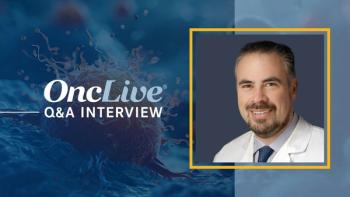
Paul E. Oberstein, MD, discusses a personalized mRNA vaccine being evaluated in pancreatic ductal adenocarcinoma and why it matters.
“This vaccine takes a person’s individual tumor, [and the care team] does sequencing and other analytics to identify specific epitopes, or specific areas in the tumor, that might make the body’s immune system effective in killing that cancer cell. [This mechanism] is an important part of [the vaccine]. It’s a huge discovery [comprising] tremendous computational and other science.”
Paul E. Oberstein, MD, an associate professor in the Department of Medicine, service chief of the Gastrointestinal Medical Oncology Program, and assistant director of the Pancreatic Cancer Center at Perlmutter Cancer Center of New York University Langone Health, discussed the mRNA vaccine autogene cevumeran for the treatment of patients with pancreatic ductal adenocarcinoma (PDAC) and how it might increase long-term disease control.
Oberstein began by pointing out challenges with developing vaccines for cancer, including convincing the immune system that the tumor cells are different from healthy cells. Identifying certain tumor-specific neoantigens for the immune system to recognize and target were important efforts in helping improve vaccines, according to Oberstein. He underscored how autogene cevumeran is personalized for each patient and that this is an important breakthrough.
Oberstein then discussed recently reported data with the vaccine in patients with PDAC, mentioning that in the phase 1 trial, patients who responded and did not respond to the vaccine were split into 2 groups. These data suggest that the vaccine helped activate the immune system in those who responded, he added. Oberstein concluded by pointing out how disease control persisted in those who responded, building promise for the vaccine.