
Opinion|Videos|December 5, 2023
Exploring LBCL: Transplant Eligibility and Second Line Treatment Selection of Novel Agents
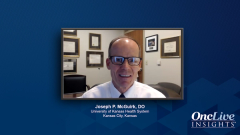
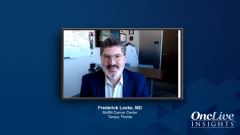
Author(s)Frederick Locke, MD
Fred Locke, MD, provides an overview of transplant eligibility for patients with large B-cell lymphoma, highlighting second line strategies with CAR T-cell therapy and bispecific antibodies.
Advertisement
Episodes in this series
Advertisement
Related to this article
Did you catch all of this week's top oncology news? Test your knowledge with OncLive's Weekly News Quiz.

In case you missed any, read a recap of the episodes of OncLive On Air that aired in September 2026.
Oral azacitidine and cedazuridine met the end point of total cycle azacitidine exposure vs subcutaneous azacitidine in MDS or CMML.

Interim data showed that the BCMA-directed CAR T-cell therapy NXC-201 generated complete responses in relapsed/refractory AL amyloidosis.

The third BLA submission for tabelecleucel follows 2 CRLs and includes updated ALLELE data with additional patients and longer follow-up.

An observational analysis showed a long-term OS benefit with Orca-T in adult patients undergoing allogeneic transplantation for hematologic malignancies.

The top 5 OncLive TV videos of the week cover insights in NSCLC, large granular lymphocytic leukemia, ovarian cancer, and myelofibrosis.

Did you catch all of this week's top oncology news? Test your knowledge with OncLive's Weekly News Quiz.
Advertisement
Advertisement
Trending on OncLive
1
FDA Approves Pirtobrutinib for Previously Untreated CLL/SLL
2
Revisit Every OncLive On Air Episode From September 2026
3
Oral Azacitidine and Cedazuridine Meets Primary Pharmacokinetic End Point in MDS and CMML
4
UTRxMYCN M1-14 Nets FDA Dual Designations in Soft Tissue Sarcoma
5